

Table of Contents
- 1. Define Your Personal Style Identity
- 2. Invest in Quality Wardrobe Essentials for Women
- 3. Master How to Style Basic Clothes
- 4. Apply the 7-Point Rule for Outfits
- 5. Use the 3-3-3 Rule for Clothes to Simplify Decisions
- 6. Build a Neutral Color Palette and Add Visual Interest
- 7. Edit Your Wardrobe and Commit to Quality Over Quantity
- Frequently Asked Questions
Last Updated: October 4, 2026
1. Define Your Personal Style Identity
Effortless style starts with knowing who you are. Before you buy anything, spend time identifying the aesthetic that genuinely resonates with you. This isn't about following trends or copying what influencers wear. It's about understanding the colors, silhouettes, and overall vibe that make you feel confident and authentic.
Ask yourself these questions: What do you reach for repeatedly? Which pieces make you feel like yourself? What activities dominate your week, and what do you need to wear for them? Your personal style identity should reflect your lifestyle, not fight against it.
Many people skip this step and end up with a closet full of pieces that don't work together. You'll wear effortless style only if it actually fits your life. If you work in a corporate office five days a week, your wardrobe should reflect that reality. If you're mostly at home or in casual settings, building around comfort makes sense.
This clarity transforms how you build your wardrobe. Instead of impulse purchases that sit unworn, you're making intentional choices that compound over time.
2. Invest in Quality Wardrobe Essentials for Women
Wardrobe essentials are the pieces that form the backbone of your closet. These are items you reach for repeatedly because they're versatile, durable, and flattering. The key is investing in quality over quantity, even if it means buying fewer pieces initially.
Essential basics include a classic white T-shirt, well-fitting dark jeans, a neutral blazer, and a simple sweater. These four pieces alone can create dozens of outfit combinations. When you invest in quality versions of these essentials, they last longer, look better, and actually save money compared to buying cheap replacements repeatedly.
The Consumer Reports guide to clothing quality emphasizes that fabric composition and construction directly impact longevity. Polyester knit fabrics with proper weight and finish hold their shape better than thin alternatives. This is why investing in a quality sweater from the start makes sense.

Look for pieces with clean seams, quality stitching, and fabrics that feel substantial. A lightweight sweater like our Women's V Neck Knit Sweater at $52.37 works across seasons and pairs with everything from jeans to tailored trousers. The relaxed fit and bell sleeves add visual interest while remaining timeless.
Other essential pieces worth investing in include:
- Well-fitted dark jeans (like our Women's High Waist Button Front Jeans at $55.78)
- Neutral-colored blazer or structured jacket
- Simple midi dress for versatile styling
- Quality leather loafers or neutral flats
- Classic leather bag
3. Master How to Style Basic Clothes
Once you have quality essentials, the real skill is learning to style them in ways that feel polished and intentional. Basic clothes become effortless style when you understand how to layer, proportion, and add visual interest.
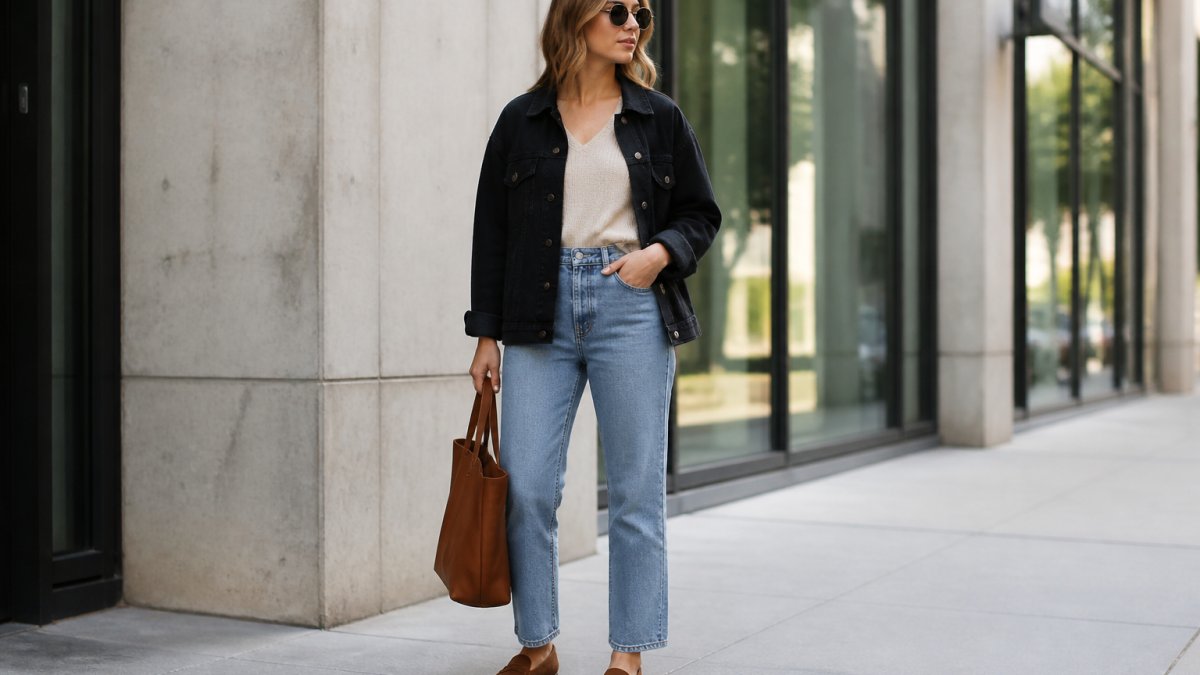
Layering is your most powerful tool. A simple sweater becomes completely different when you layer it under a denim jacket or over a collared shirt. The Women's Black Denim Jacket at $59.09 transforms casual basics into streetwear-inspired looks.
Proportion matters more than most people realize. If you wear a relaxed-fit sweater, balance it with fitted bottoms. If you wear a fitted top, looser pants create visual interest. This simple principle prevents outfits from looking either frumpy or overly tight.
Add one visual point to every outfit. This could be a statement necklace, a structured bag, interesting shoes, or a belt. A leather crossbody bag like our Women's Leather Crossbody Messenger Bag at $92.26 serves this function while remaining practical.
Shoes matter more than most basics. Quality footwear elevates an entire outfit. Our Women's Suede Loafers at $68.78 work with nearly everything and provide comfort for all-day wear. Alternatively, Women's Platform Walking Sneakers at $61.82 offer a modern, casual option that still feels intentional.
4. Apply the 7-Point Rule for Outfits
The 7-point rule is a framework for creating visually balanced, interesting outfits. It's simple: identify seven distinct visual points across your outfit and ensure they work together harmoniously.
The seven points are typically: shoes, bottoms, top, outerwear or layering piece, bag, jewelry, and one accent (belt, scarf, or hat). Not every outfit needs all seven, but this framework helps you think about balance and visual interest systematically.
Start with your base: shoes and bottoms. These anchor your outfit and take up the most visual space. Choose a color or style, then build around it. If you wear neutral jeans and loafers, your top can be more expressive. If you wear patterned or colored bottoms, keep your top simpler.
Your layering piece or outerwear comes next. This could be a blazer, cardigan, denim jacket, or structured coat. Our Women's Blazer and Wide Leg Pants Set at $127.57 functions as both bottoms and outerwear, simplifying the equation while maintaining polish.
Bag, jewelry, and accents complete the picture. These don't need to match perfectly, but they should feel intentional together. A leather bag works with both casual and dressy outfits. Delicate jewelry feels different from chunky pieces. A belt can define your waist or add a pop of color.
The beauty of the 7-point rule is that it prevents decision paralysis. You're not choosing randomly. You're thinking systematically about balance, proportion, and visual interest across seven distinct elements.
5. Use the 3-3-3 Rule for Clothes to Simplify Decisions
The 3-3-3 rule is a wardrobe-building framework that prevents overbuying while ensuring everything works together. The concept is simple: three neutral colors, three accent colors, and three pattern styles.
Your three neutral colors form the foundation. Most people choose from black, white, navy, gray, and beige. Pick three that feel natural to you. These neutrals should work together seamlessly. If you choose black, white, and gray, they all coordinate. If you choose navy, beige, and white, they also work together naturally.
Your three accent colors add personality without overwhelming your wardrobe. These might be blush pink, sage green, and caramel brown. Or burgundy, forest green, and mustard yellow. The key is choosing colors that complement your three neutrals and work well together.
Your three pattern styles keep prints cohesive. This might be: solid colors, small-scale prints like stripes, and larger geometric patterns. Or: solids, florals, and abstract prints. By limiting pattern styles, you ensure that pieces coordinate even when they're not the same color.
This framework transforms shopping. Before buying anything new, ask: Does this fit my three neutrals, three accents, and three patterns? If it doesn't, it probably won't coordinate with your existing wardrobe, no matter how much you love it.
The American Society for Quality standards on decision-making suggests that reducing options actually increases satisfaction. You're not overwhelmed by choices, and everything you buy works with everything else.
6. Build a Neutral Color Palette and Add Visual Interest
A neutral color palette is the foundation of effortless style. It allows you to buy fewer pieces while creating more outfit combinations. But a neutral wardrobe doesn't mean boring. Visual interest comes from texture, layering, proportion, and strategic accessories.
Start by choosing your neutral base: typically black, white, navy, gray, or beige. Our Women's Sleeveless Knit Midi Dress at $61.59 comes in white and black, providing two versatile neutral options that layer beautifully.

Texture creates visual interest without adding color. A chunky knit sweater feels different from a smooth silk blouse, even if both are black. Corduroy, linen, velvet, and satin all add dimension. Mixing textures prevents a monochromatic outfit from feeling flat.
Layering adds visual depth. A neutral sweater over a collared shirt, or a denim jacket over a dress, creates more visual interest than a single piece. The Women's V Neck Knit Sweater layers effortlessly over everything from T-shirts to collared blouses.
Proportion creates visual interest through silhouette. Pair fitted pieces with loose ones. A relaxed sweater with fitted jeans. A slim dress with an oversized blazer. This contrast keeps outfits from looking either too tight or too shapeless.
Accessories and small accent pieces add personality without overwhelming your neutral palette. Our Women's Satin Slip Maxi Dress at $45.50 in black or white becomes completely different when styled with heels and jewelry versus flats and a cardigan.

7. Edit Your Wardrobe and Commit to Quality Over Quantity
The final step in achieving effortless style is editing ruthlessly. A smaller wardrobe of pieces you actually wear beats a closet full of items you don't. This is where the real transformation happens.
Start by removing anything that doesn't fit, is damaged beyond repair, or makes you feel bad when you wear it. Be honest. If you haven't worn something in a year and you don't have a specific occasion coming up that requires it, it's taking up space.
Next, identify gaps. What pieces do you reach for repeatedly? What combinations do you make most often? What's missing that would make those combinations work better? This is where you should invest your money.
Quality matters more than quantity. A well-made piece lasts years and maintains its appearance. Cheap fabric pills, fades, loses shape, and requires constant replacement. The Textile Exchange sustainability report documents how quality construction extends garment lifespan significantly, reducing overall consumption.
Commit to buying less, but better. Instead of buying ten new pieces per season, buy two or three that you've thought through carefully. Will they work with your existing wardrobe? Do they fit your color palette? Will you actually wear them?
Effortless style isn't about having more clothes or following complicated rules. It's about knowing who you are, investing in quality pieces that work together, and understanding how to combine them intentionally.
Frequently Asked Questions
What is the 7-point rule for styling an outfit?
The 7-point rule is a framework for creating balanced, visually interesting outfits. It uses seven distinct elements: a base layer, a second layer, a statement piece, a neutral anchor, shoes, an accessory, and a finishing touch. This structure ensures your outfit has depth and proportion without looking overdone. The rule helps busy professionals build polished looks quickly by providing a simple formula to follow each time you get dressed.
What is the 3-3-3 rule for clothes?
The 3-3-3 rule simplifies wardrobe building by dividing your closet into three categories: 3 basics (neutral essentials like plain tees and simple sweaters), 3 layers (blazers, cardigans, jackets), and 3 statement pieces (items with color, pattern, or texture). This approach prevents overbuying while ensuring you have enough pieces to create multiple outfit combinations. It's ideal for budget-conscious shoppers who want versatility without excess.
How do you make a basic outfit look more polished?
Elevate basic outfits by adding layers, choosing quality fabrics, and investing in fit. Pair a simple V-neck sweater with tailored trousers and a structured blazer, then finish with suede loafers and a leather crossbody bag. Focus on neutral colors for a timeless look, and ensure each piece fits your body well. Small details like tucking in tops, choosing intentional accessories, and maintaining good posture transform casual basics into refined, effortless looks.
What wardrobe essentials make getting dressed easier?
Core wardrobe essentials include neutral sweaters, well-fitting jeans, a blazer, a simple dress, comfortable shoes like loafers or sneakers, and a versatile bag. These pieces work across seasons and occasions, mix easily with each other, and transition from casual to professional settings. Building around these fundamentals reduces decision fatigue and ensures you always have something polished to wear. Quality matters more than quantity, invest in pieces you'll reach for repeatedly.
How can you achieve effortless style on a budget?
Achieve effortless style affordably by focusing on timeless basics over trends, shopping for quality pieces at reasonable prices, and building a capsule wardrobe of versatile items. Hoss Style & Co offers curated pieces like V-neck sweaters ($52.37), high-waist jeans ($55.78), and suede loafers ($68.78) that provide style without premium luxury pricing. Buy fewer items but choose pieces that work together, care for them well, and wear them frequently. This approach saves money while building a cohesive, functional wardrobe.


