

Table of Contents
- Why Move Beyond Fast Fashion
- Affordable Sustainable Clothing Brands That Deliver Quality
- Ethical Clothing Brands for Basics You Can Trust
- How to Build a Versatile Wardrobe on a Budget
- Secondhand and Circular Fashion Options
- How to Verify Sustainability and Labor Claims
- Extend Garment Life Through Care and Repair
- Frequently Asked Questions
Last Updated: October 15, 2026
Why Move Beyond Fast Fashion
Fast fashion dominates retail because it's convenient and cheap: new styles drop weekly and prices stay low.
The problem isn't that fast fashion exists. It's that when your wardrobe rotates every season, nothing lasts long enough to justify its place.
At Hoss Style & Co LLC, we offer a curated collection of modern fashion designed to bring style, comfort, and confidence to your everyday wardrobe.
Affordable Sustainable Clothing Brands That Deliver Quality
"Affordable" and "sustainable" are not opposites, but the price gap is real. A typical fast-fashion basic tee runs $5-$12; a comparable organic-cotton or recycled-fiber tee from a smaller-batch brand lands between $25 and $45. The question isn't which sticker is lower, it's which piece you still wear in year three.
The price gap comes down to volume and material. Fast-fashion retailers order enormous runs for a single trend cycle.
Realistic Price Bands for Essentials
Use these ranges as a shopping benchmark for what smaller-batch, transparency-forward brands commonly charge for basics.
| Essential | Fast-Fashion Typical | Sustainable Typical | Notes |
|---|---|---|---|
| Basic tee | $5-$12 | $25-$45 | Look for 100% cotton or cotton/hemp blends |
| Long-sleeve henley or shirt | $12-$20 | $28-$55 | Heavier fabric weight lasts longer |
| Denim | $20-$40 | $55-$120 | Raw or rigid denim outlasts stretch blends |
| Sweater | $15-$30 | $40-$90 | Wool and cotton beat acrylic on longevity |
| Everyday shoes | $25-$50 | $60-$150 | Resoleable construction is the value driver |
| Tote or crossbody bag | $15-$30 | $25-$95 | Leather and heavy canvas age better than PU |
These are bands, not rules. A $45 tee worn twice a week for three years beats a $10 tee replaced every four months.

Cost-Per-Wear, Worked Out
Cost-per-wear is price divided by the number of times you realistically wear the piece. The formula is simple; the honesty is hard.
- A $35 organic-cotton tee worn twice a week for two years: roughly 200 wears, about $0.18 per wear.
- A $10 fast-fashion tee worn twice a week for four months before it pills or fades: roughly 35 wears, about $0.29 per wear.
- A $90 pair of rigid denim jeans worn three times a week for three years: roughly 450 wears, about $0.20 per wear.
The sustainable piece wins on cost-per-wear in each pairing, even though it costs more up front. The catch: the math only works if you actually wear it.
:::pro-tip Before buying, estimate your wears honestly. Count how often you wore a similar piece in the past year. If the answer is under 20, the price is irrelevant, it is too expensive at any number.
Fit and Sizing: The Overlooked Barrier
Price gets the headlines, but fit keeps a piece in rotation. A durable garment that doesn't fit isn't a wardrobe essential, it's closet clutter.
A few practical checks before you commit:
- Size range: Look for a full size chart, not just S/M/L. Extended sizing (often up to 3X or beyond) signals the brand expects a range of bodies.
- Measurements, not labels: Compare your chest, waist, hip, and inseam measurements to the brand's chart. Vanity sizing varies wildly.
- Fit consistency: Read reviews on whether the piece runs small, large, or true to size.
If a brand can't state fabric weight, fiber percentages, or size range in plain numbers, that's a fit risk before it's an ethics question.
What "Quality" Actually Looks Like
Quality is a set of construction details you can check in person or in product photos:
- Stitching density: Tighter, even stitching at stress points (shoulders, crotch, pockets) resists tearing.
- Fabric weight: Heavier cotton, wool, and canvas hold shape longer than thin knits.
- Hardware: Metal zippers and reinforced buttons outlast plastic.
Hoss Style & Co LLC offers curated pieces. The Women's High-Waist Denim-Look Pants with Wide Waistband at $55.78 and the Men's Long Sleeve Henley T-Shirt are examples of modern fashion designed for everyday versatility.
| Consideration | Fast Fashion | Sustainable Brands |
|---|---|---|
| Material quality | Low-grade synthetics | Natural or recycled fibers |
| Durability | 5-10 wears | 50+ wears |
| Supply chain transparency | Minimal | Well-documented |
| Price per wear | High | Low |
| Environmental impact | Significant waste | Reduced footprint |
| Size range | Often narrow | Frequently extended |
| Return policy | Often restrictive | Often generous |
Ethical Clothing Brands for Basics You Can Trust
Ethical production means fair wages, safe working conditions, and respect for workers throughout the supply chain.
Look for third-party certifications which require independent audits and ongoing compliance. Avoid vague promises without verification.
The simplest way to verify ethics is the brand's website: Where are garments made? What certifications do they hold? If a brand won't answer, move on.
Basics from Hoss Style & Co LLC include pieces like the Women's Ribbed High-Neck Long-Sleeve Pullover Sweater at $33.11 and the Men's Full Grain Leather Slip-On Loafers at $36.37, wardrobe anchors you reach for repeatedly because they fit well, feel good, and pair with almost everything you own.

How to Build a Versatile Wardrobe on a Budget
Most wardrobe advice stops at "buy neutrals." That's not a plan.
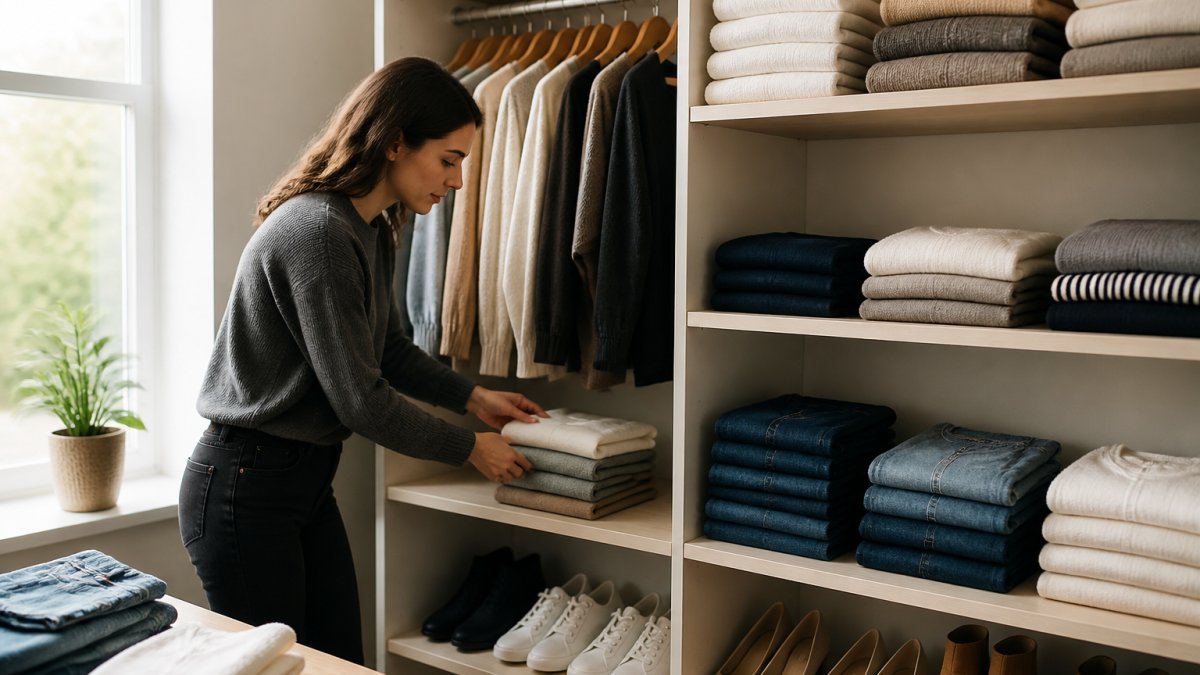
Start by identifying the activities that dominate your week: work, casual outings, exercise, social events. Then build a foundation of pieces that serve those contexts, maximum outfits from minimum pieces.
Neutral colors (black, white, beige, gray, navy) are your foundation. They pair with almost everything and never look dated. Add 2-3 accent colors that reflect your personal style.
A Season-Aware Capsule Plan
A capsule that ignores seasons fails. Build in layers so each piece works across at least two seasons.
Year-round core (buy first):
- 2 pairs of jeans (one dark, one light)
- 3-4 basic tees in neutral colors
- 1-2 long-sleeve shirts or henleys
Warm-season add-ons:
- 1-2 linen or lightweight cotton shirts
- 1 pair of neutral shorts or a skirt
- 1 breathable dress or jumpsuit
Cold-season add-ons:
- 1-2 sweaters (wool or cotton, not acrylic)
- 1 heavier coat for your climate
- 1 pair of boots
The core stays constant; add-ons rotate, keeping a 30-40 piece capsule from feeling repetitive year-round.
Capsule Wardrobe Essentials for Women
A capsule wardrobe for women typically includes 30-40 pieces that work together. Start with these categories:
- Bottoms: 2-3 pairs of jeans (one dark, one light), 1-2 neutral trousers, 1 skirt if you wear them
- Tops: 3-4 basic T-shirts, 2-3 long-sleeve shirts, 1-2 sweaters
- Shoes: Everyday flats (like the Women's Suede Loafers at $68.78), work shoes, casual sneakers, one dressier option
The Women's Corduroy Tote Bag at $27.88 works as an everyday carry for work or casual outings. The Women's Leather Crossbody Messenger Bag at $92.26 adds a more polished option for professional settings.
Women's Ribbed High-Neck Long-Sleeve Pullover Sweater →

Quality matters more than quantity: five well-made pieces you actually wear beat twenty cheap pieces you avoid.
A Decision Guide for Real Constraints
Most shoppers don't have unlimited budget, store access, or time. Route your decision by the constraint that applies to you.
If budget is the binding constraint:
- Buy used first for statement pieces, new for basics you wear daily.
- Prioritize cost-per-wear over sticker price.
- Build one category at a time (bottoms, then tops, then shoes) rather than spreading a small budget thin.
If location is the binding constraint:
- In a city with thrift and consignment options, shop in person, you can check fit and construction.
- In a low-access area, online resale platforms and direct-to-consumer basics brands are the practical route.
- If returns are expensive or slow, buy fewer pieces and lean on brands with published size charts.
If new-versus-used is the question:
- Used wins on price and environmental impact for outerwear, bags, and statement pieces.
- New wins on fit certainty and warranty for basics you wear multiple times a week.
- A hybrid approach, used outerwear, new basics, is the most common pattern among people who stick with a capsule long term.
If style is the binding constraint:
- Identify the 2-3 silhouettes you actually wear (straight-leg denim, crew-neck knits, structured blazers).
- Buy those silhouettes in neutral colors first, then add accent colors.
- Skip trends until the core is complete.
Calculate Cost-Per-Wear to Justify Quality
This single metric changes how you shop: cost-per-wear is price divided by the number of times you'll wear it.
A $100 blazer worn 100 times = $1.00 per wear.
To calculate realistically, think about the last year: how often did you wear similar pieces?
This framework eliminates impulse buying. Before purchasing, ask: will I wear this at least 20 times?
Secondhand and Circular Fashion Options
Secondhand shopping is one of the fastest alternatives to fast fashion, reducing impact while building a wardrobe on a budget.
Thrift stores, consignment shops, and online resale platforms (Poshmark, Depop, ThredUP) offer quality pieces at 30-70% off retail, often barely worn.
Circular fashion extends this idea: clothing swaps, rental services, and take-back programs let you rotate pieces without accumulating them.
The environmental benefit is significant. According to the EPA's textile waste data, the average person discards about 81 pounds of clothing annually.
How to Verify Sustainability and Labor Claims
Marketing language around sustainability is often vague. "Eco-friendly," "sustainable," and "ethical" mean nothing without specifics.
Here's what to check:
- Material composition: Does the brand specify fiber percentages? Natural materials (cotton, linen, wool) and recycled synthetics beat virgin polyester.
- Production location: Where are garments made? Countries with strong labor laws are generally safer bets.
- Certifications: Look for B Corp, Fair Trade, GOTS (Global Organic Textile Standard), or similar third-party verification.
Ask direct questions if information isn't available. Legitimate brands respond; silence is your answer.
Extend Garment Life Through Care and Repair
The longest-lasting wardrobe is one you maintain. Proper care extends the life of every piece.
Basic care practices:
- Wash in cold water to preserve color and reduce fabric stress
- Use gentle detergent designed for delicate fabrics
- Air dry when possible; machine drying degrades fibers faster
Repair skills are worth learning. A loose seam costs $5-10 at a tailor but $50-100 if ignored and the garment tears further.
According to the Ellen MacArthur Foundation's circular fashion research, extending garment life by just nine months reduces waste and carbon emissions by 20-30%.
Some brands now offer repair services.
Building a modern wardrobe beyond fast fashion is about intentional choices: quality over quantity, durability over trends, and cost-per-wear over price tags. Shop our collection of basics, from Women's Suede Loafers to Men's Vintage Work Boots, and build a wardrobe that actually lasts.
Frequently Asked Questions
What are the best alternatives to fast fashion for building a modern wardrobe?
Focus on affordable sustainable clothing brands and ethical basics that prioritize durability and timeless design. Look for pieces made from quality materials like organic cotton, recycled fibers, and natural fabrics. Brands offering transparent supply chains and fair labor practices provide genuine alternatives. Building a capsule wardrobe with versatile essentials, neutral sweaters, quality denim, simple tops, and classic footwear, gives you more outfit combinations while reducing overall consumption.
How can I tell if a clothing brand is actually sustainable or just greenwashing?
Check for specific certifications. Sustainable brands publish transparent supply chain information, material sourcing details, and labor practices. Be skeptical of vague claims like 'eco-friendly' without proof. Ask whether they disclose factory locations and environmental impact data. Ethical clothing brands for basics typically provide detailed product information about fiber content and manufacturing processes.
What is cost-per-wear and why does it matter when building a budget wardrobe?
Cost-per-wear divides a garment's price by how many times you'll wear it. A $55 pair of jeans worn 100 times costs $0.55 per wear; a $30 fast-fashion item worn 5 times costs $6 per wear. This metric helps justify investing in quality basics over cheap pieces that fall apart. When building a versatile wardrobe on a budget, prioritizing items with low cost-per-wear means you spend less overall while owning fewer, better pieces.
Where can I find secondhand and vintage clothing that fits my style?
Thrift stores, consignment shops, and online resale platforms offer affordable secondhand options. Circular fashion through clothing swaps with friends, rental services, and peer-to-peer resale apps extends garment life and reduces waste. Vintage pieces often outlast modern fast fashion due to superior construction. When shopping secondhand, check seams, zippers, and fabric condition carefully. Many secondhand basics are higher quality than new fast-fashion alternatives at similar price points.
How do I care for and repair clothes to make them last longer?
Follow care labels carefully: wash in cold water, air dry when possible, and store properly to prevent damage. Learn basic repairs like sewing buttons, fixing small seams, and patching holes, these skills extend garment life significantly. Treat stains promptly and use appropriate detergents for fabric types. Quality basics from ethical brands often reward proper care with years of wear. Investing time in garment maintenance reduces the need to replace clothing frequently and supports a slow-fashion approach.


