

Table of Contents
- Business Casual vs Smart Casual: The Core Differences
- Business Casual Dress Code for Men
- Smart Casual Outfits for Men
- Business Casual Outfits for Men: Practical Examples
- Smart Casual Shoes for Men and Complete Outfits
- Common Mistakes and Borderline Items
- When to Wear Each Dress Code
- Frequently Asked Questions
Last Updated: October 10, 2026
Business Casual vs Smart Casual: The Core Differences
Understanding the distinction in business casual vs smart casual matters more than most men realize. These two dress codes sit at different points on the formality spectrum, and confusing them can undermine your professional presence or make you look overdressed in a relaxed setting.
Business casual and smart casual both reject full formality, no suits required, but they operate under different rules. Business casual maintains a professional edge suitable for traditional office environments, client meetings, and formal workplace settings.
The real difference lies in how you combine pieces and the level of intentionality behind your outfit.
Formality and Polished Appearance
Business casual demands a polished, put-together appearance. Your clothing should look intentional and coordinated. Every piece serves a purpose, and nothing should feel casual or worn. The overall impression is refined: structured fabrics, clean lines, and a sense of control.
Smart casual relaxes this requirement without abandoning polish. You can introduce more texture, pattern, and personality into your outfit. The look is effortlessly cool rather than formally correct. Comfort matters more visibly, you're not sacrificing fit or wearability for formality. Yet you're still clearly making an effort. Wrinkled fabrics, stains, or sloppy fits undermine smart casual just as they would business casual.
Comparison Table
| Aspect | Business Casual | Smart Casual |
|---|---|---|
| Formality Level | Professional, structured | Relaxed, approachable |
| Shirt/Top | Button-down, polo, dress shirt | Button-down, polo, casual shirt, sweater |
| Bottoms | Dress pants, chinos, tailored trousers | Chinos, dark jeans, tailored trousers |
| Shoes | Leather dress shoes, loafers | Loafers, clean sneakers, casual leather shoes |
| Accessories | Belt, watch, tie optional | Minimal, optional |
| Overall Vibe | "I'm ready for the boardroom" | "I'm stylish and comfortable" |
| Best For | Offices, client meetings, formal events | Creative workplaces, social outings, weekends |
Business Casual Dress Code for Men
Business casual is the professional standard for most corporate and traditional office environments. It's the default when a company says "we're business casual" without further specification. This dress code bridges the gap between full business formal (suits and ties) and casual wear.


What Defines Business Casual
Business casual is a dress code that combines professional polish with a relaxed approach to formality. You're abandoning the suit jacket and tie, but maintaining structured, intentional clothing that reads as professional.
Button-down shirts form the foundation of business casual. These can be solid colors, subtle patterns, or light checks. Avoid anything too casual, graphic tees, heavily printed designs, or loose athletic fits don't belong here.
For bottoms, business casual calls for dress pants or chinos. Dress pants in neutral colors (black, gray, navy, khaki) are the safest choice. Chinos offer slightly more personality while remaining professional.
Footwear should be leather or leather-look shoes. Dress shoes, loafers, or professional casual shoes all work. Sneakers don't belong in business casual, even high-end ones. The shoe should look intentional and professional.
Workplace Expectations
Most traditional corporate offices operate on business casual standards. Law firms, financial institutions, consulting companies, and government offices typically expect this level of formality. Client-facing roles almost always require business casual as a minimum.
The specific expectations vary by industry and company culture. Some offices interpret business casual strictly, closer to business formal without the jacket. Others take a looser approach. When you start a new job, observe what senior colleagues wear. That's your best guide.
Business casual signals respect for the professional environment. It says you take your role seriously and understand workplace norms. This matters in industries where client trust, authority, and competence are visual signals.
Smart Casual Outfits for Men
Smart casual represents the modern approach to dressing well without rigid formality. It's become the default for many creative industries, startups, and contemporary workplaces. It works equally well for social events, weekend outings, and casual dining.
What Defines Smart Casual
Smart casual is a dress code that prioritizes looking intentional and polished while embracing comfort and personality. You're dressing well, but not dressing formally. The outfit should look coordinated and deliberate, never sloppy or thrown together.
Shirts and tops offer more flexibility here. Button-down shirts work, but so do casual shirts, sweaters, and even well-fitted t-shirts in solid colors. Polo shirts are a smart casual staple.
Bottoms lean toward chinos, dark jeans, or tailored trousers. Chinos in neutral or muted colors work best. Dark jeans, well-fitted, not distressed, are acceptable in smart casual contexts.
Footwear can include loafers, clean leather shoes, or high-quality sneakers. This is where smart casual differentiates itself from business casual. A clean white sneaker or minimalist leather shoe works perfectly in smart casual.
When and Where to Wear It
Smart casual works for creative workplaces, tech companies, casual restaurants, weekend social events, and contemporary venues. It's the dress code for most casual dates, informal gatherings, and social outings where you want to look good without appearing overdressed.
Many modern offices have shifted toward smart casual. It allows personality to show through while maintaining a professional appearance. It's also the default for events described simply as "casual" when you want to look put-together.
Business Casual Outfits for Men: Practical Examples
Building a business casual wardrobe requires intentional pieces that combine professional polish with wearability. The foundation is simple: structured tops, tailored bottoms, and professional footwear.
Shirts and Tops
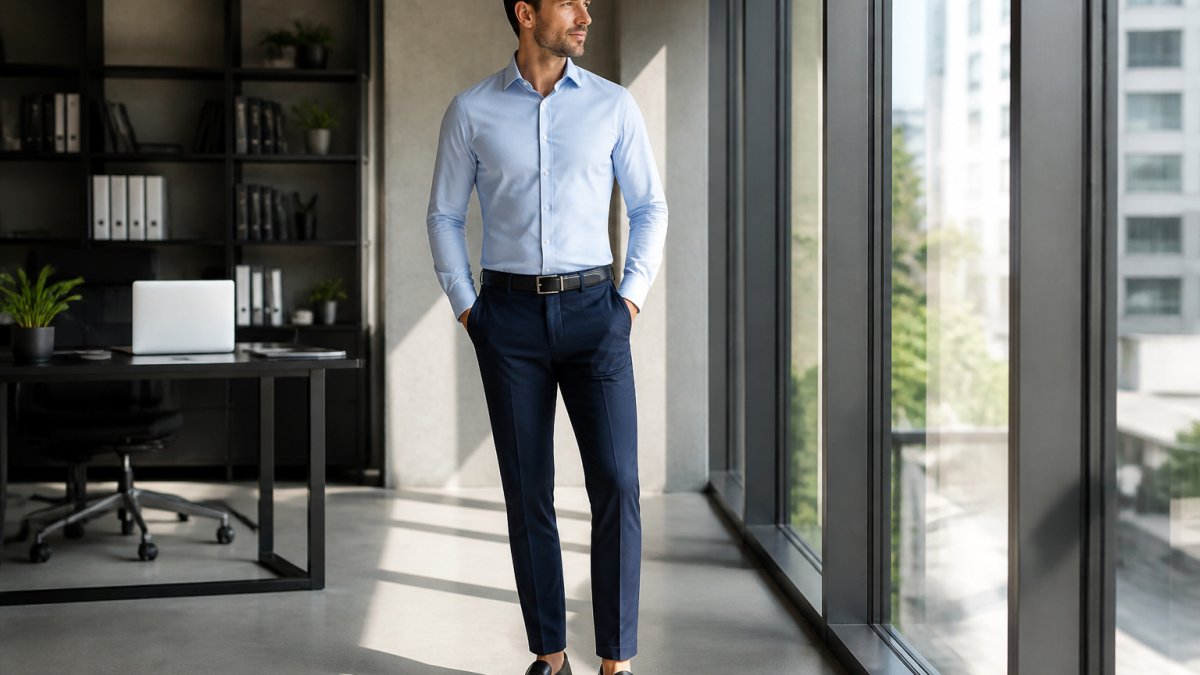
Button-down dress shirts in white, light blue, and pale gray are the backbone of business casual. These neutral colors pair with virtually any bottom and look inherently professional.
Polo shirts offer a middle ground between casual and formal. They're less formal than dress shirts but more professional than t-shirts. Solid colors work best. Navy, white, and gray polos are versatile foundations.
Layering with a light sweater or cardigan adds dimension to business casual outfits. A navy or gray sweater over a white button-down creates a polished look suitable for client meetings or presentations.
Bottoms and Layering
Dress pants in charcoal, navy, or black form the most formal end of business casual. They pair with any professional top and work for important meetings or client interactions. Chinos in khaki, navy, or light gray offer slightly more personality while remaining professional.
The fit is critical. Pants should be tailored to your body, not tight, not baggy. A slight break at the top of your shoe is ideal. Cuffed pants look more intentional than hemmed.
Layering with a blazer elevates business casual to near-formal territory. A navy or charcoal blazer over a button-down shirt and chinos creates a polished appearance suitable for presentations or important meetings. The blazer doesn't need to match your pants.
Men's Leather Business Dress Shoes →
Smart Casual Shoes for Men and Complete Outfits
Footwear is where smart casual and business casual diverge most noticeably. Smart casual allows more personality in shoes while maintaining a polished appearance.
Footwear Choices
Loafers remain the smart casual standard. Full grain leather loafers like those from Hoss Style & Co work equally well in business casual and smart casual settings. They're professional enough for offices yet comfortable enough for social events. The slip-on design makes them convenient for everyday wear.
Clean white or minimalist leather sneakers work in smart casual contexts where business casual would feel overdressed. The sneaker should look intentional, high-quality materials, clean condition, minimal branding.
Casual leather shoes and boat shoes bridge the gap between sneakers and formal dress shoes. They're comfortable, approachable, and work well with chinos or dark jeans.
For smart casual specifically, avoid athletic sneakers, heavily branded shoes, or anything that looks like gym wear. The shoe should signal intentionality even if it's casual.
Building a Polished Smart Casual Look
A smart casual outfit typically combines tailored bottoms with a well-fitted top and intentional footwear. Start with dark chinos or well-fitted dark jeans. Add a button-down shirt, polo, or quality sweater. Finish with loafers or clean casual shoes.
Accessories matter in smart casual. A simple watch, minimal jewelry, or a quality belt add polish without formality. Avoid excessive branding or statement pieces.
The overall impression should be "I care about how I look, and I'm comfortable in this outfit." Smart casual works because it balances polish with ease. You're not fighting against your clothing, you're working with it.
Hoss Style & Co's Men's Full Grain Leather Slip-On Loafers offer the versatility smart casual demands. At just $36.37, they work with virtually any smart casual combination and transition seamlessly into business casual contexts when needed.

Common Mistakes and Borderline Items
Several items create confusion in the business casual versus smart casual distinction. Understanding where they fall prevents wardrobe missteps.
Jeans: Dark, well-fitted jeans work in smart casual but are borderline or inappropriate in traditional business casual.
Sneakers: Clean, minimalist sneakers work in smart casual. Athletic sneakers, running shoes, or heavily branded footwear don't belong in either dress code. Business casual never includes sneakers.
T-shirts: Graphic tees and printed t-shirts are too casual for business casual.
Shorts: Shorts don't belong in business casual under any circumstance. They're too casual.
Blazers: A light blazer elevates business casual toward formal territory. It's optional in business casual but adds polish for important meetings.
Accessories: Business casual benefits from minimal, intentional accessories, a watch, simple belt, nothing flashy.
When to Wear Each Dress Code
Context determines which dress code applies. Traditional corporate environments, law firms, financial institutions, and government offices operate on business casual standards. When a job description or company website mentions "business casual," interpret that literally.
Client-facing roles almost always require business casual as a minimum. If you're meeting clients, presenting to senior leadership, or attending formal business events, business casual is the safe choice.
Smart casual works for creative industries, tech companies, startups, and modern workplaces. It's the default for casual restaurants, weekend social events, and informal gatherings.
When in doubt, choose business casual. It's more formal and reads as respectful in uncertain contexts. You can always be more dressed up than the room requires. Being underdressed is harder to recover from.
The distinction matters because each dress code sends a message.
Looking to upgrade your wardrobe with pieces that work across both business casual and smart casual contexts? Our Men's Leather Business Dress Shoes deliver timeless sophistication for formal moments, while our Men's Full Grain Leather Slip-On Loafers transition seamlessly from office to social events.
Frequently Asked Questions
What is the main difference between business casual and smart casual for men?
Business casual is more formal and structured, requiring dress shirts, tailored trousers, and closed-toe dress shoes. Smart casual blends polished pieces with relaxed elements, think button-down shirts with chinos or loafers instead of formal dress shoes. Business casual works for professional offices; smart casual suits casual dining, weekend events, and relaxed workplaces. The key difference: business casual looks like you're ready for a meeting, smart casual looks effortlessly put-together.
Can men wear jeans with a business casual dress code?
No, jeans are not appropriate for business casual, even dark-wash jeans. Business casual requires tailored bottoms like dress trousers, chinos, or khakis. Jeans fall into casual wear and break the polished, professional look that business casual demands. If your workplace allows jeans, that's typically a sign they accept smart casual or full casual dress instead.
What shoes work best with business casual outfits for men?
Business casual shoes should be closed-toe and formal: leather dress shoes, oxfords, or loafers in black, brown, or burgundy. Hoss Style & Co offers Men's Leather Business Dress Shoes ($201.68) with premium cowhide leather and carved detailing, ideal for boardrooms and formal occasions. For smart casual, you have more flexibility with loafers, casual leather shoes, or even clean sneakers, but closed-toe shoes always look more polished.
Are sneakers appropriate for smart casual outfits?
Clean, minimal sneakers can work for smart casual, especially with tailored trousers or chinos and a structured shirt. However, athletic or heavily branded sneakers don't fit the polished aesthetic. For a safer smart casual look, choose leather loafers instead, they bridge casual and refined. Hoss Style & Co's Men's Full Grain Leather Slip-On Loafers ($36.37) work perfectly for smart casual outfits and everyday wear.
How can men make a smart casual outfit look more polished?
Focus on fit, fabric, and accessories. Choose tailored trousers or chinos that fit properly at the waist and break cleanly at the shoe. Wear a structured button-down or polo shirt in solid colors or subtle patterns. Add a light blazer or cardigan for extra polish. Invest in quality footwear, leather loafers elevate the entire look. Keep accessories minimal: a simple belt and watch work best. Proper grooming and clean, well-maintained clothes matter as much as the pieces themselves.


