

Table of Contents
- What Makes High Quality Wardrobe Staples Worth the Investment
- How to Spot Quality Clothing While Shopping
- Best Fabric for Long-Lasting Clothes
- Capsule Wardrobe Essentials List: Building Your Foundation
- Calculating Cost-Per-Wear for Smart Purchases
- Where to Buy High Quality Wardrobe Staples
- Investment Pieces vs. Affordable Basics: Finding Your Balance
- Conclusion
Last Updated: August 6, 2026
What Makes High Quality Wardrobe Staples Worth the Investment
The difference between a shirt that lasts five years and one that falls apart in five months comes down to fabric choice, construction quality, and fit. Building a wardrobe around high quality wardrobe staples means investing in fewer items that actually work together and stand up to regular wear.
At Hoss Style & Co LLC, we understand that quality matters. This is where cost-per-wear becomes your secret weapon. A $120 sweater worn 200 times costs 60 cents per wear. A $30 sweater worn 20 times costs $1.50 per wear. The expensive piece wins every time.
How to Spot Quality Clothing While Shopping
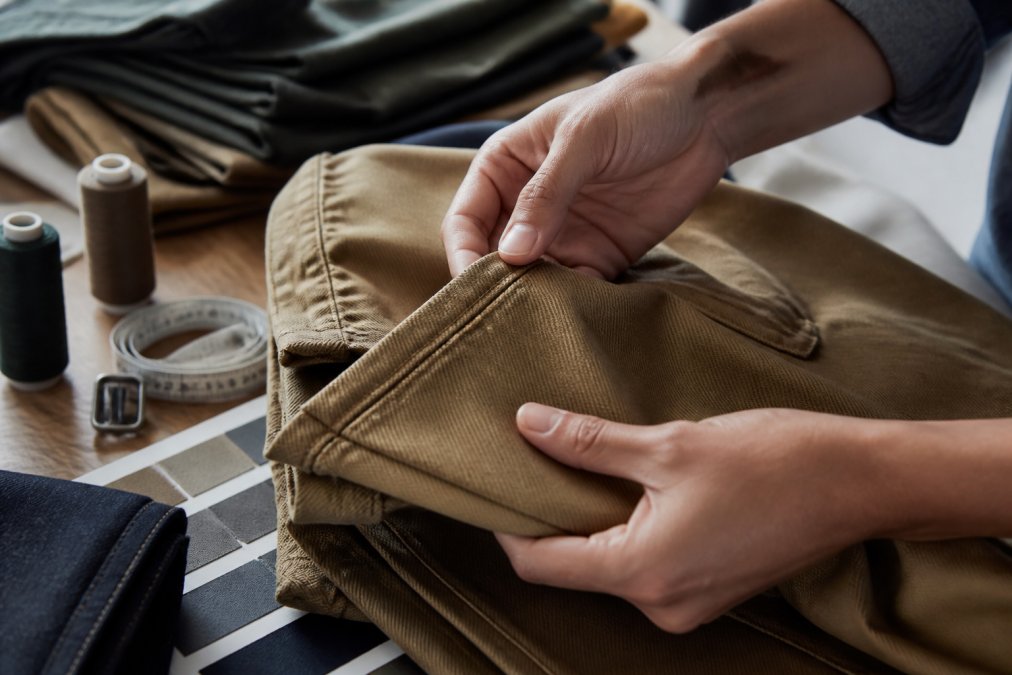
When you're standing in front of a rack, quality isn't obvious. But you can train your eye to catch the signals that separate well-made pieces from disposable ones. Learn to inspect three specific areas: stitching, fabric weight, and seams.
Stitching and seams
Open the garment and look at the seams from the inside. Quality construction means tight, even stitches with minimal gaps. Seams should be finished, either with a serged edge or a flat-felled seam. Raw seams that fray immediately are a red flag. Count the stitches per inch if you can. Most quality garments have 12-16 stitches per inch. Fast-fashion pieces often drop to 8-10. Check the hems too. Hand-stitched or blind-stitched hems indicate care. Machine-stitched hems are fine if they're straight and secure.
Weight and hand feel
Pick up the garment and feel it. Quality fabric has substance. Cotton should feel smooth and slightly substantial, not thin or slippery. Knits should have a consistent weight throughout with no thin spots. Run your fingers across the surface. Pilling shows up quickly on low-quality knits. Press the fabric between your fingers. Does it wrinkle immediately and stay creased, or does it bounce back? If a piece feels stiff or plastic-like, synthetic content is high and breathability will suffer.
Best Fabric for Long-Lasting Clothes
The fabric you choose determines how long a piece will actually last. This matters more than brand name or price.
Natural fibers and durability
Cotton is the workhorse of quality wardrobes. Look for long-staple cotton varieties like Pima or Egyptian cotton. Longer fibers create smoother, stronger yarn, which means less pilling and better longevity. Merino wool deserves special attention. It resists odor naturally, regulates temperature, and moves moisture away from your skin better than cotton. A single merino tee outlasts three cotton ones in terms of maintaining its appearance.
Linen is durable but wrinkles significantly. It's perfect for summer pieces you don't mind looking relaxed in. Linen actually gets softer and more comfortable with age and washing.
Blends and performance
A 95% cotton, 5% elastane blend offers stretch without sacrificing durability. That small percentage of elastane helps pieces maintain shape through multiple washes. Viscose blends are common in quality basics. A 70% cotton, 30% viscose blend creates a fluid, comfortable piece that still holds up well. A small percentage of nylon in a cotton base adds durability to high-wear areas like underarms and seams.
Capsule Wardrobe Essentials List: Building Your Foundation
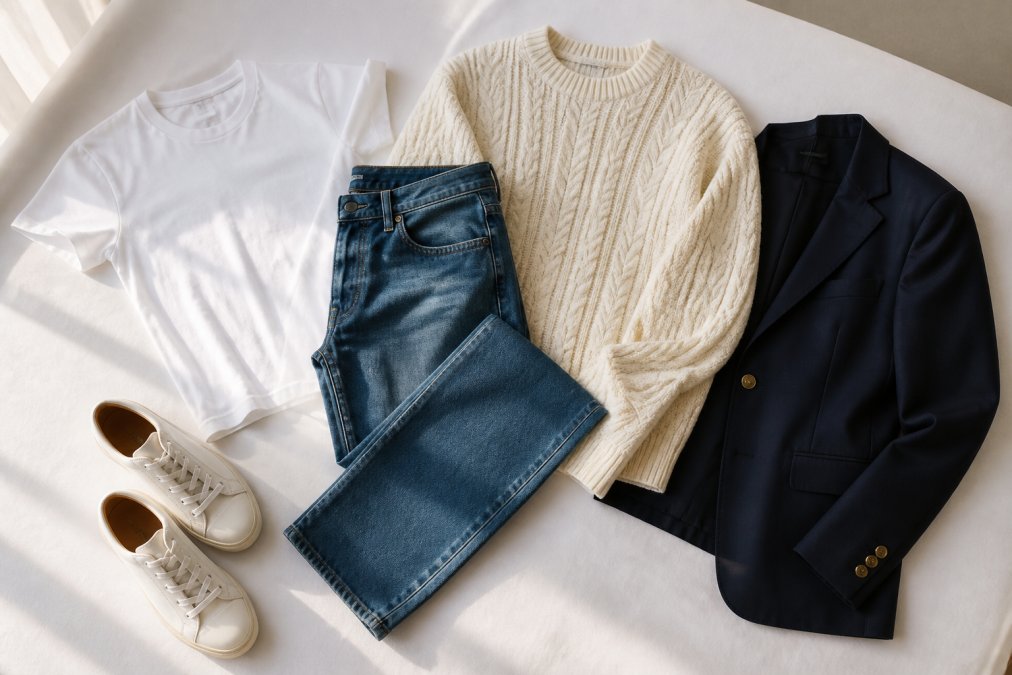
A capsule wardrobe isn't about owning fewer clothes, it's about owning pieces that work together. Every item should pair with at least three others. Start with neutral colors and classic silhouettes, then add personality through accessories and layering.
Tops and layering pieces
A white crew-neck tee is non-negotiable. Buy quality cotton, fitted but not tight. It should survive 100+ washes without losing shape. A neutral sweater in cream, gray, or camel works for layering and standalone wear. Add a button-down shirt in white or light blue that transitions from casual to work-appropriate. A lightweight cardigan in a neutral tone provides layering without bulk. Include one striped tee in navy and white for versatility.
Bottoms for work and casual
Dark jeans are the anchor. Invest in a quality pair with a small elastane percentage for shape retention. Medium to dark indigo holds color better than black. Neutral trousers in black, gray, or khaki round out work options. A simple A-line or pencil skirt in black or gray works for work and casual. If you prefer dresses, a simple black sheath dress and a neutral wrap dress cover most occasions.
Outerwear and transitions
A neutral blazer in navy, gray, or black pulls together any outfit. It should fit your shoulders properly. A lightweight jacket for transitional seasons extends your wearing seasons. For cold climates, a quality winter coat is essential. This is an investment piece worth buying from a specialized outerwear brand.
Calculating Cost-Per-Wear for Smart Purchases
Cost-per-wear removes emotion from buying decisions. Divide the price by the number of times you'll realistically wear it. A $200 coat worn 100 times costs $2 per wear. A $50 coat worn 20 times costs $2.50 per wear. The expensive coat wins.
Be honest when estimating realistic wear. For everyday basics, estimate higher. A white tee worn twice a week for two years is 100+ wears. For special-occasion pieces, estimate conservatively. A formal dress worn twice a year for five years is 10 wears total.
Where to Buy High Quality Wardrobe Staples
Finding retailers that consistently deliver quality requires knowing what to look for. Some brands prioritize transparency about their production.
Ethical and sustainable brands
Brands that disclose their supply chain tend to care about quality. Some brands publish factory details and cost breakdowns for each product. Some partner with ethical factories that meet specific labor and environmental standards.
Other providers offer luxury materials at accessible prices by cutting out middlemen.
Some brands take transparency further, publishing the complete cost breakdown, environmental impact, and factory details for every garment. Their permanent collection model means pieces don't go out of stock.
Size-inclusive and fit-focused retailers
Some brands build their entire brand around fit inclusivity, offering a wide range of sizes and programs that let you exchange items for a different size if your body changes within a year.
Other providers focus on domestically-made staples with vintage inspiration, which typically means better quality control.
Some specialize in seasonless essentials and well-fitting denim, with pieces designed to transition between seasons and occasions.
Hoss Style & Co LLC offers a curated collection of modern fashion designed for everyday versatility. Every item is chosen to work with others in the collection. The secure checkout and reliable tracked shipping remove friction from the buying process.
Investment Pieces vs. Affordable Basics: Finding Your Balance
Not every item needs to be expensive. The key is knowing which pieces justify premium pricing and which don't.
Investment pieces are items you'll wear 100+ times over multiple years. They should be in neutral colors and classic silhouettes. A quality coat, tailored blazer, well-fitting jeans, and premium sweaters earn their higher prices through longevity. These pieces should be in natural fibers or high-quality blends.
Affordable basics work for items with shorter lifespans or higher wear rates. Undershirts, workout clothes, and seasonal pieces don't need premium pricing. The key is still quality, affordable doesn't mean disposable.
Build your capsule with investment pieces in neutral colors and classic cuts. Add affordable basics for layering and variety. Accessories are where you can experiment with trends without breaking the budget.
Finding high quality wardrobe staples requires patience and a willingness to think long-term. When every piece coordinates with others, getting dressed becomes effortless. When pieces last years instead of months, you save money despite higher upfront costs.
Start with the capsule essentials in neutral colors and natural fibers. Buy from retailers that prioritize quality and transparency. Use cost-per-wear to justify investment pieces. At Hoss Style & Co LLC, we've curated a collection designed around this exact philosophy, pieces that work together, feel good to wear, and stand up to real life. Shop All to explore a wardrobe foundation that actually works.
| Wardrobe Essential | Best Fabric | Cost-Per-Wear Target | Realistic Lifespan |
|---|---|---|---|
| White crew tee | Long-staple cotton or cotton blend | Under $1.50 | 2-3 years |
| Dark jeans | Cotton with 5% elastane | $0.50-$1.00 | 3-5 years |
| Neutral sweater | Merino wool or quality cotton blend | $0.75-$1.25 | 3-4 years |
| Blazer | Wool or wool blend | $1.00-$1.50 | 5-7 years |
| Button-down shirt | Structured cotton | $0.75-$1.25 | 3-5 years |
| Winter coat | Wool or technical blend | $1.50-$2.50 | 5-7 years |
Frequently Asked Questions
What are considered wardrobe staples?
Wardrobe staples are versatile, timeless pieces that form the foundation of your closet and can be mixed and matched across seasons. These include white and neutral t-shirts, well-fitting jeans, neutral sweaters, crisp button-downs, and classic outerwear. High quality wardrobe staples transcend trends and work for multiple occasions, from casual to professional settings. They're designed to last years, not seasons, making them worth the investment.
How do you identify high-quality clothing when shopping?
Look for several indicators: examine seams for tight, even stitching with no loose threads; check fabric weight and feel for substantial, natural materials; inspect hems and closures for precision finishing; and look for reinforced stress points like pocket corners. Read care labels to understand fabric composition and maintenance requirements. Feel the fabric in your hands, quality garments have a substantial weight and smooth texture. Check for consistency in color and pattern, and verify that tags are sewn securely rather than glued.
Is it worth investing in expensive wardrobe basics?
Yes, when calculated by cost-per-wear. A $150 sweater worn 100 times costs $1.50 per wear, while a $40 sweater worn 10 times costs $4 per wear. High quality pieces last longer, maintain their shape and color, and often fit better, reducing returns and replacements. Quality basics also transition across seasons and styles, meaning you'll reach for them repeatedly. The key is choosing pieces you genuinely love and will wear frequently, not just expensive items for the sake of price.
What fabrics should I look for in high-quality clothing?
Prioritize natural fibers like organic cotton, merino wool, and linen for their durability and breathability. Organic cotton resists pilling and fading better than conventional cotton. Merino wool regulates temperature, resists odors, and maintains shape through repeated wear. Linen becomes softer with washing. Quality blends like cotton-linen or wool-silk combinations offer performance benefits. Avoid pure synthetic fabrics for staples; they pill easily and don't age well. Check labels for fabric composition, garments with 80% natural fiber content and proper weight (measured in GSM or ounces per yard) indicate better longevity.
This article was written using GrandRanker


