

Table of Contents
- Why Comfortable Professional Attire for Women 2026 Is Easier to Build Than Ever
- Business Casual Outfits for Women 2026: Formulas That Work All Day
- Capsule Wardrobe for Work 2026: The 3-3-3 Rule and What to Buy
- Comfortable Work Shoes for Women: What to Look For
- Fabric and Fit: The Real Secret Behind Comfortable Professional Attire
- Inclusive Sizing, Climate, and Care: What Most Guides Skip
- Conclusion: Build a Work Wardrobe That Feels as Good as It Looks
- Frequently Asked Questions
Last Updated: September 12, 2026
Why Comfortable Professional Attire for Women 2026 Is Easier to Build Than Ever
Comfortable professional attire for women 2026 holds its polish through a nine-hour day without pinching, sagging, or a mid-afternoon shoe swap. The shift is fabric: soft-shoulder tailoring, stretch-enhanced wovens, and pull-on silhouettes now read as office-ready, so you no longer trade comfort for credibility.
This guide from Hoss Style & Co LLC covers formulas, a capsule framework, footwear criteria, and the fabric details that decide whether a piece survives a full week of wear.
The core argument: comfort in professional dress is a construction problem, not a style compromise. Get the fabric and fit right, and the polish follows.
Business Casual Outfits for Women 2026: Formulas That Work All Day
The most reliable business casual outfits for women 2026 follow a three-part formula: a structured topper, a soft base layer, and a bottom with real stretch. That handles temperature swings, long meetings, and the walk between buildings without looking rumpled by 3 p.m.
Three formulas worth building around:
- Soft-shoulder blazer + silk blouse or fine knit + tailored trousers. The blazer carries the formality; everything under it stays comfortable.
- Structured vest + longline shirt + wide-leg pants. A vest reads dressy professional while leaving your arms free and your shoulders unconstrained.
- Knit midi dress + tailored blazer + low heel. One piece, two layers, zero waistband pressure.
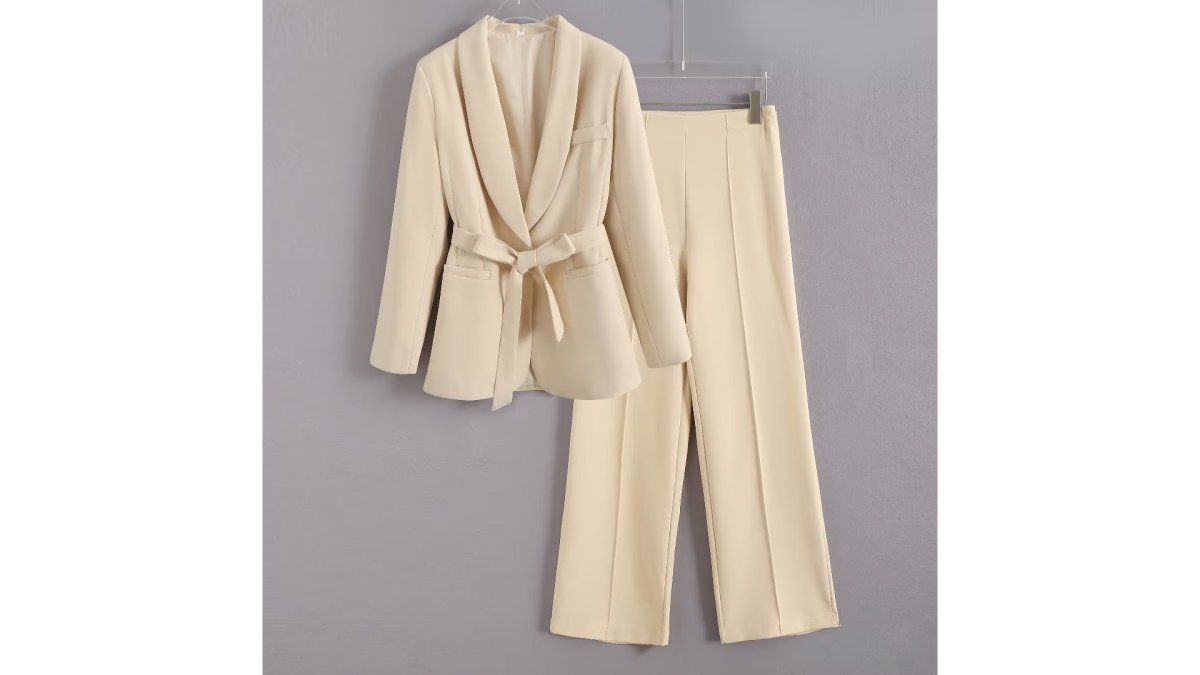
Where the formula breaks down is fabric weight: a heavy blazer over a lightweight knit traps heat, and a linen bottom with a wool topper looks mismatched. Match weights to the season and the formula holds.

Capsule Wardrobe for Work 2026: The 3-3-3 Rule and What to Buy
A capsule wardrobe for work 2026 works best on a 3-3-3 structure: three bottoms, three tops, three toppers, all interchangeable, 27 combinations from nine pieces, enough for a full work rotation with room for laundry.
Here is how to fill each slot:
- Bottoms: one tailored trouser, one wide-leg pant, one knit or modal pull-on style
- Tops: one silk or satin blouse, one fine-gauge knit, one crisp button-down
- Toppers: one structured blazer, one longline cardigan or vest, one soft-shoulder jacket
Build the base in neutral tones, then add color through one accent layer. High-waisted and pull-on cuts both work; pick whichever you will actually reach for at 7 a.m.
Why 3-3-3 Works (and Where the Math Breaks)
The rule is a combinatorics shortcut: nine pieces that all match produce 27 outfits, but only if every top works under every topper and over every bottom. Add a top that pairs with one bottom and you have not added a piece, you have added a single outfit and a coordination problem. Nine pieces that all talk to each other beat fifteen that only half do.
Build the capsule in three phases rather than buying all nine at once:
- Phase one (weeks 1-4): one bottom, one top, one topper, the pieces you reach for most. Wear them hard and note where they pinch, gap, or wrinkle.
- Phase two (weeks 5-12): add the second of each slot, choosing fabrics that solve the problems phase one exposed (a lighter topper for warm offices, a stretchier bottom for long sitting days).
- Phase three (month 4 onward): fill the third slot with the piece that extends your range, the one that handles your least-common work situation, whether a client presentation or a travel day.
Fitting the Capsule to Your Body, Not the Other Way Around
Most capsule guides assume one body type. The framework only pays off if each slot is cut for you, so treat the list as a template and adjust the construction:
- Petite frames: a longline blazer or cardigan can swallow your proportions. Look for toppers that hit at or just above the hip bone, and choose a wide-leg pant with a higher rise so the leg line reads long. A knit midi dress often needs hemming, budget for it.
- Tall frames: standard longline toppers can read short, and wide-leg pants can hit above the ankle. Look for tall-specific inseams or a "long" length option, and favor a duster-length cardigan.
- Plus-size frames: the risk is trading structure for stretch. A plus-size blazer should still have a defined shoulder seam and a real closure, not a pull-on knit pretending to be tailoring. Modal and ponte knits hold shape without digging, but check that the waistband is constructed, not just elastic.
- Straight and mid-size frames: the common failure is sizing down to fake structure. If a piece gaps at the back or strains across the hips, it is the wrong size, not the wrong body.
What to Buy First (and What to Skip)
Starting from zero, spend the most on the pieces that touch your skin longest: the bottom you sit in and the top you wear against your torso. Toppers are the easiest slot to buy well at a lower price point, since a soft-shoulder jacket or longline cardigan needs less fabric engineering than a trouser that must hold a crease through a nine-hour day.

Skip at first: trend-driven accent pieces, anything requiring a specific undergarment, and any fabric that needs dry cleaning after every wear. A capsule is a rotation, and a piece that cannot survive a normal laundry cycle will not survive the rotation.
The Federal Trade Commission's guidance on clothing care labels is worth knowing here, since care instructions determine whether a piece survives a year of rotation or pills by month three.
Comfortable Work Shoes for Women: What to Look For
Comfortable work shoes for women come down to four specs: a heel under two inches, a cushioned sole, a wide toe box, and a breathable material (aofas.org). Everything else is preference.
What to check before you buy:
| Feature | What to Look For | Why It Matters |
|---|---|---|
| Heel height | Under 2 inches, block or stacked | Distributes weight across the foot |
| Toe box | Rounded or square, room to spread | Prevents pinching on long days |
| Sole | Cushioned, flexible at the ball | Reduces fatigue on hard floors |
| Upper | Leather, knit, or breathable mesh | Manages heat and moisture |
| Closure | Adjustable strap or laces | Accommodates swelling |
A common mistake is buying shoes that fit perfectly at 8 a.m. Feet swell through the day, so shop in the afternoon and leave a little room. Coming from years of heels, expect the first week in flats to feel strange, then better.
Fabric and Fit: The Real Secret Behind Comfortable Professional Attire
Fabric decides comfort more than cut. A stretch-enhanced woven trouser in a modal or polyester-spandex blend moves with you; the same silhouette in a stiff, low-stretch fabric fights you all day.
What to look for on the label:
- Modal and cotton blends for softness and breathability in trousers and knits
- Polyester-spandex for structure that still stretches, useful in wide-leg pants
- Lightweight polyester for blazers that hold a tailored line without weight
- Knit fabrics for dresses that skim rather than cling
Fit follows the same logic. Longline cuts and soft-shoulder tailoring flatter more body types than sharply padded shoulders, and a defined waist, whether by tie, cinch, or seam, keeps a relaxed silhouette looking intentional rather than oversized.
Inclusive Sizing, Climate, and Care: What Most Guides Skip
Most workwear guides assume one body type, one climate, and a dry cleaner on standby. This section covers the fit, climate, and care mechanics that decide whether a work wardrobe actually lasts.
Inclusive Sizing and Fit: Read the Chart, Not the Label
Generic S-XL labels tell you almost nothing. What matters is whether a brand publishes real measurements, bust, waist, hip, inseam, rise, and whether they are taken on the garment laid flat or on a body. Mixing the two is the most common reason an online order fits wrong.
A practical method: measure a piece you already own and like, lay it flat, and compare those numbers to the brand's flat measurements. If the brand only publishes body measurements, add ease, typically 1-2 inches at the bust and hip for a tailored fit, more for a relaxed one. If the numbers do not line up, the size is wrong regardless of the tag.
Fit challenges differ by frame, and the fixes are construction-level, not styling-level:
- Petite: the issue is proportion, not width. A regular-size blazer's waist seam can land at the hip, and a standard inseam can pool at the ankle. Look for petite-specific patterns or a "short" length, and expect to hem knits.
- Tall: sleeves end above the wrist and rises sit too low. Tall-specific inseams and long-length toppers solve most of it; a tailor can add length to a hem but rarely to a shoulder.
- Plus-size: the trap is a garment that stretches everywhere and supports nowhere. A plus-size blazer should still have a defined shoulder seam, a real closure, and a lining that does not twist. Stretch is a comfort feature, not a substitute for structure.
- Mid-size and straight: sizing down to fake a sharper fit pulls at the shoulders and waist within an hour and makes any fabric look cheap.
The FDA's guidance on textile and apparel labeling explains what sizing and fiber information labels are required to carry, which helps you compare across brands when the marketing copy is vague.
Climate-Specific Professionalism
Comfort is climate-dependent, and a wardrobe that works in one region can fail in another. The fix is fabric weight and layering, not formality.
Hot and humid. Linen, lightweight cotton, and fine-gauge knits move heat and moisture better than wool blends. A structured vest replaces a blazer without insulation, and an open-weave or unlined jacket reads professional while letting air through. Avoid heavy polyester suiting, it traps moisture and shows it.
Cold and dry. Layering does the work: a knit base layer, a blazer or vest, and a long coat cover both a commute and an arctic office thermostat. Wool and wool blends hold warmth without bulk, and a mid-weight knit under a blazer beats a heavy blazer over a thin blouse.
The office-thermostat problem. Many offices run cold in summer and warm in winter, the opposite of the weather outside. The answer is a removable layer (longline cardigan, vest, or lightweight scarf) you can shed or add without changing the outfit underneath.
Maintenance and Care for Professional Fabrics
High-quality fabrics stay professional longer with a few fiber-specific habits:
- Wool and wool blends: brush rather than wash, air between wears, and steam instead of ironing to avoid shine. Dry clean sparingly, over-cleaning breaks down the fiber.
- Silk: hand wash cold with a gentle detergent or dry clean, never wring, and dry flat away from direct sun. Hang on a padded hanger once dry.
- Linen: machine wash cold, tumble low or line dry, and embrace the crease, pressing linen flat fights its nature. A light steam relaxes it enough for the office.
- Knits: wash inside out in cold water, dry flat rather than hanging, and fold to avoid shoulder stretch.
- Blazers: hang on a shaped hanger, not a wire one, and give them a day to recover between wears. Rotate shoes so each pair dries fully.
These habits extend a work wardrobe further than any single purchase, the difference between a capsule that lasts three years and one that looks tired in six months.
Sustainable and Ethical Workwear
Buying fewer, better pieces and caring for them properly is the most practical sustainability move available. A nine-piece capsule worn for years outperforms a fast-fashion rotation on cost per wear and waste, and it is the same advice that makes the wardrobe more comfortable, so the ethical and practical choices point the same direction.
When you do buy, look for clear fiber content, construction you can repair (a real seam allowance, a replaceable button, a lining that can be re-stitched), and care instructions you will actually follow. A piece you cannot maintain is not sustainable, whatever the label claims.
Conclusion: Build a Work Wardrobe That Feels as Good as It Looks
The hard part of professional dressing is not finding polished pieces. It is finding polished pieces you can wear for nine hours without thinking about them. That is a construction question, and it has an answer: soft-shoulder tailoring, stretch-enhanced fabrics, a 3-3-3 capsule, and shoes built for the day you actually have.
Hoss Style & Co LLC curates versatile pieces for exactly this problem, from a Women's Blazer and Wide Leg Pants Set that carries a full day in one outfit to Modal Slim Plus Size Trousers built for all-day movement. Every order ships with secure checkout and tracked delivery, so building the wardrobe is as stress-free as wearing it.

Get started with Hoss Style & Co LLC and build a work rotation that feels as good at 5 p.m. as it did at 8 a.m.
Frequently Asked Questions
What are the office wear trends for 2026?
In 2026, office wear leans toward elevated basics: soft-shoulder tailoring, wide-leg pants, longline cuts, and stretch-enhanced fabrics. Color coordination is simpler, with neutral palettes and one accent color. Structured vests and refined knitwear replace stiff suit jackets. The focus is on polished yet comfortable professional attire that moves from desk to dinner without a change. Look for pull-on trousers, silk blouses, and layered separates that feel as good as they look.
How can I balance comfort and professionalism in my work wardrobe?
Start with fabric. Stretch-enhanced modal, cotton blends, and ponte knits hold their shape while letting you move. Choose soft-shoulder blazers over rigid ones and pull-on trousers with a flat front. For shoes, prioritize cushioned insoles and low heels. Build a capsule of five to seven versatile pieces in coordinating colors, then layer with structured vests or cardigans. This approach keeps you office-ready without sacrificing all-day comfort.
What is the 3-3-3 rule for building a capsule wardrobe?
The 3-3-3 rule suggests picking three bottoms, three tops, and three pairs of shoes that all work together. That gives you 27 outfit combinations from nine items. For a work capsule, choose tailored trousers, wide-leg pants, and a midi skirt for bottoms; a silk blouse, knit top, and button-down for tops; and loafers, flats, and low heels for shoes. Stick to two or three colors so everything coordinates. It is a budget-friendly way to build a versatile professional wardrobe.
What are the best fabrics for comfortable professional clothing?
Modal cotton blends offer softness and stretch, making them ideal for trousers and skirts. Polyester-spandex mixes provide breathability and shape retention for wide-leg pants. Linen works well in warm climates but wrinkles, so blends are better for office settings. Knit fabrics like ponte and jersey drape nicely and resist creasing. Look for fabrics with a bit of give, they keep you comfortable through long meetings and commutes without looking sloppy.
How do I transition my wardrobe to 2026 professional trends?
Start by swapping one stiff blazer for a soft-shoulder style and one pair of skinny pants for wide-leg or tailored trousers. Add a structured vest or longline cardigan for layering. Replace worn-out shoes with cushioned loafers or low-block heels. Introduce one or two new colors that coordinate with your existing pieces. You do not need to replace everything at once; a few strategic updates will make your workwear feel current and comfortable.


