

Table of Contents
- What Effortless Style Actually Means for Working Adults
- Build Your Capsule Wardrobe for Work
- Business Casual Outfit Formulas That Work Every Day
- Best Fabrics for Low-Maintenance Workwear
- Time-Saving Morning Routines for Professionals
- Elevate Basics and Maintain Professional Polish
- Why Intentional Dressing Saves Time and Money
- Conclusion
Last Updated: August 10, 2026
What Effortless Style Actually Means for Working Adults
Effortless style for busy professionals isn't about having unlimited time or a six-figure wardrobe budget. It's about building a system where getting dressed takes minutes, not mental energy. The difference between someone who looks put-together every day and someone who doesn't usually comes down to intentional choices made once, not repeated decisions made every morning.
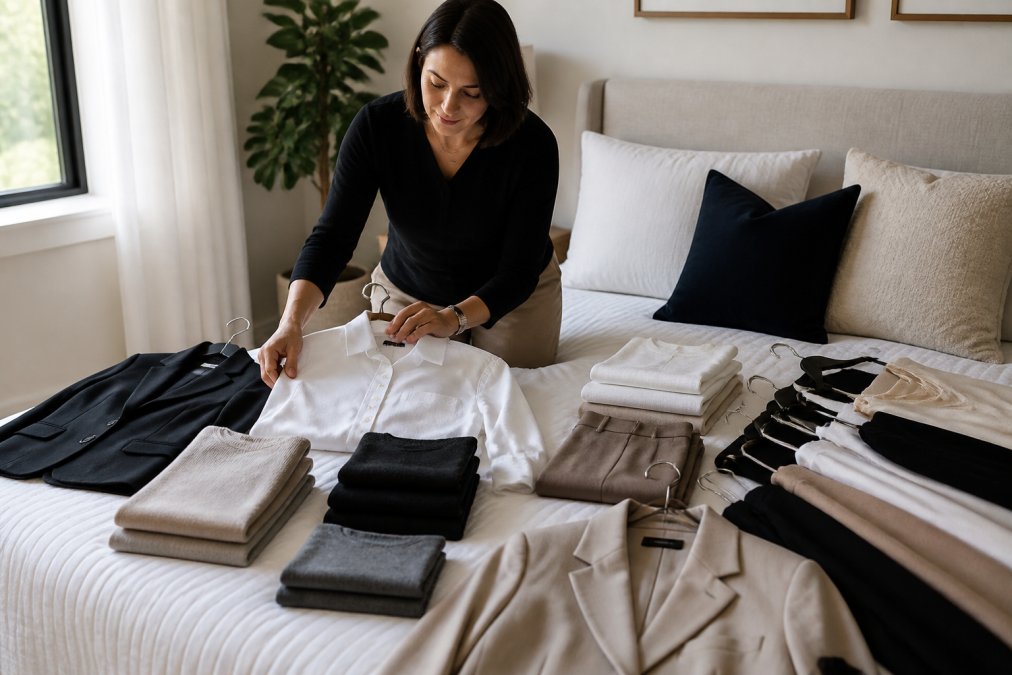
At Hoss Style & Co, we've observed that professionals who master effortless style share one trait: they've eliminated decision fatigue from their closets. They own fewer pieces, but every piece works with everything else. They know their formulas. They understand fit. They maintain their clothes properly so nothing falls apart mid-week.
This isn't minimalism for its own sake. It's strategic simplification. The goal is to look professional, feel confident, and spend zero mental bandwidth on what you're wearing. That frees up energy for the work that actually matters.
Build Your Capsule Wardrobe for Work
A capsule wardrobe for work is a curated collection of 20-40 pieces that mix and match endlessly. Every item serves multiple purposes. Every piece transitions from business casual to after-work settings without looking out of place. The size varies by your lifestyle, but the principle stays the same: intentional over abundant.
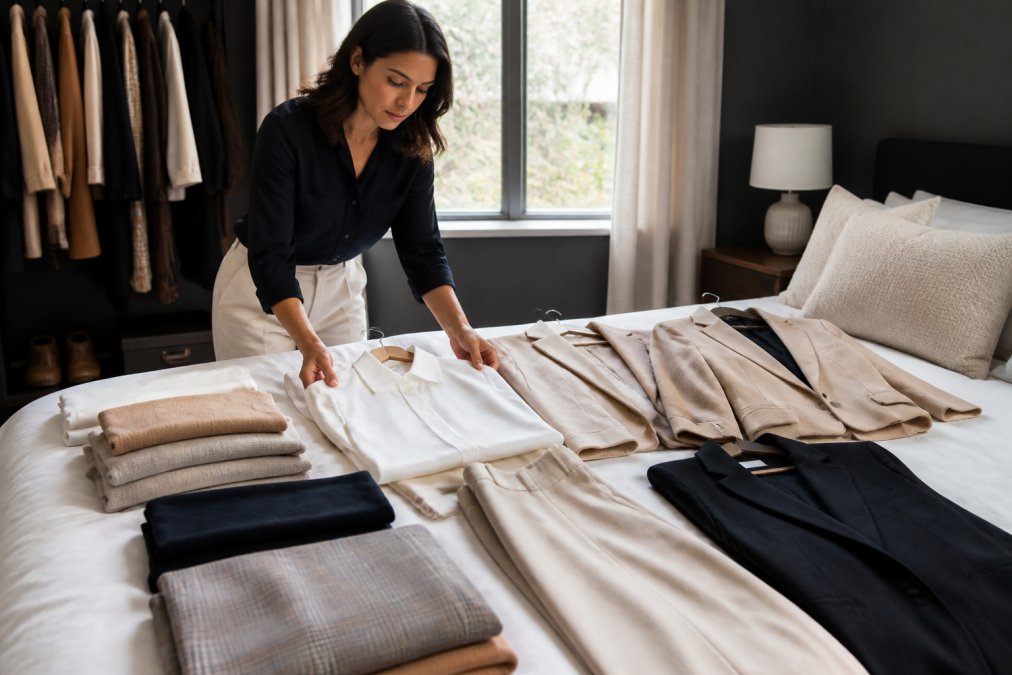
Essential Wardrobe Staples That Do the Heavy Lifting
The foundation of any work capsule wardrobe rests on neutral basics that anchor every outfit. A crisp white shirt works in the office and at dinner. A tailored blazer elevates jeans or dresses. Dark-wash jeans bridge business casual and weekend wear. These aren't trendy pieces, they're the infrastructure of looking effortlessly put-together.
Beyond these anchors, add structured pieces that define silhouette without requiring constant adjustment. A well-fitted pair of trousers in navy or black works across seasons. A simple crew-neck sweater in gray or cream layers under blazers and stands alone. These wardrobe staples do the heavy lifting because they solve the core problem: you need pieces that work together, fit properly, and don't demand constant styling.
The psychology here matters. When your basics are solid, you can take small risks with texture or color without feeling off-balance. A patterned scarf, a structured handbag, or a single statement piece becomes an accent rather than a gamble.
The Role of Proper Fit and Tailoring
Fit determines whether a piece looks effortless or sloppy. A $30 shirt that fits perfectly beats a $300 shirt that bunches at the shoulders. This is where many professionals waste money: they buy expensive pieces that don't fit their actual body, then never wear them.
Proper fit means the garment skims your body without pulling or sagging. Shoulder seams should sit at your actual shoulder. Sleeves should hit your wrist bone. Trouser length should break slightly at the top of your shoe. Blazer length should cover your hip.
Tailoring transforms fit from acceptable to excellent. A professional tailor can take in seams, shorten hems, and adjust waistbands in ways that make off-the-rack pieces look custom. The investment is modest, usually $15-40 per alteration, and the payoff is enormous. Clothes that fit perfectly require less styling, photograph better, and make you feel more confident.
Business Casual Outfit Formulas That Work Every Day
Business casual outfit formulas eliminate the daily decision. Instead of asking "What should I wear?" you follow a proven template. These formulas work because they're based on proportions and color relationships that simply function together.
The simplest formula: neutral bottom plus neutral top plus one accent piece. Dark trousers plus cream sweater plus structured blazer. This works Monday through Friday without variation. Add a different scarf or swap the blazer for a cardigan, and you have five distinct outfits from three pieces.
Another reliable formula: tailored trousers plus patterned top plus neutral layer. The pattern carries visual interest, the neutral layer keeps it professional, the trousers ground everything in structure. This formula works across seasons and body types because it prioritizes proportion over trend.
The key to making these formulas work is understanding your personal color palette. Most professionals look best in either warm or cool tones. Stick within your palette and pieces work together automatically. Mix palettes and even well-designed pieces feel discordant.
Best Fabrics for Low-Maintenance Workwear
Fabric choice determines whether your clothes last two years or five, and whether they need constant maintenance or minimal care. Low-maintenance fabrics resist wrinkles, hold their shape, and don't pill or fade easily.
Cotton blends outperform pure cotton for workwear. A 65% cotton, 35% polyester blend resists wrinkles better than 100% cotton while still breathing and feeling natural. Linen looks beautiful but wrinkles aggressively, reserve it for casual settings or accept the wrinkled aesthetic as intentional.
Wool is the gold standard for structure. Wool trousers hold their crease, resist wrinkles, and develop character over time rather than looking worn. Merino wool, specifically, resists odor and can go longer between washes. The trade-off is cost and care requirements, wool needs proper storage and occasional professional cleaning.
Synthetic blends like nylon or spandex mixed into natural fibers improve durability and stretch recovery. A blazer with 5% spandex maintains its shape better than 100% wool. Stretchy trousers move with your body throughout the day, reducing the need for constant adjustment.
Avoid pure synthetics for workwear unless you prioritize wrinkle-resistance above all else. They don't breathe as well, they can pill more easily, and they often feel less premium even when they cost the same.
Time-Saving Morning Routines for Professionals
A time-saving morning routine for professionals must account for the reality of hybrid work: most US professionals now spend 2-3 days per week in video calls from home and 2-3 days in physical offices. This split requires a different approach than traditional office-only dressing.
The most efficient strategy is a two-tier system: "camera-ready" pieces for video calls and "full-body" pieces for in-office days. This eliminates the mental load of deciding which outfit works for which setting.
The Two-Tier Wardrobe for Hybrid Work
For video calls, you need only pieces that photograph well from the shoulders up. A structured blazer in navy, charcoal, or camel works on camera because it creates clean lines and reads as professional. A solid-colored or subtly patterned blouse in white, cream, or a jewel tone flatters skin tones on video. Avoid busy patterns, thin stripes, or high-contrast checks, they create visual noise on camera and can cause moiré effects.
The efficiency gain: you can wear comfortable, worn-in sweatpants or leggings below the camera line on video calls. This means you can shower, throw on a professional top and blazer, and be camera-ready in three minutes. No need to find matching trousers or worry about whether your full outfit coordinates.
For in-office days, you follow your standard capsule wardrobe formula. But because you've already worn your blazer and blouses on video calls earlier in the week, you're not adding new pieces to your laundry load. You're simply extending the wear of pieces you've already styled.
The 3-3-3 Rule for Quick Decision-Making
The 3-3-3 rule is a decision framework that eliminates outfit paralysis. You identify three bottoms that work with everything in your closet, three tops that work with everything, and three layers or accessories that complete outfits. From these nine pieces, you can create dozens of combinations.
For hybrid professionals, adapt this to: three camera-ready blazers, three camera-ready tops, and three pairs of in-office bottoms. This ensures that on any given day, whether you're on video or in the office, you have a proven combination ready.
This works because constraints actually increase efficiency. When you have forty options, choosing takes longer. When you have three bottoms and three tops, you're choosing from nine combinations instead of 120. The decision happens faster, and the outfit works because you've already vetted every combination.
Outfit Prep Strategies That Eliminate Morning Stress
Outfit prep strategies range from simple to structured. The simplest: lay out tomorrow's outfit tonight. This takes ninety seconds and removes the largest source of morning friction. For hybrid workers, this means checking your calendar first, if tomorrow is a video-call day, you lay out a camera-ready top and blazer. If it's an in-office day, you lay out your full outfit.
A more structured approach: designate specific outfits for specific days based on your calendar. If your company has "office days" on Tuesdays and Thursdays, you plan full outfits for those days. Mondays, Wednesdays, and Fridays are video-call days, so you plan only camera-ready pieces. This removes decision-making entirely. You wake up knowing exactly what you're wearing and whether you need full-body coordination.
The most advanced approach: batch your outfit planning weekly. Sunday evening, you review your calendar for the week ahead. You identify which days are in-office and which are video-call days. You plan five outfits accordingly, camera-ready pieces for video days, full capsule combinations for office days. You lay out each outfit in sequence. This takes twenty minutes once per week instead of five minutes daily, and it accounts for the actual structure of your work week rather than assuming every day is the same.
Elevate Basics and Maintain Professional Polish
Elevating basics means transforming simple pieces into polished outfits through intentional styling. A plain white shirt becomes professional when paired with tailored trousers and a structured blazer. The same shirt becomes casual when paired with jeans and a cardigan. The piece doesn't change, the context does.
Professional polish comes from consistency, not complexity. Shoes that are clean and well-maintained matter more than expensive shoes. Hair that's neat matters more than an elaborate style. Nails that are clean and filed matter more than elaborate manicures. The pattern: small details matter more than big statements.
Texture Mixing and Color Palette Strategy
Texture mixing prevents outfits from looking flat or boring. A smooth silk blouse under a knit sweater creates visual interest. A matte blazer over a shiny shell top adds dimension. Pairing smooth trousers with a textured sweater prevents a one-note appearance.
The rule: mix at least two textures in every outfit. Smooth plus knit. Matte plus shiny. Structured plus fluid. This creates visual interest without requiring pattern or color variation.
Color palette strategy means choosing colors that work together and with your skin tone. Warm palettes include cream, warm gray, camel, olive, and warm red. Cool palettes include white, cool gray, navy, black, and cool red. Staying within one palette makes everything work together automatically.
Garment Maintenance and Steaming Routines
Garment maintenance determines whether clothes look new or worn. The most impactful practice is steaming instead of washing. A steamer removes wrinkles, refreshes fabric, and kills odor-causing bacteria without the wear and tear of washing.
A basic steaming routine: steam your outfit the night before wearing it. This takes five minutes and removes wrinkles, dust, and odor. Most clothes can go 3-4 wears between washes if you steam between wears.
Proper storage prevents wrinkles before they start. Hang blazers, dresses, and trousers on quality hangers. Fold sweaters to prevent stretching. Store everything in a cool, dry space. Invest in cedar blocks or lavender sachets to prevent odor and moths.
For specific fabrics: wool benefits from occasional professional cleaning but can go months between washes if steamed regularly. Cotton blends wash more frequently but dry quickly. Delicate fabrics like silk benefit from hand-washing or dry cleaning.
Why Intentional Dressing Saves Time and Money
Intentional dressing saves time because you've made decisions once instead of daily. It saves money because you buy fewer pieces, and every piece gets worn regularly. A capsule wardrobe of 30 well-chosen pieces gets worn far more than a closet of 100 pieces where half never leave the hanger.
The financial benefit compounds over years. You spend less money upfront because you're not buying impulsively. You spend less money on replacements because well-maintained pieces last longer. You spend less money on alterations because you buy pieces that fit properly from the start. The total cost of ownership drops significantly.
The time benefit is immediate. Getting dressed takes minutes instead of twenty minutes of deliberation. You have fewer decisions to make, so you have more mental energy for actual work. You look more polished because every outfit follows a proven formula, not a rushed guess.
Intentional dressing also builds confidence. When you know your pieces work together, when you understand your formulas, when you've invested in proper fit, you feel more confident. That confidence shows. It affects how you carry yourself, how you interact with colleagues, and how you perform in meetings.
Building effortless style for busy professionals requires one upfront investment: time spent designing your system. Once that system is in place, getting dressed becomes automatic. You spend less time, less money, and more mental energy on what matters.
At Hoss Style & Co, we've built our curated collection around this principle. Every piece is selected for versatility, quality construction, and the ability to work across multiple outfits and settings. We understand that busy professionals need clothes that work as hard as they do, pieces that transition from morning meetings to evening events without requiring a wardrobe change. Our commitment to secure checkout and reliable, tracked shipping means you can build your capsule wardrobe with confidence, knowing your pieces will arrive exactly when you need them. Shop our collection and start building the effortless style system that works for your life.
Frequently Asked Questions
What is the 3-3-3 rule for clothes?
The 3-3-3 rule is a time-saving strategy for busy professionals: own 3 neutral-toned basics (like a crisp white shirt, structured blazer, and neutral trousers), 3 accent pieces in complementary colors or patterns, and 3 finishing pieces like belts or jewelry. This formula lets you mix and match quickly without decision fatigue. Combined with proper fit and quality fabrics, you can create multiple professional outfits from a small, intentional wardrobe that actually gets worn.
How do you build a capsule wardrobe for work without overspending?
Start with 5-7 essential wardrobe staples in neutral tones: a crisp white shirt, tailored blazer, dark trousers, neutral skirt or dress, and basic knits. Prioritize quality over quantity, well-made pieces in low-maintenance fabrics like cotton blends and wool last longer and require less maintenance. Add 3-4 versatile accent pieces that coordinate with your basics. Focus on garment fit through tailoring if needed; a perfectly fitted piece in a mid-range fabric outperforms an expensive item that doesn't fit. This approach builds a functional capsule wardrobe that grows sustainably as your budget allows.
What fabrics are best for low-maintenance workwear?
Look for performance blends that resist wrinkles and maintain their shape: cotton-polyester blends, wool-synthetic mixes, and technical fabrics like Tencel or modal. These materials require less steaming and maintain professional polish through a full workday. Avoid 100% linen or delicate silks if you're prioritizing low maintenance. Quality construction matters as much as fabric, double-stitched seams and structured pieces hold their silhouette longer. When shopping, check care labels for 'easy care' or 'wrinkle-resistant' claims, and test how fabric feels after hand-washing to ensure it meets your maintenance preferences.
How can busy professionals save time getting dressed in the morning?
Use outfit formulas and prep strategies: lay out complete outfits the night before, organize your closet by color palette so pieces are visible and coordinate easily, and adopt the 3-3-3 rule for quick combinations. Limit your color palette to 3-4 neutrals plus 2-3 accent colors, this ensures everything works together without mental effort. Invest in quality basics and proper fit so you feel confident quickly. Keep accessories minimal and in one accessible spot. These time-saving morning routines reduce decision-making from 20 minutes to under 5 minutes, freeing up energy for your actual work.
This article was written using GrandRanker


