

Table of Contents
- How to Measure Your Body for Clothing Accurately
- How to Read Size Charts Online and Match Your Measurements
- Understanding Clothing Fabric Composition and Stretch Factor
- Analyze Product Photography and Garment Drape
- Review Customer Feedback and Fit Guides Before Purchase
- How to Avoid Return Shipping Fees and Restocking Charges
- Calculate Cost-Per-Wear and Make Confident Purchase Decisions
Last Updated: August 16, 2026
How to Measure Your Body for Clothing Accurately
Getting accurate body measurements is the foundation of avoiding online clothing returns. Stand straight with arms relaxed and wrap a soft measuring tape snugly around the fullest part of your chest without pulling tight. Measure your waist at the narrowest point just above your hip bones, keeping the tape parallel to the ground. Then measure your hips at the fullest point, usually about 8 inches below your waist.
For pants and shorts, inseam measurement is critical. Wear shoes with a heel height similar to what you'll wear with the garment and measure from your inner thigh to your ankle bone, or have someone help you measure from your crotch seam to the floor.
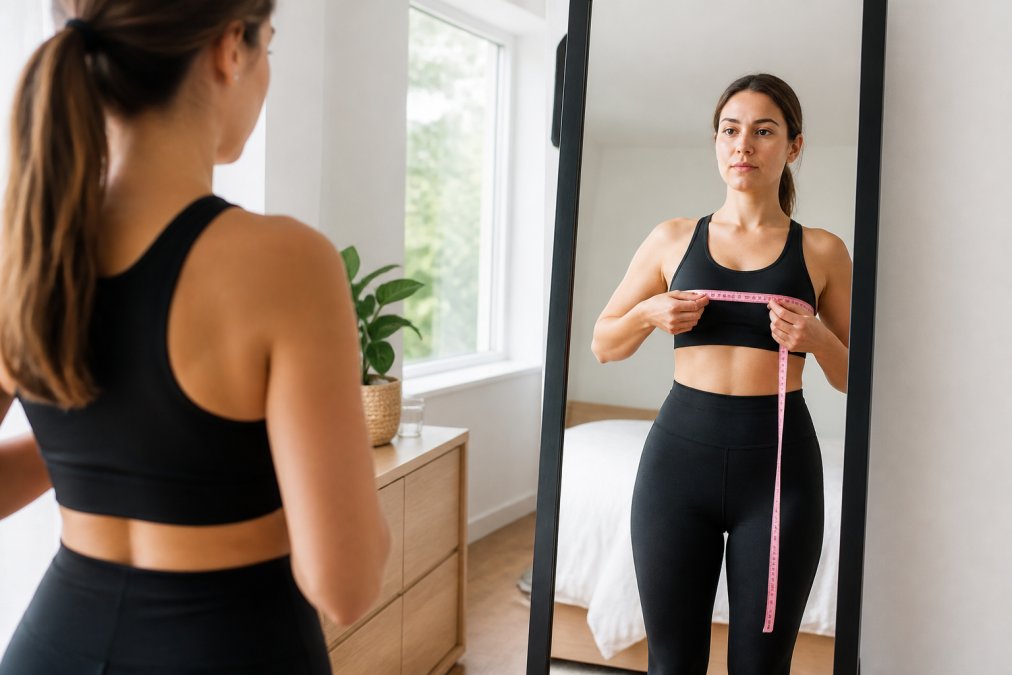
Take measurements on different days since body measurements fluctuate with hydration, time of day, and other factors. Average multiple measurements for your most reliable baseline. Many retailers recommend measuring a garment you already own and love to compare against their size charts. Document your measurements with the date so you can track changes over time.
How to Read Size Charts Online and Match Your Measurements
Size charts aren't universal, a Medium from one brand fits completely differently than a Medium from another. Compare YOUR measurements directly to the numbers listed in the chart, not to the size label. If your bust measures 36 inches and the size chart shows that size Medium fits 35-37 inches in the bust, that's your match.
Pay attention to whether the chart shows garment measurements (actual dimensions as the piece lies flat) or body measurements (what the item is designed to fit). Most reputable retailers specify which type they're showing. Hoss Style & Co provides detailed garment measurements for each piece, which removes guesswork.
Look for fit notes within the size chart. Comments like "runs small" or "generous fit" based on customer feedback are invaluable. If a style runs small, you might size up even if your measurements technically fit the labeled size.
| Measurement Type | What It Tells You | How to Use It |
|---|---|---|
| Garment measurements | Actual dimensions of the piece | Compare to your measurements for true fit |
| Body measurements | What body size the garment fits | Use if you want a specific fit level |
| Fit notes | Customer feedback on sizing | Adjust size choice if garment runs small/large |
| Model height/size | Reference for how item looks worn | Helpful if similar to your proportions |
International sizing requires conversion. A UK size 12 is not the same as a US size 12. Most size charts include conversion guides, but double-check the measurements themselves rather than relying on size letter conversions.
Understand return policies before purchase. Some retailers offer free returns within 30 days, while others charge restocking fees or require you to cover return shipping. At Hoss Style & Co, we commit to reliable shipping with tracking so you know exactly when your order arrives.
Understanding Clothing Fabric Composition and Stretch Factor
Fabric content determines how a garment will fit, feel, and change over time. Natural fibers like cotton, linen, and wool tend to shrink when washed in hot water or dried on high heat. Cotton typically shrinks 3-5% in the first wash if not pre-shrunk. Synthetic fibers like polyester and nylon resist shrinkage but can melt or warp under high heat.
Stretch factor refers to the percentage of spandex or elastane in the fabric blend. A garment with 2% spandex has minimal stretch, while 5-10% spandex provides noticeable elasticity. Higher stretch percentages (15%+) create very form-fitting, flexible pieces. Low-stretch fabrics hold their shape better over time, while high-stretch fabrics may gradually lose elasticity with repeated wear and washing.
Blended fabrics offer compromises. A cotton-poly blend combines cotton's breathability with polyester's durability and wrinkle resistance. The specific ratio matters, 60% cotton, 40% polyester behaves differently from 80% cotton, 20% polyester.
Care instructions on the label tell you how the manufacturer expects the garment to behave. Following care instructions prevents fit changes that turn a good purchase into an unwearable return.
When shopping for items like the Modal Slim Plus Size Trousers from Hoss Style & Co, the fabric composition directly affects fit. Modal fabric is soft and drapes beautifully, with natural stretch properties that adapt to your body without clinging.

Analyze Product Photography and Garment Drape
Product photography reveals how a garment actually drapes on a body, which measurements alone cannot show. Look for multiple photos showing the garment on different body types and from different angles. Front, back, and side views give you a complete picture of silhouette. If the retailer only shows the garment on one body type or from one angle, that's a red flag.
Pay attention to how the fabric sits on the model's body. Does it skim the body or cling tightly? Does it create a defined waist or drape loosely? If the model has a similar body shape to yours, you can predict how the garment will look on you.
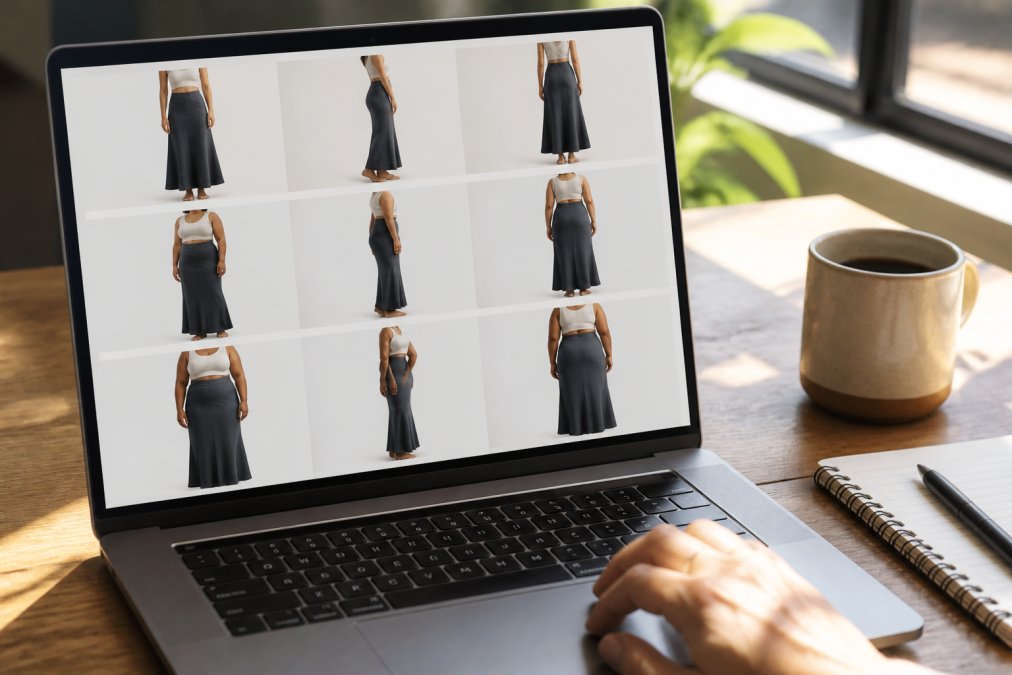
Garment drape refers to how fabric falls and moves. Structured fabrics like denim or canvas hold their shape and create defined lines. Fluid fabrics like jersey or silk drape softly and follow body contours. Seaming and construction details visible in photos affect fit and comfort. High armholes restrict movement, while low armholes feel looser. Side seams placed at the natural side of your body create a flattering line.
Look for fit model information. Most retailers list the height and size of the person wearing the sample. If you're significantly taller or shorter, or wear a different size, the proportions will look different on you.
Customer photos, when available, provide unfiltered reality. Professional product photos are styled and lit to flatter. Real customer photos show how the garment actually looks on diverse bodies in everyday conditions.
Review Customer Feedback and Fit Guides Before Purchase
Customer reviews are your direct line to real-world fit experiences. Before buying, read reviews specifically mentioning fit, sizing, and fabric feel. Look for reviews from people with your body type or similar measurements.
Fit guides provided by retailers synthesize customer feedback into actionable guidance. A fit guide might say "runs small, size up one size" or "true to size, generous in the chest." Hoss Style & Co provides detailed fit information for each piece, reflecting real customer experiences.
Pay attention to specific feedback about stretch and shrinkage. If multiple reviewers mention that a fabric stretched out after a few wears, expect that. If they note significant shrinkage in the wash, factor that into your size choice.
Negative reviews matter as much as positive ones. If 10% of reviewers report that a garment runs small, you now know the risk. Check the review date, recent reviews reflect current product quality and fit.
How to Avoid Return Shipping Fees and Restocking Charges
Return policies vary dramatically across retailers. Some offer free returns within a specific timeframe, while others charge a flat restocking fee (typically 10-20% of the purchase price) on all returns. A few charge actual return shipping, which can run $5-15 depending on package weight and distance.
Read the return policy carefully before checkout. Look for these key details: How many days do you have to initiate a return? Do they cover return shipping, or do you pay? Is there a restocking fee? Are sale items returnable?
Timing matters. If you have only 14 days to return an item and shipping takes 5 days each way, you've used 10 days just in transit. Longer return windows (30-60 days) give you breathing room to try items in real conditions.
Keep your order confirmation and tracking information. Take photos of items before returning them, showing their condition. Some retailers offer return labels in the original packaging or via email. If they don't provide a label, ask about reimbursement for return shipping costs.
| Return Policy Element | What It Means | Impact on Your Decision |
|---|---|---|
| Return window | Days you have to return | Shorter windows = faster decisions needed |
| Return shipping cost | Who pays to ship back | Free returns save money on mistakes |
| Restocking fee | Percentage charged on returns | Higher fees make returns expensive |
| Sale item policy | Whether discounted items are returnable | Final sale items can't be returned |
| Condition requirements | What condition item must be in | Worn items may not be returnable |
Avoid return fees by getting the fit right on the first try. At Hoss Style & Co, we're committed to a smooth shopping experience with reliable, tracked shipping and transparent sizing information.
Calculate Cost-Per-Wear and Make Confident Purchase Decisions
Cost-per-wear divides the price of an item by the number of times you'll realistically wear it, revealing the true cost of ownership. A $50 shirt worn 100 times costs $0.50 per wear. A $200 jacket worn 50 times costs $4 per wear. The same $50 shirt worn only 5 times costs $10 per wear.
This calculation helps you avoid returns driven by buyer's remorse. If you're considering a $40 pair of shorts but you'll only wear them 3 times, you're paying $13.33 per wear. If you'll wear them 30 times, it's $1.33 per wear.
Versatility directly impacts cost-per-wear. A neutral color that pairs with multiple outfits gets worn more often than a trendy color. A style that works for multiple seasons gets more wears than something seasonal.
Quality affects cost-per-wear through durability. A $60 shirt that lasts three years and 100 wears costs $0.60 per wear. A $30 shirt that falls apart after 20 wears costs $1.50 per wear. Hoss Style & Co focuses on versatile pieces designed to last, which improves cost-per-wear even at higher price points.
Calculate cost-per-wear before returning an item. If you bought something at $30 and you've worn it 15 times, that's $2 per wear, which is excellent value. Even if it's not perfect, keeping it might make more financial sense than returning it.
Avoiding online clothing returns comes down to making informed decisions before you buy. Accurate body measurements, understanding size charts specific to each retailer, recognizing how fabric composition affects fit, analyzing product photos for real-world drape, and reading customer feedback create a complete picture of what you're getting. Cost-per-wear analysis completes the foundation.
At Hoss Style & Co, we support that goal with detailed size information, quality fabrics that perform as expected, and reliable shipping that gets your order to you quickly and safely. Shop with confidence, knowing you've done the work to choose pieces that will fit and flatter.
Frequently Asked Questions
How can I accurately measure myself for online clothing shopping?
Use a soft measurement tape and measure key areas: bust (around fullest part), waist (at natural waistline), hips (around fullest part), inseam (inside leg from crotch to ankle), and sleeve length. Wear fitted clothing, stand straight, and have someone help if possible. Record measurements in inches and compare directly to the garment's size chart before purchasing. Inconsistent sizing across brands makes this step essential to avoid returns.
What should I look for in customer reviews to predict fit?
Search reviews for comments about fit accuracy, sizing consistency, and how the garment compares to similar items. Look for reviewers with your body type or size who mention whether they sized up, down, or stayed true to size. Pay attention to feedback on fabric stretch, shrinkage after washing, and how the garment drapes on different body types. This real-world fit feedback is more reliable than generic product descriptions.
How does fabric composition affect whether clothing will fit after washing?
Natural fibers like cotton and linen typically shrink 3-5% when washed in hot water, while synthetic blends shrink less. Modal and stretch fabrics with elastane maintain shape better but may lose elasticity over time. Check the care label and read reviews mentioning shrinkage before purchasing. Understanding textile properties helps you predict how a garment will fit after the first wash, reducing buyer's remorse.
What return policies should I check before buying to avoid restocking fees?
Review the store's return policy for restocking fees, shipping cost responsibility, and return windows before checkout. Some retailers charge 15-30% restocking fees on final sale items. Check whether the company covers return shipping or if you pay. Reliable brands with tracked shipping and clear return policies reduce the financial risk of returns. Always read the policy completely, it's often hidden in fine print.
This article was written using GrandRanker


