

Table of Contents
- Why Finding Clothes That Fit Is Harder Than It Should Be
- How to Measure Your Body for Clothing (Step-by-Step)
- Size vs. Fit: The Difference That Changes Everything
- How to Dress for Your Body Type and Proportions
- The Benefits of Tailoring Clothes and When Alterations Are Worth It
- Fabric, Drape, and Garment Construction: What to Feel Before You Buy
- Virtual Sizing Tools, Tech, and Fit for Chronic Pain or Sensory Needs
- How to Find Clothes That Fit Online: Wardrobe Audit and Buying Checklist
Last Updated: August 4, 2026
Most people have walked out of a fitting room frustrated, holding a garment that fits in one place and fails everywhere else. Knowing how to find clothes that fit is one of the most practical skills you can develop, and it saves far more money over time than chasing sales. This guide from Hoss Style & Co LLC covers the full process: from taking accurate body measurements to understanding garment construction, tailoring, and tech tools that make online shopping less of a gamble. You'll find guidance on fit for non-binary bodies, sensory needs, and how to make alterations a sustainable habit.
Here's what most guides get wrong: they treat clothing size as a proxy for fit. Size is a manufacturer's label. Fit is how a garment interacts with your specific proportions. That distinction changes everything about how you shop.
Why Finding Clothes That Fit Is Harder Than It Should Be
Sizing inconsistency is the core problem. A size 10 in one brand can measure two full inches wider in the chest than a size 10 in another. This isn't a flaw in your body; it's a structural issue in garment manufacturing. Off-the-rack clothing is designed to fit a statistical average, and most people fall outside that average in at least one key measurement.
According to American Association of Textile Chemists and Colorists sizing research, standardized sizing in the U.S. apparel industry has never been enforced as a uniform national standard, which explains why size charts vary so dramatically between brands. You're not trying to find "your size." You're trying to find clothes that fit your actual measurements.
How to Measure Your Body for Clothing (Step-by-Step)
Accurate body measurements are the foundation of every good fit decision. Take them in fitted underwear or a thin base layer, standing naturally, with a soft measurement tape held snug but not tight.
Work through these key fit points in order:
- Chest/Bust: Measure around the fullest part of your chest, keeping the tape parallel to the floor.
- Waist: Measure at your natural waist, roughly an inch above your navel, not where you wear your pants.
- Hips: Measure around the fullest part of your hips and seat, usually 7-9 inches below the natural waist.
- Inseam: Measure from the crotch seam to the floor along the inside of your leg.
- Torso length: Measure from the top of your shoulder to your natural waist.
- Shoulder width: Measure straight across the back from one shoulder seam point to the other.
- Sleeve length: Measure from the shoulder point down to your wrist with a slight bend in the elbow.
- Rise: For pants, measure from the crotch seam to the top of the waistband front.
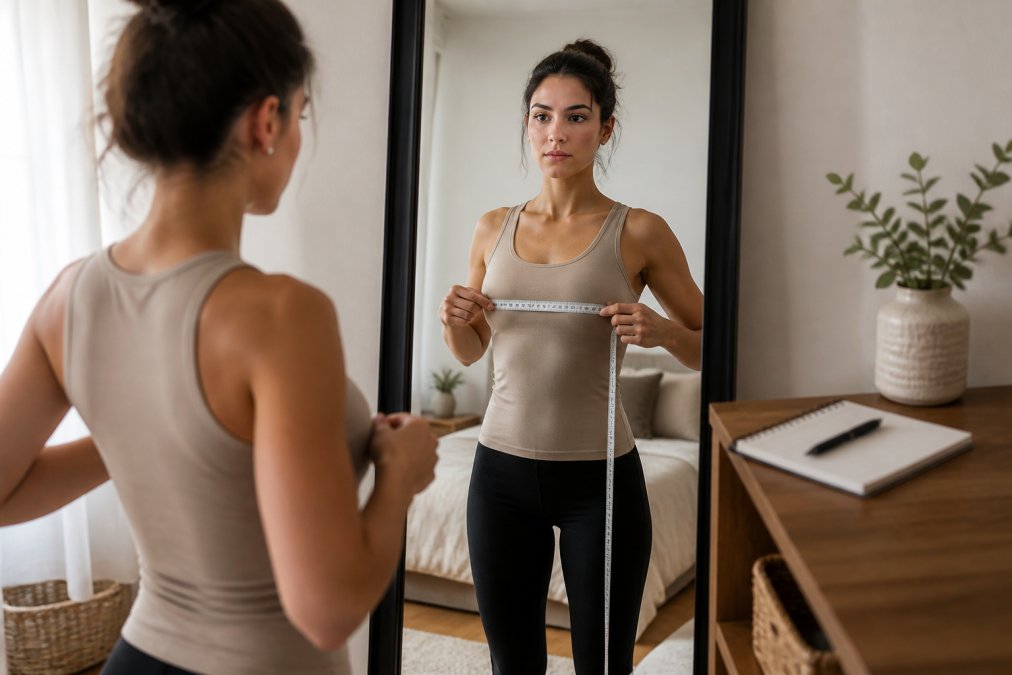
Write these numbers down and keep them accessible on your phone. They're more useful than any size label.
The Key Fit Points Every Measurement Should Cover
The shoulder seam is the single most critical fit point on any top or jacket. If the shoulder seam sits off your shoulder, the entire garment drapes incorrectly, and no amount of tailoring fixes it without a major rebuild.
For pants, the rise is the most underrated measurement. A low rise on a high-torso body creates constant pulling. A high-waisted cut on a short torso can look overwhelming. Getting the rise right is what separates pants that feel comfortable all day from pants you want to take off by noon.
How to Read a Size Chart Without Getting It Wrong
Size charts are only useful if you're comparing the right measurement to the right column. Most charts list finished garment measurements, not body measurements. A chest measurement of 40 inches on a size chart means the garment itself measures 40 inches, which may leave only 2 inches of ease on a 38-inch chest. For a structured blazer, that's fine. For a relaxed weekend shirt, you'd want 4-6 inches of ease.
Always check whether a brand's size chart lists body measurements or garment measurements. When in doubt, size up at the shoulder and alter the rest.
Size vs. Fit: The Difference That Changes Everything
Size is a number or letter assigned by a manufacturer. Fit is how a garment interacts with your body's specific proportions. These two things are not the same, and conflating them is the reason most people end up with closets full of clothes they rarely wear.
Once you know which brands cut for your proportions, shopping becomes significantly faster. You stop trying things on speculatively and start buying with confidence.
How to Dress for Your Body Type and Proportions
The real goal of dressing for your body type is visual balance. You're working with proportions to create a silhouette that feels intentional, not fighting against your natural shape.
Body Shape Analysis: Moving Beyond the Old Categories
The classic body shape categories, pear, apple, hourglass, inverted triangle, rectangle, are useful starting points but flatten nuance. A body shape analysis is more accurate when it focuses on specific proportions: shoulder width relative to hip width, torso length relative to leg length, and where your natural waist sits.
A few practical principles that work across body types:
- Shoulder seam placement defines the foundation of any outfit. Clothes that fit the shoulders correctly look more expensive regardless of price.
- High-waisted cuts visually lengthen the legs and define the waist, which works across many different proportions.
- Hemline placement relative to your widest point matters: ending a hem at the widest part of any body area draws the eye there.
- Fabric with structure holds a silhouette; fabric with drape follows the body's natural lines. Neither is better; they serve different purposes.
Fit for Non-Binary and Gender-Neutral Bodies
Most clothing guides still assume a binary framework, men's or women's sizing, which leaves a significant portion of shoppers without useful guidance. Non-binary and gender-neutral dressing is a fit challenge as much as a style one, because standard size charts are built around gendered assumptions about shoulder-to-hip ratios.
The practical approach: ignore the labeled gender of a garment and focus entirely on measurements. Many people find that men's shirts fit their shoulders better, while women's trousers accommodate their hip-to-waist ratio more accurately. Mixing sizing systems based on fit points rather than gender labels is a legitimate, effective strategy.
The Benefits of Tailoring Clothes and When Alterations Are Worth It
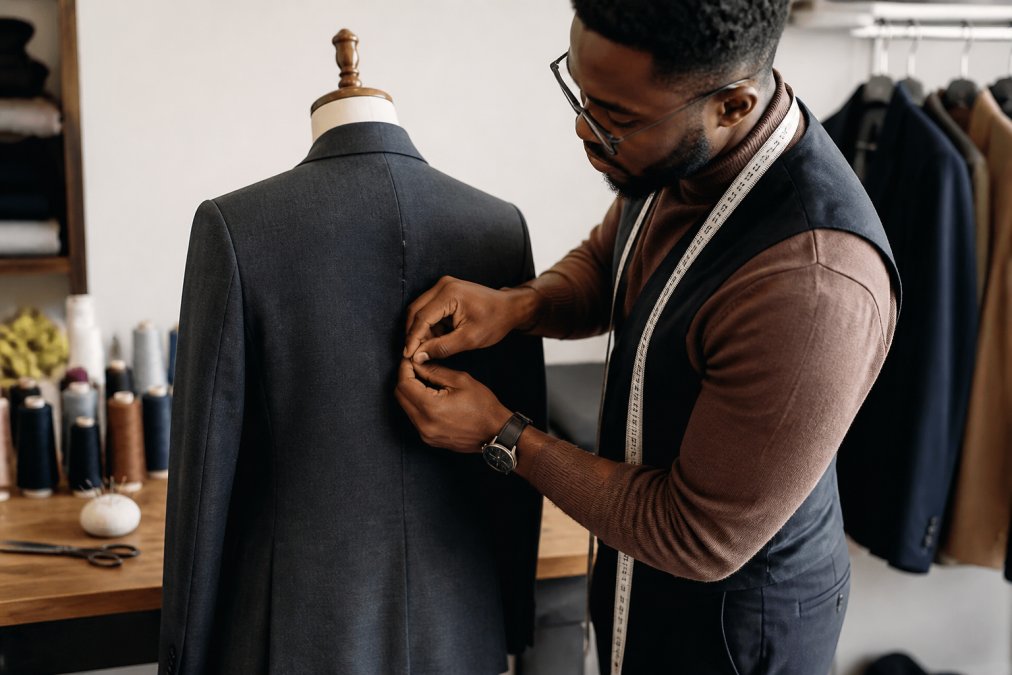
Tailoring is the most underused tool in most people's wardrobes. A $60 blazer that fits perfectly reads better than a $300 blazer that doesn't. Alterations don't have to be expensive to be transformative.
The alterations most worth doing, in order of impact and cost-effectiveness:
- Hemming pants and sleeves: Low cost, high impact, and reversible.
- Taking in the waist on trousers: Fixes the most common fit problem in off-the-rack pants.
- Tapering a shirt or jacket body: Removes excess fabric through the torso for a cleaner line.
- Shortening a jacket body: Adjusts proportions for shorter torsos.
The alterations rarely worth attempting on cheap garments: resetting sleeves, restructuring shoulders, or moving button placings. These require significant labor and often cost more than the garment.
Sustainable and Ethical Alterations: A Smarter Way to Shop
Alterations are one of the most straightforward sustainability practices in fashion. Extending the life of a garment through skilled repair or resizing reduces the need to buy new. According to EPA textile waste data and clothing lifecycle information, Americans generate millions of tons of textile waste annually, much of it from clothing discarded because it no longer fits rather than because it's worn out.
Before donating or discarding a garment that almost fits, ask a tailor whether it's worth altering. Many fit problems cost less than $20 to fix. Building a relationship with a local alterations shop also means you can buy secondhand with more confidence, knowing you can adjust the fit after purchase.
Fabric, Drape, and Garment Construction: What to Feel Before You Buy
Fabric composition determines how a garment behaves on the body. Drape refers to how fabric falls and moves. Fabrics with good drape, like viscose, silk, or lightweight wool, follow the body's contours. Stiffer fabrics, like structured cotton poplin or canvas, hold their own shape.
Fabric composition and stretch affect fit consistency. A fabric with 2-5% elastane will recover its shape after wearing; a 100% woven cotton will relax and stretch out over time. For fitted garments, some stretch content helps maintain fit point accuracy throughout the day.
Garment construction signals quality and durability. Look at the seam allowances inside: wider allowances mean there's material available for future alterations. Check that patterns match at seams, that buttons are sewn with a thread shank, and that the lining doesn't pull.
Virtual Sizing Tools, Tech, and Fit for Chronic Pain or Sensory Needs
Virtual sizing tools have improved significantly. Several brands now offer body-scanning apps or AI-driven size recommendation engines that cross-reference your measurements against a brand's specific garment data, making online shopping measurably more reliable.
For people managing chronic pain or sensory processing differences, fit is a functional need, not just an aesthetic one. Specific considerations include:
- Seam placement: Flat-felled seams or seamless construction reduces friction for sensory-sensitive skin.
- Waistband construction: Elastic waistbands without internal stitching lines are more comfortable for people with hip or lower back pain.
- Closure types: Magnetic closures, wide-set buttons, and side zippers improve accessibility for people with limited hand mobility.
- Fabric weight: Lighter fabrics reduce pressure on joints and skin for people with chronic inflammation.
According to ADA guidelines on accessible clothing and adaptive fashion resources, adaptive clothing design is a growing area of focus, and many mainstream brands are beginning to address these needs in standard collections.
How to Find Clothes That Fit Online: Wardrobe Audit and Buying Checklist
Knowing how to find clothes that fit online starts with a wardrobe audit. Go through what you already own and identify which pieces you reach for most. These are your fit reference points. Note the brand, the size, and what specifically works: the rise, the shoulder width, the torso length.
Use this checklist before every online purchase:
- Have I checked the brand's size chart against my actual measurements, not just my usual size?
- Does the brand list garment measurements or body measurements on their size chart?
- Have I read reviews specifically mentioning fit, not just quality?
- Does the fabric composition include stretch, and does that match what I need?
- Is the return policy clear and free, in case the fit is off?
- Does this brand cut for my shoulder-to-hip ratio based on past experience?
| Fit Problem | Likely Cause | Fix |
|---|---|---|
| Shirt pulls across chest | Too small in chest, not size | Size up; taper the body if needed |
| Pants gap at back waist | Low rise or straight cut | Try high-waisted or curvy-fit cut |
| Jacket shoulder seam falls off | Wrong shoulder width | Prioritize shoulder fit; size accordingly |
| Sleeves too long | Standard sleeve length | Hem alteration (low cost, easy) |
| Dress fits bust but not waist | Different bust/waist ratio | Alter the waist or try wrap styles |
| Shirt too boxy through torso | Excess ease in body | Taper the sides at a tailor |
Common Mistakes to Avoid When Shopping Off-the-Rack
The most common mistake is buying for the size label rather than the fit point. A person who usually wears a medium but needs a large in a specific brand's cut will often buy the medium anyway, wear it uncomfortably, and blame themselves. The label is irrelevant. The fit is everything.
A second common mistake: ignoring the shoulder seam. Once you train yourself to check it first, you'll notice how many off-the-rack garments fail at this single point. Third: buying clothes that "almost fit" with the intention of losing or gaining weight before wearing them. Clothes should fit the body you have now.
Garment fit standards in the U.S. are voluntary, which means the responsibility ultimately falls to the individual shopper to understand their own measurements and how they map to different brands. Clothes that fit well require less effort to style, hold their shape longer, and communicate more confidence than expensive clothes that don't.
Hoss Style & Co LLC curates pieces with everyday versatility in mind, designed to work across body types without requiring a wardrobe of specialists. The collection focuses on garments that balance structure and comfort, making them easier to fit off the rack and simpler to alter when needed.
Frequently Asked Questions
Why is it so hard to find clothes that fit properly off the rack?
Off-the-rack sizing is built around standardized averages, not real body proportions. Brands use different size charts, and garment construction varies widely, so a size medium at one label can fit like a large at another. Torso length, rise, shoulder seam width, and inseam all affect fit independently of a single size number. Taking your own body measurements and comparing them against each brand's specific size chart before buying is the most reliable fix.
What are the most important body measurements to take for clothing?
The measurements that solve most fit problems are chest or bust, natural waist, hips, inseam, shoulder width, and torso length. For tops, the shoulder seam placement is critical because it is the hardest thing to alter. For bottoms, the rise and inseam determine comfort and silhouette. Use a soft measurement tape, measure twice, and record everything in inches. Compare your numbers directly to the brand's size chart rather than guessing based on your usual size.
How can I tell if a garment is worth tailoring?
A piece is worth tailoring when the fabric composition is quality, the garment construction is solid, and only one or two fit points are off. If the shoulders fit and the chest fits, a tailor can adjust the waist, hemline, or sleeve length affordably. Avoid tailoring anything where the core structure is wrong, such as a misaligned armscye or an off-grain cut. As a general rule: if you love the fabric and the silhouette is close, alterations are almost always worth the cost.
How do I dress for my body type if I don't fit the traditional shape categories?
Traditional body shape categories like hourglass or inverted triangle are useful starting points, but most people fall between them. Focus on visual balance instead: identify which areas you want to emphasize and which you want to minimize, then use structured versus draped fabrics, high-waisted cuts, and tapered silhouettes to create proportion. For non-binary or gender-neutral bodies, prioritize fit points like shoulder width and torso length over gendered sizing labels, and shop brands that offer size charts based on measurements rather than gendered categories.
Can virtual sizing tools actually help me find clothes that fit online?
Virtual sizing tools have improved significantly and can reduce return rates when used correctly. The best tools ask for your height, weight, and key body measurements rather than just your usual size. Some platforms use fit preference data from previous purchases to refine recommendations. They work best as a first filter, not a guarantee. Always cross-reference the tool's suggestion with the brand's actual size chart and read reviews from shoppers who mention their measurements for the most accurate result.
Finding clothes that fit well is a solvable problem once you stop relying on size labels and start working from your actual measurements. Hoss Style & Co LLC offers a curated selection of modern, versatile pieces for both men and women, with secure checkout and reliable tracked shipping on every order, so the clothes you choose actually arrive when you need them. Browse the full collection and shop pieces designed to work with your wardrobe from day one.
This article was written using GrandRanker


