

Table of Contents
- Why Online Clothing Fit Fails (And How to Fix It)
- How to Measure Your Body for Clothing Size Accurately
- Understanding Garment Measurements vs Body Measurements
- How to Read Size Charts for Clothes Like a Pro
- Best Online Clothing Size Calculators and Tools
- Comparing Your Measurements with Existing Well-Fitting Clothes
- Fabric Composition and Stretch: What Changes Everything
- Using Customer Reviews and Fit Feedback to Your Advantage
Last Updated: August 8, 2026
Why Online Clothing Fit Fails (And How to Fix It)
Finding clothes that fit perfectly online remains frustrating because most shoppers skip sizing data or don't know how to interpret it correctly. Size charts exist on nearly every product page, but they're inconsistent across brands and filled with industry jargon. Vanity sizing, where a medium from one brand fits completely differently than a medium from another, makes the entire system feel broken.
Here's what changes everything: Stop relying on your usual size. Instead, measure your actual body, learn to read size charts like a professional, compare those measurements against existing clothes that already fit you perfectly, and use customer reviews as a final reality check. This approach takes roughly 20 minutes the first time you shop from a new retailer but eliminates the majority of fit problems.
How to Measure Your Body for Clothing Size Accurately
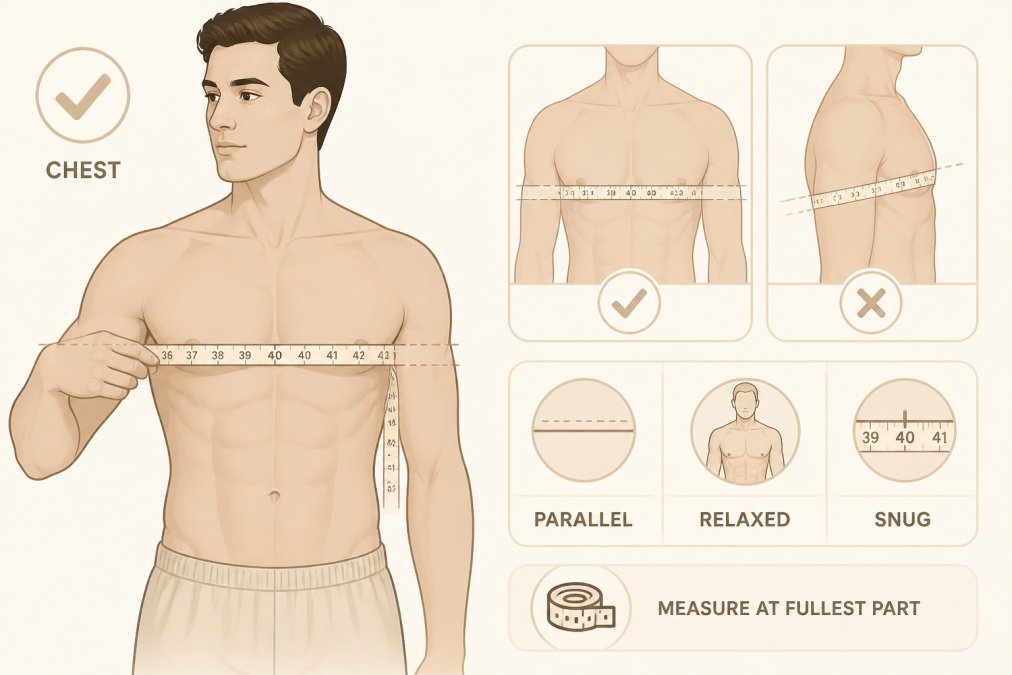
Taking accurate body measurements is the foundation of finding clothes that fit perfectly online. Start with a soft measuring tape, the flexible kind used in sewing. You'll need measurements for bust circumference, waist circumference, hip circumference, inseam, and sleeve length.
Essential Measurements You Need
Measure your bust circumference by wrapping the tape around the fullest part of your chest, keeping it parallel to the ground. The tape should be snug but not compressing. Move to your natural waist, the narrowest part of your torso, and wrap the tape without pulling tight. Then measure your hip circumference at the fullest part of your hips, roughly 8-9 inches below your waist.
For inseam, stand barefoot with feet shoulder-width apart and measure from your inner thigh where your leg meets your torso down to your ankle bone. Sleeve length runs from the center of your back neck, across your shoulder, down your arm to your wrist. Have someone measure this while your arm hangs naturally at your side.
Write these numbers down and keep them in your phone. You'll reference them constantly when shopping online.
Common Measurement Mistakes to Avoid
Measure in a t-shirt and pants, or better yet, just underwear. Tight clothing compresses your body and throws off every measurement. The tape should be snug enough to stay in place but loose enough that you can slide one finger underneath it comfortably.
Measure your bust at the fullest part of your chest, not at your collarbone or too low. For waist measurement, find your natural waist by bending slightly to the side, where your body naturally creases, not where you want your pants to sit. Measure in the morning when your body is at its baseline. If you're between sizes, round up.
Understanding Garment Measurements vs Body Measurements
The measurements on a size chart are garment measurements, not body measurements. A size medium shirt with a 38-inch bust measurement doesn't mean it fits people with a 38-inch bust, it means the shirt itself is 38 inches wide when laid flat.
Garment measurements are taken on the finished product lying flat. When you wear a shirt, it needs to accommodate your body plus ease, extra space for movement and comfort. A fitted shirt typically has 2-4 inches of ease built in. A relaxed fit might have 6-8 inches. An oversized silhouette could have 12+ inches.
If your bust circumference is 36 inches, a fitted garment with a 38-inch bust measurement would give you 2 inches of ease, snug but wearable. The same 36-inch bust in a garment with a 42-inch measurement would give you 6 inches of ease, creating a more relaxed drape.
The fit profile describes how a garment is designed to sit on your body. Tailored fit means it follows your body's contours closely. Relaxed fit means it hangs looser. Slim fit is tighter. Understanding this distinction changes how you read size charts.
How to Read Size Charts for Clothes Like a Pro
Every online retailer provides a size chart, but they're presented differently. Some show measurements in inches, others in centimeters. Some list garment measurements, others list body measurements.
What Each Column Actually Means
Start by identifying what each column represents. Look for labels like "chest," "waist," "length," or "sleeve length." Check the measurement unit, US retailers typically use inches; international retailers often use centimeters. Find the row that corresponds to your size, then look at the specific measurements.
For a shirt, focus on chest and sleeve length. For pants, focus on waist and inseam. For dresses, you need chest, waist, and length. Compare the garment measurements to your body measurements plus the amount of ease you want. If you have a 36-inch bust and you're looking at a fitted shirt, find a size with a chest measurement around 38-40 inches. For a relaxed fit, aim for 42-44 inches.
Spotting Vanity Sizing and Inconsistent Standards
Vanity sizing is when brands deliberately label garments smaller than they actually measure. A size medium might actually measure 40 inches across the chest but be labeled as a medium to make customers feel like they fit into a smaller size.
The way to spot vanity sizing is to compare the actual garment measurements across brands. If one retailer's medium measures 38 inches and another's measures 42 inches, one of them is using vanity sizing or they simply cut their garments differently. This is why relying on your usual size across different retailers fails.
Look for a note on the size chart that says something like "true to size" or "runs small." These notes come from customer feedback and are worth paying attention to.
Best Online Clothing Size Calculators and Tools
Several online tools attempt to simplify sizing by asking for your body measurements and recommending a size. Major retailers have built their own sizing calculators that compare your measurements against their specific garment measurements, which tend to be more accurate than generic calculators.
Your body measurements are more reliable than any calculator because they're based on your actual body, not assumptions about how a brand cuts their clothing. Use calculators as a secondary check, not your primary tool.
The most useful "tool" is a spreadsheet or note in your phone where you track which sizes work for you at specific retailers. After you've ordered from a brand a few times and know that their medium fits perfectly, write that down. This personal database becomes more valuable over time as you identify patterns in how different brands fit your body.
Comparing Your Measurements with Existing Well-Fitting Clothes
This is the single most powerful technique for finding clothes that fit perfectly online. Before you order anything new, measure a garment you already own that fits you exactly how you want it to fit.
Pick a shirt that you wear regularly and feel great in. Lay it flat on a table. Measure the chest by measuring across the front from armpit to armpit, then multiply by two. Measure the length from the back of the neck down to the hem. Measure the sleeve length from the center back neck, across the shoulder, down to the cuff. Write these measurements down.
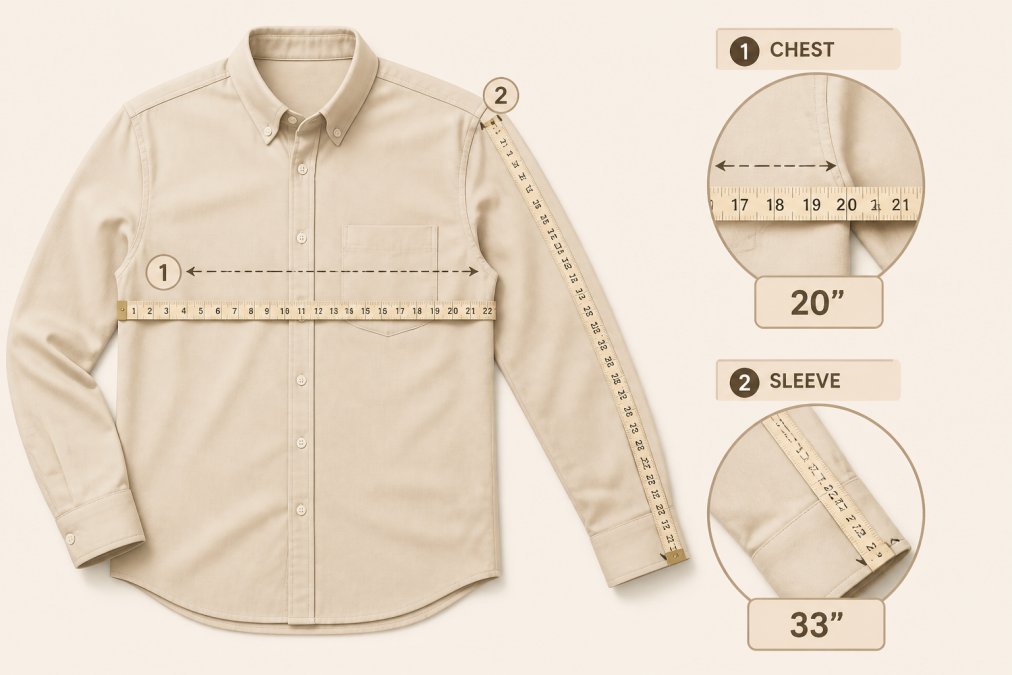
When you're shopping online for a similar garment, find the size chart and look for a size that matches these measurements. If your favorite shirt measures 40 inches across the chest and 28 inches long, search for sizes in new brands that have similar measurements. This approach removes all guesswork.
For pants, measure the waist when laid flat and the inseam. For dresses, measure bust, waist, and the total length from shoulder to hem. Keep a small note in your phone with these "reference garment" measurements. When you find a new brand, you have an instant comparison point.
Fabric Composition and Stretch: What Changes Everything
Two garments can have identical measurements but fit completely differently based on their fabric composition. A cotton shirt with no stretch will fit much tighter than a cotton-spandex blend with 5% elastane, even if both measure 40 inches across the chest.
Check the fabric composition on the product page. Look for the fiber content: is it 100% cotton, or does it include spandex, elastane, or other stretch fibers? Even a small percentage of stretch, 2-5%, changes how a garment drapes and moves on your body.
Natural fibers like cotton and linen don't stretch; they shrink slightly when washed. Synthetic fibers like polyester are more stable. When comparing garment measurements, also compare fabric composition. If your reference garment is 100% cotton and the new garment is 95% cotton with 5% spandex, expect it to fit slightly differently, usually more comfortably because of the stretch.
Customer reviews often mention fabric behavior. Look for comments like "runs small," "stretches out," or "shrinks after washing." These real-world experiences tell you how the fabric will actually perform.
Using Customer Reviews and Fit Feedback to Your Advantage
Customer reviews are your window into how a garment actually fits on real bodies. Before you buy, read reviews specifically looking for fit comments. Focus on reviews that describe actual fit experiences.
Look for patterns in the feedback. If multiple reviewers say "runs small," that's a strong signal to size up. If reviews say "true to size" or "fits perfectly," you can trust the size chart. Pay special attention to reviews from people who describe their body type. If a reviewer says "I'm 5'8" and usually wear a medium, and this shirt was perfect," you've found someone with similar proportions.
Look for reviews that mention specific fit issues: "the sleeves were too short," "the waist was roomy," "the length was perfect." These concrete details tell you more than a generic star rating. Negative reviews about fit are actually valuable, if someone says "I'm usually a medium but had to return this because it was way too tight," that tells you this brand cuts their mediums small.
Prioritize verified reviews over unverified ones. Many retailers show a badge indicating whether the reviewer actually bought the item. Also consider the reviewer's history. If someone has reviewed dozens of items and consistently provides detailed fit feedback, their reviews are more trustworthy.
Finding clothes that fit perfectly online doesn't require luck or endless returns. It requires measuring your body accurately, understanding how to read size charts, comparing new garments against reference pieces you already love, and using customer feedback as a reality check. At Hoss Style & Co LLC, we understand that fit confidence is the foundation of a great wardrobe. Our commitment to reliable, tracked shipping means your orders arrive exactly when you need them, and our curated collection is designed with fit consistency in mind, so you can shop with confidence knowing your measurements will translate reliably across our pieces.
| Step | Time Required | Purpose |
|---|---|---|
| Take body measurements | 10 minutes | Establish your baseline dimensions |
| Measure reference garments | 5 minutes per item | Create comparison points for future shopping |
| Review size charts | 3-5 minutes per product | Compare garment measurements to your body |
| Read customer reviews | 5-10 minutes per product | Verify fit consistency and identify potential issues |
| Compare against reference measurements | 2 minutes per product | Make final sizing decision |
Frequently Asked Questions
How do I know my clothing size without a measuring tape?
You can estimate by comparing your body against existing well-fitting clothes. Lay a favorite shirt flat and measure key points like chest width and sleeve length, then compare those garment dimensions to online size charts. Many retailers also offer virtual fitting tools or size calculators that ask questions about your height, weight, and typical fit preferences instead of requiring exact measurements. Customer reviews often mention sizing feedback, search for comments like 'runs small' or 'true to size' to adjust your selection accordingly.
Why do clothing sizes vary so much between brands?
Vanity sizing and different manufacturing standards are the main culprits. Many brands intentionally size garments larger than their labeled size to make customers feel smaller, which creates inconsistency across the industry. International brands may follow different sizing conventions, and even within the same brand, different production facilities can produce slightly different proportions. This is why comparing your body measurements directly to each retailer's size chart, rather than relying on your usual size, is essential for finding clothes that fit perfectly online.
What should I look for in online size charts?
Look for charts that include both body measurements and garment dimensions. Body measurements tell you what size range suits your proportions; garment dimensions show how the finished piece will actually fit. Check for measurements in inches across key areas like bust circumference, waist, inseam, and sleeve length. Be wary of charts that only list sizes (S, M, L) without numbers. Also note whether the chart specifies fit profile (slim fit, relaxed fit, tailored fit), the same size can vary dramatically depending on the intended silhouette. Compare the garment dimensions to clothes you already own and love.
Can fabric composition really affect how clothes fit me?
Absolutely. Fabric composition and stretch factor dramatically change how a garment drapes and feels on your body. Cotton shrinks and has minimal stretch, so you may need a size up. Spandex blends stretch significantly and can mold to your shape. Linen wrinkles and has a looser drape. Polyester blends often hold their shape better. Always check the fabric composition label in the product description, and read customer reviews for feedback on how the material behaves after washing and wearing. A garment's construction quality and seam placement also affect fit, well-made pieces with reinforced seams and quality stitching maintain their shape better than poorly constructed alternatives.
This article was written using GrandRanker


