

Table of Contents
- What Makes Tracked Shipping Reliable in 2026
- How to Find Clothes That Fit When You Shop Online
- Online Clothing Store Shipping Policies: What to Check Before You Buy
- Shipping Insurance and Lost Package Resolution
- Tips for Safe Online Clothing Shopping
- Real-Time Logistics Transparency and Carbon Footprint
- Hoss Style & Co: Tracked Shipping on Every Order
- Conclusion: Choosing a Brand You Can Trust
- Frequently Asked Questions
Last Updated: September 14, 2026
What Makes Tracked Shipping Reliable in 2026
Reliable tracked shipping gives you a working tracking number, a realistic delivery window, and a clear resolution path when something goes wrong. Speed matters less than predictability. This guide from Hoss Style & Co LLC breaks down what separates a dependable clothing retailer from one that leaves you refreshing a tracking page for three weeks.
Order Processing Time vs. Transit Time
Order processing time is how long a warehouse takes to pick, pack, and hand your parcel to a carrier. Transit time is what happens after that. A store can advertise two-day delivery while sitting on your order for four days first.
Ask two questions before checkout: when does the order actually leave the fulfillment center, and which carrier takes it from there? Retailers that don't publish both are usually hiding a slow first step.
Tracking Numbers and Delivery Windows
A tracking number is only useful if it updates. Some carriers scan at pickup and go quiet until the last-mile attempt, making the number decorative.
Look for a delivery window rather than a single date. A three-to-five-day range is more honest than a promise that shatters when a sorting facility backs up.
How to Find Clothes That Fit When You Shop Online
Fit is the number one reason online clothing orders come back, and returns are the biggest threat to a tracked shipment staying delivered. Solving fit starts before you add anything to a cart: a return doubles the transport footprint of the original order and resets your delivery clock.
Measure Once, Compare Against the Brand's Chart, Not Your Usual Size
Take five measurements with a soft tape and save them in a phone note: chest (fullest point), natural waist (narrowest point, usually just above the navel), hip (fullest point), inseam (crotch seam to ankle bone), and sleeve length (shoulder seam to wrist bone).
Compare those numbers against the specific brand's chart, not the size you wear at another label, a medium in one cut can match a large in another, and vanity sizing has drifted over the past decade. When a chart lists body measurements (chest, waist) rather than garment measurements (pit-to-pit, length), trust the body numbers first and use garment numbers to sanity-check the cut.
Read the Fit Vocabulary Like a Spec Sheet
Fit descriptors are shorthand for how much ease the pattern adds over your body measurements:
- Slim / tailored: roughly 1-2 inches of ease at the chest. Order your measured size; sizing up usually looks baggy in the shoulders.
- Regular / classic: roughly 3-4 inches of ease. True to your measured size in most cases.
- Relaxed / oversized: 5+ inches of ease. If you want a fitted look, size down one; if you want the intended drape, stay true.
- True to size: the brand is telling you its chart matches standard body measurements. Verify against your own numbers anyway.
Fabric Determines How Much Fit Error You Can Absorb
Stretch content is the forgiveness factor: a knit with 3-5% elastane (spandex) recovers from a slightly tight chest or hip, while rigid 100% cotton twill or non-stretch wool suiting will not. Two rules of thumb:
- Stretch blends (knits, denim with elastane, performance fabrics): you can usually order your measured size and expect it to work even if you are between sizes.
- Rigid wovens (dress shirts, structured jackets, non-stretch denim): when you are between sizes, size up. A tailor can take in a garment that is slightly large; almost nothing can be added to one that is too small.
Also check shrinkage notes: unwashed cotton and linen can lose 2-5% of length on a hot wash, enough to turn a perfect sleeve into a short one. If the care tag says cold wash and hang dry, believe it.
Use the Return Policy as a Fit Safety Net
Before ordering from a new brand, check three things on the return page: the return window (does it start at purchase or delivery?), who pays return postage, and whether size exchanges are free. A brand that charges return shipping both ways on a size swap is taxing you for its own inconsistent sizing.
The Tracked-Shipping Connection
Every return you avoid is a shipment you don't have to track a second time: a returned order means a new outbound parcel, a new tracking number, a new delivery window, and reverse-leg transport. Getting fit right the first time is the cheapest, lowest-emission way to make tracked shipping work in your favor.
Online Clothing Store Shipping Policies: What to Check Before You Buy
A shipping policy tells you more about a retailer than its homepage does. Read it before you pay, because the terms you accept at checkout are the terms you're stuck with, and the policy is what you'll quote back if a tracked parcel goes sideways.
The Seven Clauses That Actually Matter
Most policies run 800-1,500 words of boilerplate. Find these clauses:
- Free shipping threshold and whether it applies to returns. A $75 free-shipping minimum that does not cover the return label means a $75 order can cost you $8-$12 to send back.
- Order processing time stated in business days. "Ships in 1-2 business days" is a commitment; "ships within 5-7 days" is a warning. Processing time is the clock that starts before the carrier ever scans your parcel.
- Which carriers the store uses and whether you can choose. A retailer that ships exclusively via a regional last-mile carrier may have weaker tracking granularity than one using a national network.
- Whether the return window starts at purchase or at delivery. A 30-day window that starts at purchase can shrink to 20 days of actual possession time once transit is factored in.
- Who pays return postage on a defective item. The answer should be the retailer. If the policy is silent, assume you do.
- Whether the store insures parcels or self-insures. Some retailers buy carrier insurance; others absorb losses on their own balance sheet. Either is fine, what matters is that the policy states which, because it tells you who files the claim.
- The stated resolution timeline for lost or damaged orders. A policy that says "we will investigate" without a number is a policy that can stall indefinitely.
How the FTC Mail-Order Rule Backs You Up
Under FTC guidance on mail order merchandise, a seller generally must ship within the time stated in its own policy, or within 30 days if no time is given. If the seller cannot ship within that window, it must offer you the option to cancel for a full refund, and it cannot substitute a delay notice for a refund offer if you have already asked to cancel.
This converts the retailer's own shipping policy into a binding commitment: if the policy says "ships in 2 business days" and the parcel sits unfulfilled for three weeks, you have a documented basis to demand a refund. Save the policy page or a screenshot at purchase, policies change, and the version you agreed to governs your order.
Red Flags in the Fine Print
A few patterns are worth walking away from:
- "Shipping times are estimates and not guaranteed." Standard disclaimer, but if it is the only timing language on the page, there is no commitment to hold the retailer to.
- Return window measured from the ship date. This penalizes you for slow transit the retailer chose.
- Restocking fees on size exchanges. A 15% restocking fee on a $120 jacket is $18, often more than the return shipping itself.
- No physical address or phone number. A store with no serviceable address has nowhere to receive a legal notice, which tells you how a dispute would go.
- "Contact us for return authorization" with no stated response time. This is how return windows quietly expire while you wait.
Turn the Policy Into a Checklist Before Checkout
Before you pay, confirm four things in writing: processing time in business days, the carrier, the return window start date, and who pays postage on a defective item. If any is missing, email support and ask. A retailer that answers clearly is one you can hold to that answer; one that dodges is telling you something too.
Shipping Insurance and Lost Package Resolution
Package insurance covers the value of a parcel that never arrives or shows up damaged. Who holds that coverage depends on the retailer, and it's where careful shoppers separate good stores from cheap ones.
Under FTC guidance on mail order merchandise, a seller generally must ship within the time stated or within 30 days if no time is given, and must offer a refund if the order can't be delivered as promised. That rule protects you when a package vanishes, but only if you know it exists.
When a parcel goes missing, act in this order:
- File a missing mail search with the carrier using the tracking number
- Contact the retailer in writing and keep the thread
- Request a replacement or refund rather than waiting indefinitely
- Escalate to your card issuer only if the retailer stops responding
Retailers that treat lost packages as their problem, not yours, are the ones worth reordering from. Ask about their policy before you buy, not after.
| Problem | First Step | Who Should Fix It | Realistic Timeline |
|---|---|---|---|
| Tracking stalled 5+ days | File carrier search | Retailer follows up | 3-7 business days |
| Marked delivered, not found | Check neighbors, then carrier | Retailer files claim | 5-10 business days |
| Arrived damaged | Photograph packaging | Retailer replaces | 7-14 business days |
| Wrong item shipped | Contact support | Retailer | 5-10 business days |
Tips for Safe Online Clothing Shopping
Safe shopping comes down to a few habits that take seconds. Use a payment method with chargeback rights instead of a debit card or direct transfer, because card issuers give you a formal dispute process when a seller goes quiet.
Watch the checkout page itself. A secure checkout uses an encrypted connection, and your browser should show a lock icon in the address bar. If a site asks for payment details over email or a chat window, close the tab.
One more: read recent reviews specifically about delivery, not product quality. Slow fulfillment shows up there first.
Real-Time Logistics Transparency and Carbon Footprint
Logistics transparency means seeing where your parcel is at every stage, not just the endpoints. Carriers scan at multiple points, and retailers that pass those scans straight to you cut down on "where is my order" emails and anxiety.
There's a tradeoff nobody mentions: expedited delivery usually means air freight, which carries a far heavier carbon cost per parcel than ground transport. Choosing standard ground shipping on a non-urgent order is one of the simplest ways to lower an online purchase's footprint.
The EPA's guidance on reducing waste and emissions covers the broader picture on consumption and shipping emissions. For clothing specifically, the greener choice is usually fewer, better-made pieces that last, which is where garment durability and cost-per-wear come in.
Hoss Style & Co: Tracked Shipping on Every Order
Hoss Style & Co builds its shipping promise around tracking rather than speed claims. Every order ships with a tracking number and a delivery window, and processing time is stated up front so you know when the clock starts.
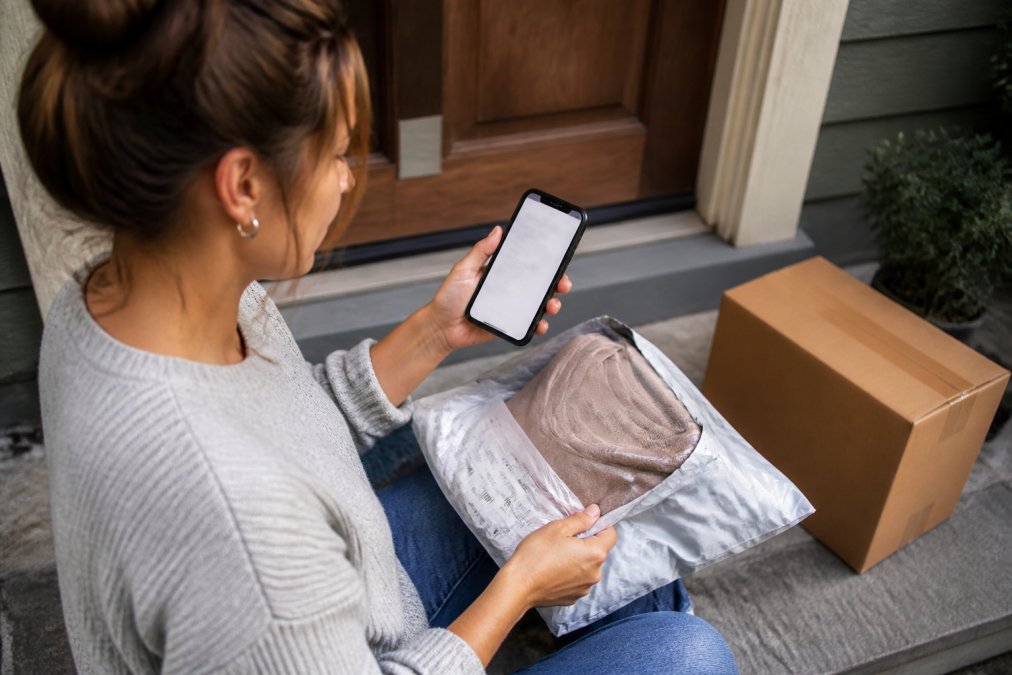
The catalog is deliberately small, which helps with fit: fewer pieces means clearer size charts and less guesswork. Checkout runs through an encrypted payment flow, and support answers shipping questions directly rather than routing you through a bot loop.
Where it falls short: a tight catalog won't suit someone who wants endless variety, and some items ship from overseas with longer windows. The product pages say so clearly, which is the point.
Product Spotlight: COOFANDY Softshell Hooded Jacket
The COOFANDY Men's Softshell Hooded Fleece-Lined Windbreaker is a good example of the cost-per-wear argument. At $65.89, it's a scratch-resistant polyester and spandex shell with a fleece lining, built for wind and light rain.

It's the kind of piece that earns its place: worn across fall, winter, and early spring, the per-wear cost drops fast. Sizing runs true to the chart, and because it ships tracked, you'll know exactly when it lands.
Conclusion: Choosing a Brand You Can Trust
Reliable clothing brands with tracked shipping tell you when your order leaves, where it is, and what happens if it never shows. Speed is a marketing claim; transparency is a policy.
If that's what you're after, Hoss Style & Co ships every order with tracking, states processing times plainly, and handles lost or damaged parcels as its own problem. Start with the COOFANDY softshell jacket or browse the full catalog, and get a delivery window you can actually plan around.
Frequently Asked Questions
How can I verify if an online clothing brand offers reliable tracked shipping?
Check the brand's shipping policy page for three things: a stated order processing time, a carrier name, and a tracking number promise. Legitimate brands provide a tracking number within 1-3 business days of shipping. You can also look for a shipping confirmation email that includes a link to the carrier's tracking page. If a store cannot tell you which carrier it uses or when you will get a tracking number, that is a red flag for reliable clothing brands with tracked shipping.
What should I look for in online clothing store shipping policies before buying?
Look for the order processing time, estimated delivery window, shipping fees, free shipping threshold, and return policy. A clear policy states whether tracking is included, who pays for return shipping, and how lost packages are handled. Brands that offer package insurance or a resolution process for missing orders give you more protection. If the policy is vague about delivery windows or does not mention tracking, proceed with caution.
What are the benefits of buying from clothing brands that provide tracking numbers?
A tracking number gives you visibility into every stage: order processing, fulfillment center departure, last-mile delivery, and estimated arrival date. You can plan for package security if you will be away, and you have proof of delivery if a dispute arises. Tracking also reduces customer support back-and-forth because you can check order status yourself. For busy professionals, this transparency turns a guessing game into a predictable delivery window.
How do I track my clothing order effectively after purchase?
Save your shipping confirmation email and copy the tracking number into your phone or a notes app. Check the carrier's site directly rather than relying only on the retailer's page, since carrier data updates faster. Set a calendar reminder for the estimated arrival date. If tracking has not updated in 5 business days, contact customer support with your order number. For international transit, allow extra time and watch for customs updates.
What is the most trusted online clothing store for quality and shipping?
Trust comes down to transparency: clear shipping policies, tracking on every order, a straightforward return policy, and responsive customer support. Look for brands that state their order processing time, provide a tracking number, and explain how they handle lost or delayed packages. Hoss Style & Co offers tracked shipping on every order, secure checkout, and a curated collection designed for everyday versatility, so you know what to expect from checkout to delivery.


