

Table of Contents
- What Makes Clothing Sustainable
- Sustainable Fabrics for Everyday Wear
- Gender-Based Differences in Sustainable Fashion
- Affordable Sustainable Clothing Brands
- How to Build a Capsule Wardrobe
- Cost-Per-Wear and Long-Term Value
- End-of-Life Garment Management
- Conclusion
- Frequently Asked Questions
Last Updated: September 3, 2026
What Makes Clothing Sustainable
Sustainable everyday clothing means garments designed and produced with minimal environmental impact, ethical labor practices, and long-term durability. This goes beyond marketing claims, it involves transparency across the supply chain, responsible material sourcing, and manufacturing processes that reduce water consumption, chemical pollution, and carbon emissions.
Greenwashing is rampant. A brand claiming sustainability without third-party certification or transparent sourcing is making an unverifiable promise. True sustainable clothing requires traceability: you should know where materials come from, who made the garment, and what happens to it at end-of-life.
Sustainability involves three interconnected dimensions: environmental impact (how production affects water systems, soil, and air quality), labor ethics (fair wages, reasonable hours, safe conditions), and product longevity (whether the garment lasts or is designed for disposal). A shirt made from organic cotton in exploitative conditions isn't sustainable. Neither is an ethically-made garment that falls apart after three wears.
At Hoss Style & Co, we focus on pieces designed for versatility and durability, the foundation of sustainable consumption. When clothing works across multiple contexts and lasts longer, you buy less overall. This is the most direct path to reducing fashion's environmental footprint: wearing what you own more often.
Sustainable Fabrics for Everyday Wear
The material your clothes are made from determines much of their environmental footprint. Conventional cotton uses heavy pesticide loads and enormous water volumes. Synthetic polyester comes from petroleum and sheds microplastics.
Organic cotton eliminates synthetic pesticides and uses less water than conventional cotton, though it still requires significant irrigation. Hemp requires minimal water and pesticides, regenerates soil health, and biodegrades completely. Linen (made from flax) has similar benefits with softer feel and wider availability.
Recycled polyester diverts plastic waste from landfills and oceans while requiring less energy than virgin polyester production. Tencel (lyocell) is a regenerated fiber made from wood pulp using a closed-loop process that recycles 99% of solvents, minimizing water pollution.
Natural fibers like bamboo and viscose come from renewable sources but involve chemical-intensive processing. The manufacturing impact matters as much as the raw material.
No single fabric is perfectly sustainable. For everyday basics, organic cotton and linen offer solid environmental profiles with proven longevity. For performance pieces, recycled polyester blends outperform virgin synthetics. For maximum durability with minimal environmental footprint, hemp and linen excel, though they're pricier and less widely available.
USDA organic cotton standards set strict requirements for pesticide elimination and soil health. Look for certifications like Global Organic Textile Standard (GOTS) or Fair Trade Certified when evaluating fabric claims.
Gender-Based Differences in Sustainable Fashion
Men's and women's sustainable fashion needs diverge more than most guides acknowledge, affecting material choices, fit consistency, and pricing.
Women's sustainable basics often emphasize natural fibers like organic cotton, linen, and hemp for soft drape. Denim shorts frequently use cotton blends with stretch components (often polyester) to accommodate fit variations. The trade-off: added durability and consistent sizing, but less environmental purity.

Men's sustainable basics can lean more heavily into pure, single-fiber materials. Denim and casual wear often work in 100% organic cotton or cotton-linen blends without stretch additives, because traditional men's sizing accommodates broader body types within standard measurements.
The fit consistency gap is real. Women's clothing varies dramatically across brands and sizes. Sustainable brands addressing this invest in better sizing data and fit testing, increasing production costs. Men's sizing shows more consistency, allowing sustainable brands to produce efficiently.
Women's sustainable basics typically cost 15-25% more than men's equivalents for the same material quality because of fit complexity, smaller production runs per size, and higher return rates.
Material availability also differs. Sustainable women's athleisure options have expanded significantly, while men's sustainable activewear remains more limited. Conversely, men's sustainable denim and workwear options outnumber women's offerings.
When building a sustainable wardrobe, account for these differences. For women, prioritize brands that publish detailed fit guides and accept returns easily. For men, focus on material quality and durability since fit consistency is less problematic.
McKinsey research on fashion fit and returns documents that women's apparel has return rates 50% higher than men's, directly driven by fit inconsistency. This matters for sustainability because returns mean transportation emissions and often disposal.
Affordable Sustainable Clothing Brands
Budget-friendly sustainable options exist, they require knowing where to look and understanding what trade-offs you're accepting.
Hoss Style & Co offers a curated collection of modern fashion with sustainable everyday clothing focus for both men and women. The Men's Loose Summer Casual Five-Point Shorts at $23.99 provide comfortable, versatile basics without premium pricing. For women, the Loose Casual Women's Five-Point Denim Shorts at $28.99 deliver quality construction and everyday versatility. Both pieces prioritize durability and timeless style, the foundation of sustainable consumption.

Rather than highlighting material certifications, Hoss Style & Co focuses on pieces designed for longevity through versatility. A short that works across seasons and contexts gets worn more, reducing replacement needs. This is sustainability through practical design.
Other accessible sustainable options include brands that focus on dead stock and overstock fabric, materials that would otherwise become waste. These brands offer lower prices because they're solving a waste problem rather than sourcing virgin materials. The trade-off: less control over material type and limited inventory.
Affordable sustainable brands that offer basics in consistent styles reduce the pressure to buy new items seasonally. This consistency costs less to produce than constantly rotating designs.
| Brand Approach | Price Range | Best For | Trade-off |
|---|---|---|---|
| Certified sustainable (premium) | $60-150+ | Maximum environmental confidence | Higher cost |
| Material-transparent, non-certified | $30-60 | Durability + reasonable price | Unverified claims |
| Dead stock/overstock | $20-45 | Budget-conscious sustainability | Limited selection |
| Fast-fashion alternatives | $15-35 | Accessibility | Minimal transparency |
How to Build a Capsule Wardrobe
A capsule wardrobe, a collection of versatile pieces that work together across multiple outfits, is the most practical approach to sustainable everyday clothing. You buy less overall, wear what you own more often, and reduce decision fatigue.
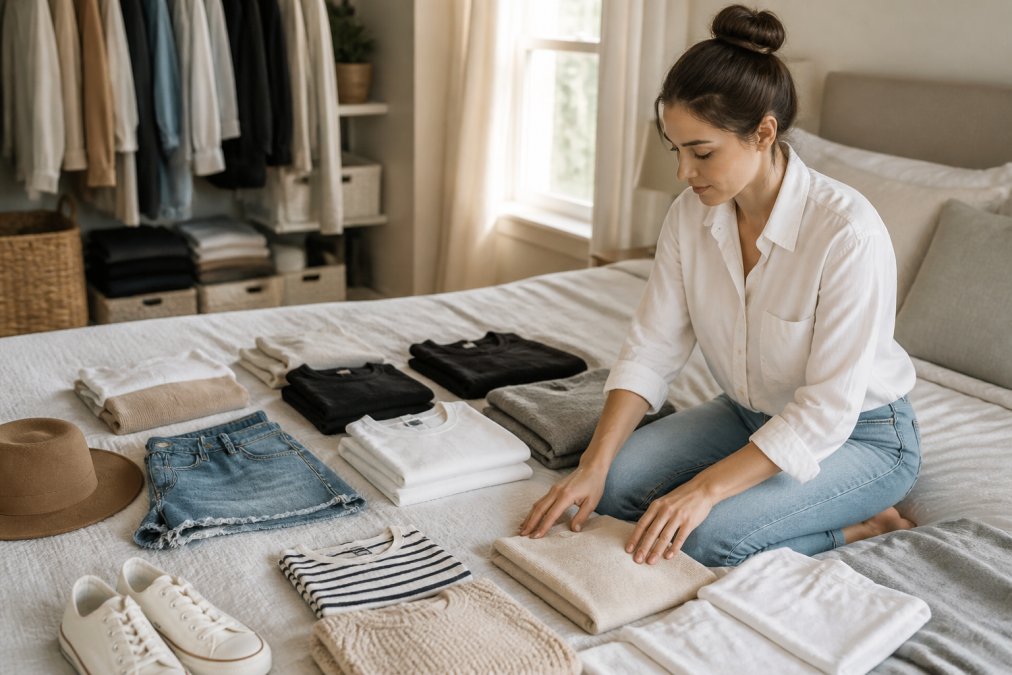
Start with a color palette. Choose 2-3 neutral base colors (black, navy, gray, white, or beige) that work with your skin tone and existing items. Add 1-2 accent colors you genuinely love. This constraint forces intentional purchasing.
Build the foundation with basics: well-fitting jeans, neutral t-shirts, simple button-ups, and comfortable shorts. These are the workhorses that appear in 80% of outfits. Invest slightly more here because these pieces get worn constantly. Hoss Style & Co's Men's Stretch Denim Five-Point Shorts at $24.78 exemplify this, quality construction at accessible pricing, designed for repeated wear.

Add layering pieces: cardigans, blazers, or lightweight jackets in your neutral palette. These extend seasonal versatility and create outfit variety without adding complexity.
Include 2-3 versatile bottoms beyond jeans: chinos, neutral trousers, or shorts in your color palette. The Loose Casual Women's Five-Point Denim Shorts at $28.99 work as both casual weekend wear and can transition to work settings with appropriate tops.
Limit accessories to items that work across multiple outfits: a neutral belt, simple jewelry, and a practical bag.
Start with 20-30 pieces total. Quality matters more than quantity at this scale. One well-made shirt worn 100 times has lower environmental impact than five cheap shirts worn 20 times each.
Cost-Per-Wear and Long-Term Value
The true cost of clothing is the price per wear. A $60 sustainable shirt worn 100 times costs $0.60 per wear. A $15 fast-fashion shirt worn 10 times costs $1.50 per wear.
Calculate cost-per-wear by dividing the purchase price by estimated number of wears before the item becomes unwearable. For everyday basics, estimate conservatively: a well-made shirt might reach 50-100 wears. Fast-fashion equivalents often fail at 10-20 wears.
Material quality directly affects wear count. Organic cotton and linen improve with age. Seam construction matters: reinforced seams last longer than single-stitch construction. Weight matters: heavier fabrics withstand more washing cycles.
Sustainable brands often charge 2-3x more for basics than fast fashion. This premium reflects actual differences in material cost, labor standards, and manufacturing efficiency. The break-even point comes quickly. A $50 sustainable basic worn 80 times costs $0.63 per wear. An $18 fast-fashion equivalent worn 15 times costs $1.20 per wear.
The financial advantage increases with wear frequency. If you wear an item regularly (more than once per week), the cost-per-wear advantage of quality becomes dramatic.
This is why capsule wardrobes make financial sense. By limiting your collection to versatile pieces you genuinely wear, you increase frequency per item, which lowers cost-per-wear and accelerates the financial payoff of quality purchases.
Build your sustainable wardrobe around pieces you know you'll wear constantly. For most people, this means basics: shorts, t-shirts, and simple layers. Invest more here. Save budget on trend pieces or experimental styles, which get worn less frequently.
End-of-Life Garment Management
Sustainability doesn't end when you stop wearing something. What happens to the garment after its useful life determines whether it truly reduced environmental impact.
Most clothing ends up in landfills or incinerators. Only 20-30% of donated clothing gets resold; the rest becomes waste. To genuinely close the loop, you need intentional end-of-life management.
Resale extends garment life and captures remaining value. Selling items through resale platforms gives them a second life while recovering some of your investment. This works best for quality pieces that remain in good condition.
Donation works when items are genuinely wearable. Local charities, community centers, and thrift stores need functional clothing. Donating worn-out items that no one will wear doesn't help.
Recycling programs exist but remain limited. Some brands accept worn-out items for recycling into new fibers or insulation materials. These programs work best for natural fibers (cotton, linen, wool). Synthetic blends are harder to recycle.
Composting is an option for 100% natural fiber items. A pure cotton or linen garment will biodegrade in home compost within months.
The most sustainable end-of-life approach: buy durable pieces you'll wear for years, then resell or donate items still in wearable condition. For items truly at end-of-life, research whether the brand offers recycling or whether your local waste management accepts textile recycling.
EPA guidance on textile waste and recycling documents that textile waste represents a growing environmental concern, with most discarded clothing ending up in landfills. Extending garment life through durability and resale directly addresses this problem.
Conclusion
Building a sustainable everyday clothing wardrobe doesn't require choosing between ethics and affordability. It requires understanding the true cost of clothing, measured in environmental impact and cost-per-wear, and making intentional choices about what you buy and how you use it.
Hoss Style & Co delivers curated pieces designed for versatility and durability at accessible prices. The Men's Casual Denim Five-Point Shorts at $26.89 and Women's Loose Casual Five-Point Denim Shorts at $28.99 exemplify this approach: quality construction, timeless design, and reasonable pricing that makes sustainable basics achievable.
Start with basics, focus on pieces you'll wear frequently, and build outward from a consistent color palette. This approach reduces environmental impact through lower consumption while actually saving money through improved cost-per-wear. Shop All at Hoss Style & Co and begin building a wardrobe that works.
Frequently Asked Questions
What certifications should I look for in sustainable clothing brands?
Look for third-party certifications like Fair Trade Certified, Global Organic Textile Standard (GOTS), and B Corp certification. These verify that brands meet specific environmental and labor standards. Fair Trade Certified ensures workers earn fair wages. GOTS confirms organic fiber production without harmful chemicals. B Corp certification demonstrates overall social and environmental performance. Brands displaying these badges have undergone independent audits, making them more trustworthy than self-labeled 'eco-friendly' claims.
Are sustainable everyday clothing brands more expensive for men or women?
Sustainable clothing typically costs more for both genders, but pricing varies by brand and item type. Women's sustainable basics often range from $25-$60, while men's basics fall in a similar range. The difference lies in availability: women's sustainable fashion offers more variety, sometimes driving prices down through competition. Men's options are fewer, which can push prices higher. Cost-per-wear analysis often favors sustainable pieces since they last longer, making the upfront investment worthwhile over time.
How do I identify truly sustainable clothing brands versus greenwashing?
Authentic sustainable brands provide transparent supply chain information, publish sustainability reports, and list material composition clearly. They explain their manufacturing process and labor practices. Greenwashing brands use vague terms like 'eco-friendly' without proof, lack third-party certifications, and rarely disclose sourcing details. Check if a brand publicly addresses environmental impact and labor rights. Smaller, transparent brands with detailed product pages and certification badges are more trustworthy than those making broad sustainability claims without evidence.
What is the 3-3-3 rule for building a sustainable wardrobe?
The 3-3-3 rule suggests owning three colors of basics, three styles of tops, and three types of bottoms that mix and match. This creates a capsule wardrobe with multiple outfit combinations from fewer pieces. Applying this principle to sustainable clothing means investing in quality basics in neutral colors like black, white, and gray, then adding versatile layers. This approach reduces overall consumption, saves money, and simplifies daily decisions while building a functional everyday wardrobe.
Sustainable everyday clothing isn't a luxury, it's a practical approach to getting more value from fewer purchases. The brands and strategies that work best are those that prioritize durability, transparency, and genuine versatility over marketing claims. When you focus on pieces you'll actually wear, sustainability and affordability align naturally.
This article was written using GrandRanker


