

Table of Contents
- How to Define Your Personal Style Before You Shop
- Capsule Wardrobe Essentials List: The Foundation Pieces
- Layering Techniques That Make Any Versatile Wardrobe Work
- Cardigan Clothing Styling Ideas for Work and Weekends
- How to Transition Your Wardrobe Between Seasons
- Budget-Conscious Scaling: Building a Versatile Wardrobe Over Time
- Body Type Customization and Sustainable Disposal
- Frequently Asked Questions
Last Updated: September 19, 2026
How to Define Your Personal Style Before You Shop
A versatile wardrobe starts with self-knowledge, not a shopping cart. Before buying anything, most stylists suggest identifying the colors, fits, and fabrics you actually reach for week after week. This guide from Hoss Style & Co LLC walks through the practical steps, from closet audits to seasonal transitions, so every purchase earns its place.
Capsule Wardrobe Essentials List: The Foundation Pieces
A capsule wardrobe essentials list is a short set of foundational items that mix and match across most occasions. The goal is versatility, not volume: fewer pieces, more outfit combinations.
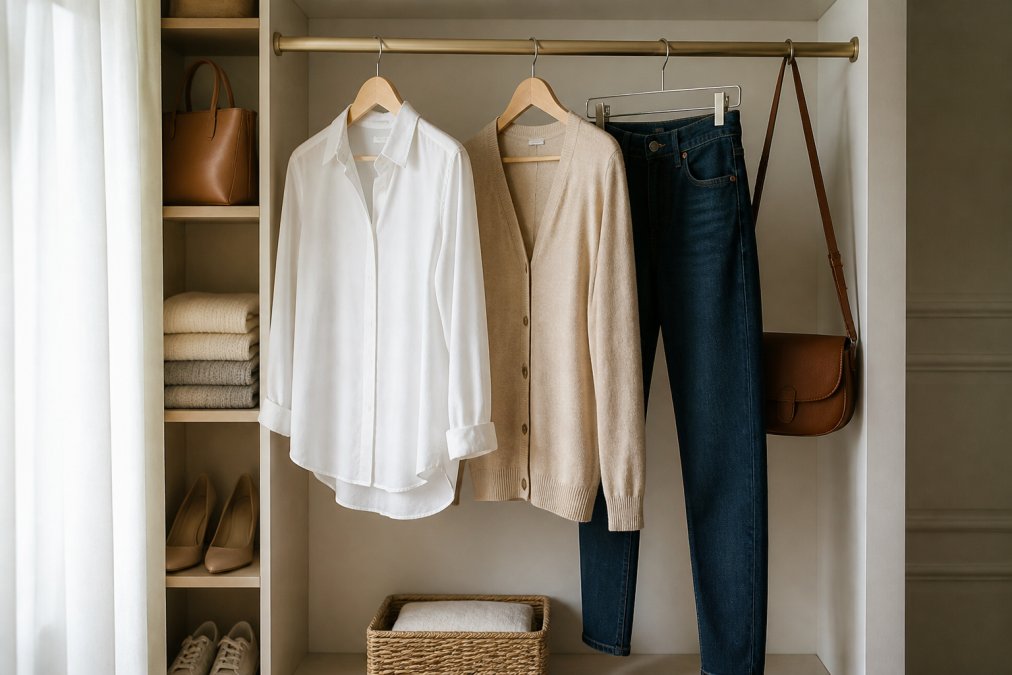
Build around these categories:
- Two pairs of well-fitting denim, like a slim high-rise and a bootcut
- One tailored blazer and one knit cardigan
- Three tops that layer cleanly under both
- One pair of leather shoes that reads professional or casual
- One structured bag that carries your daily essentials
| Item | Why It Works | Pairs With |
|---|---|---|
| High-waist denim | Anchors casual and smart outfits | Blazers, knits, tees |
| Neutral cardigan | Adds warmth without bulk | Denim, dresses, trousers |
| Leather loafers | Bridges office and weekend | Denim, chinos, tailoring |
| Crossbody bag | Finishes any look | Everything above |
Layering Techniques That Make Any Versatile Wardrobe Work
Layering is what turns a small closet into a large one. It's about textural contrast: a smooth knit over a crisp shirt, a structured jacket over soft denim.
Cardigan Clothing Styling Ideas for Work and Weekends
Cardigan clothing styling ideas usually come down to one decision: how you close it. Buttoned, it reads polished for the office. Open over a tee, it reads relaxed for weekends.
How to Transition Your Wardrobe Between Seasons
Seasonal transition is where versatile wardrobes prove their worth. The trick is layering, not replacing: keep a core of year-round pieces and adjust only the outer layer.
Budget-Conscious Scaling: Building a Versatile Wardrobe Over Time
Most guides tell you to buy "quality" pieces and leave it there, which is easy advice when someone else is paying. Building a versatile wardrobe on a real budget is a sequencing problem, not a spending problem. The goal is to get the highest number of wearable outfits out of the smallest number of dollars, and that means buying in a deliberate order rather than all at once.
Start With a Cost-Per-Wear Target, Not a Price Ceiling
Cost per wear is the only number that matters. Divide the price by the number of times you realistically expect to wear the item. A $90 pair of jeans worn twice a week for two years lands near $0.87 per wear. A $40 trend top worn four times lands at $10 per wear. The cheaper item is the more expensive one.
Buy in Tiers, Not in One Trip
A workable sequence for a tight budget:
- Tier 1, The base layer (weeks 1-4). One well-fitting pair of denim, one neutral tee or button-down, one pair of shoes you can walk in all day. These three items alone generate several outfits.
- Tier 2, The multiplier (months 2-3). A neutral cardigan or blazer. This is the piece that turns your Tier 1 base into office-ready and weekend-ready looks, so it earns its cost faster than almost anything else.
- Tier 3, The finisher (months 4-6). A structured bag or a second pair of shoes in a different register (loafer vs. sneaker). This is what makes the same outfit read differently across settings.
- Tier 4, The refresh (ongoing). Replace the single most-worn item when it wears out, not when a trend says to.
Where to Stretch and Where to Save
Spend on the pieces that touch your body most and take the most abuse: shoes, denim, and outerwear. These are the items where fit, construction, and material show, and where a cheap version fails visibly and quickly. Save on trend-driven tops, accessories, and anything you expect to wear fewer than once a month.
The Three-Outfit Test Before You Buy
At Hoss Style & Co LLC, we keep the selection focused on everyday versatility rather than trend cycles, so each piece has a job from day one. Our Women's High Waist Button Front Jeans are a good example: a slim, high-rise fit built for work, weekends, and travel alike.

Body Type Customization and Sustainable Disposal
Generic "buy these 10 items" lists assume every body is the same shape. It isn't, and a versatile piece only stays versatile if it actually fits your proportions. The same goes for what you remove from your closet: clearing it out is only half the job, where those clothes go matters too.
Fit Is the Versatility Multiplier
A garment that suits your proportions will out-perform a trend piece every time, because you'll reach for it more often. The trick is to identify the two or three fit variables that matter most for your frame and apply them to every purchase.
- If you're petite: prioritize higher rises and shorter hems. A high-rise denim and a cropped cardigan keep the vertical line clean instead of drowning you in fabric. Avoid oversized outerwear that swallows your frame.
- If you're tall: look for longer inseams and extended-length tops and blazers. A standard cardigan that hits mid-hip on someone else will sit at your waist, which throws off the proportion.
- If you're curvy: prioritize fabrics with a bit of stretch and structured shoulders. A blazer with a defined shoulder balances a fuller hip, and a wrap or V-neck top keeps the neckline open rather than closed off.
- If you're straight-framed: use layering to create shape. A belted cardigan or a structured blazer adds definition that a plain tee won't.
Where the Non-Versatile Pieces Should Go
The Council for Textile Recycling's guidance on textile waste points out that clothing disposal has a real environmental cost, which is why a wardrobe edit should end with resale, donation, or recycling rather than the trash. Before buying new, audit what you own and let go of what you don't wear.
- Resell what holds value. Brand-name denim, leather shoes, and structured bags typically resell best. List them on a resale platform or a local consignment shop before donating.
- Donate what's clean and wearable. Local charity shops and shelters take everyday clothing in good condition. Wash and fold first, donation centers discard soiled items.
- Recycle what's worn out. Stained, torn, or stretched items that can't be resold or donated often go to textile recycling programs rather than the trash.
- Repair before you replace. A reheeled shoe or a re-stitched seam extends a garment's life and is usually cheaper than a replacement.
The Professional-to-Casual Overlap
A few well-chosen pieces cover both registers without a full outfit change. Our Men's Full Grain Leather Slip-On Loafers work with business casual and weekend outfits, and a Women's Leather Crossbody Messenger Bag finishes both without switching. The rule: keep the piece neutral in color and clean in line, and let the rest of the outfit set the register.


- Audit your closet and remove anything unworn for a year
- List resale or donation options before discarding
- Identify your three most-needed gaps
- Buy one quality piece at a time
Frequently Asked Questions
What is the 3-3-3 rule for a versatile wardrobe?
The 3-3-3 rule means building outfits around three tops, three bottoms, and three pairs of shoes that all work together. This creates 27 possible combinations from just nine items. It forces you to choose pieces that share a color palette and level of formality, which is the core of a versatile wardrobe. Start by picking your most-worn neutral pieces and test whether each top works with each bottom before adding anything new.
How do I start building a capsule wardrobe from scratch?
Begin with a closet audit. Pull everything out and sort into keep, donate, and repair piles. Identify the 10 to 15 pieces you actually wear weekly. From there, fill gaps with foundational items: a dark pair of jeans, a neutral cardigan, a white or black top, and one pair of shoes that works for both work and weekends. Add one or two pieces per month rather than buying everything at once.
What are the essential pieces every versatile wardrobe needs?
A capsule wardrobe essentials list typically includes dark denim, a tailored blazer, neutral knitwear, a white button-down, a simple dress or two, and one pair of comfortable loafers or flats. Accessories like a leather crossbody bag and a belt in a neutral tone tie outfits together. The goal is not a specific number but ensuring every piece pairs with at least three others you own.
How can I balance trends with timeless staples in my closet?
Use the 70/30 rule: 70 percent timeless pieces, 30 percent trend-driven items. Timeless pieces like dark denim, neutral cardigans, and leather loafers form the base of a versatile wardrobe. Trend pieces add personality but should be inexpensive enough that you do not regret them when the trend fades. If a trend piece cannot pair with at least two staples you already own, skip it.
What is the 5-4-3-2-1 method for building a wardrobe?
The 5-4-3-2-1 method suggests five tops, four bottoms, three dresses or layers, two pairs of shoes, and one accessory. This creates a compact but flexible set for travel or a seasonal capsule. The method works because it forces intentionality: each item must coordinate with the others. It is a starting framework, not a permanent limit. Many people expand after testing which combinations they actually wear.
How do I transition my wardrobe between seasons without buying a whole new closet?
Focus on layering rather than replacing. A cardigan clothing styling approach works year-round: wear it open over a tee in spring, buttoned under a coat in winter. Swap heavy fabrics for lighter ones in the same color family. Store off-season items in bins so your closet only shows what is wearable now. Add tights or hosiery under dresses instead of buying new pants.
Is it cheaper to build your own wardrobe or buy pre-made sets?
Building your own wardrobe is almost always cheaper long-term because you buy only what fits your body and lifestyle. Pre-made sets often include pieces you will not wear. The cost per wear drops when you own 30 items you wear weekly versus 100 items you wear twice a year. Start with a budget, buy one quality piece at a time, and avoid duplicate categories like three similar black tops.
How do I know if a piece is worth buying for a versatile wardrobe?
Ask three questions: Does it match at least three items I already own? Can I wear it to both work and casual settings? Will I still want it in two years? If the answer is no to any of these, skip it. Cost per wear matters more than price tag. A $60 cardigan worn twice a week for a year costs less per wear than a $20 top worn twice total.
Building a wardrobe that actually works takes patience, and the hardest part is resisting the urge to buy everything at once. Hoss Style & Co LLC curates modern pieces for both men and women, with secure checkout and reliable, tracked shipping on every order, so you can add staples as you need them instead of overhauling your closet overnight. Start with the foundation pieces, layer from there, and let each purchase earn its place. Shop All and build the wardrobe you'll actually wear.


