

Table of Contents
- What Makes a Fabric Sustainable for a Capsule Wardrobe
- Best Fabrics for a Sustainable Capsule Wardrobe: Quick Comparison
- 1. Linen: The Breathable Workhorse
- 2. Organic Cotton: Soft, Familiar, and Traceable
- 3. Hemp: Built to Outlast Everything Else
- 4. Tencel Lyocell and Bamboo: Closed-Loop and Fast-Growing
- Durable Fabrics for Capsule Wardrobe Rotation
- Benefits of Organic Cotton vs Linen for Everyday Wear
- Frequently Asked Questions
Last Updated: September 29, 2026
What Makes a Fabric Sustainable for a Capsule Wardrobe
A fabric earns its place in a sustainable capsule wardrobe when it can be worn hard, washed often, and still look presentable years later. That means prioritizing natural fibers, traceable supply chains, and construction that survives repeated wear. This guide from Hoss Style & Co LLC breaks down the materials worth building around.
A capsule wardrobe is a small, tightly edited collection of garments that mix and match across most of your week. Sustainability here is not about a label or certification badge, it is about how many times you actually wear the piece before it wears out.
Three factors decide whether a fabric belongs in that rotation:
- Fiber origin. Natural fibers like linen, organic cotton, hemp, and lyocell come from plants and break down at end of life far more readily than polyester.
- Durability per wash. A garment that survives 100 washes beats one that pills after 20, no matter how it was grown.
- Care footprint. Lower washing temperatures and air drying cut the energy a garment consumes across its life.
The uncomfortable truth is that most "sustainable" collections still lean on synthetic blends because they are cheap and hold shape. Those blends shed tiny plastic fragments every wash and will outlive you in a landfill. Below, we walk through the best fabrics for a sustainable capsule wardrobe, with the honest trade-offs of each.
Best Fabrics for a Sustainable Capsule Wardrobe: Quick Comparison
Here is how the leading natural fibers stack up on the factors that matter most for a minimalist closet.
| Fabric | Breathability | Durability | Care Needs | Best For |
|---|---|---|---|---|
| Linen | Excellent | Very high | Machine wash cold, air dry | Warm-weather everyday wear |
| Organic cotton | Good | High | Machine wash cold | Basics and layering |
| Hemp | Good | Exceptional | Softens with every wash | Hard-wearing trousers, shirts |
| Tencel lyocell | Excellent | Medium-high | Gentle cycle, low heat | Draped tops, dresses |
| Bamboo lyocell | Excellent | Medium | Hand wash or gentle cycle | Lightweight summer pieces |
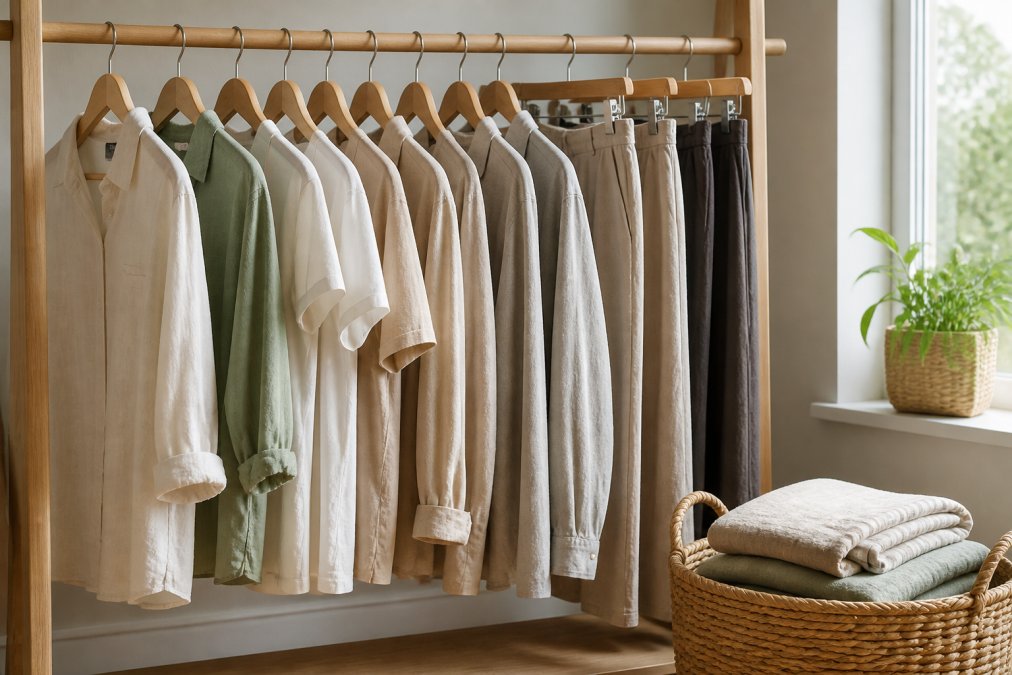
Linen and hemp lead on longevity, cotton wins on familiarity, and lyocell fabrics handle drape and softness.
1. Linen: The Breathable Workhorse
Linen is the strongest natural fiber you can wear in heat, and it gets softer every wash. It comes from the flax plant, which grows with relatively little irrigation compared with thirsty crops.
European flax is the gold standard: a rain-fed crop in most growing regions, keeping its water footprint low. The fiber is fully biodegradable, so a worn-out linen shirt returns to the soil instead of sitting in a landfill for centuries. What most guides miss is how well linen handles the "wear it three times between washes" test, it resists odor and dries fast, meaning less laundry and less energy spent.

Pros and Cons of Linen
Pros:
- Exceptional breathability in heat
- Gets softer with age rather than wearing thin
- Fully biodegradable at end of life
- Dries quickly, so it needs less tumble drying
Cons:
- Wrinkles easily, which some people read as "unfinished"
- Can feel stiff until the first few washes break it in
- Pure linen costs more than a cotton-polyester blend
2. Organic Cotton: Soft, Familiar, and Traceable
Organic cotton is the easiest swap for anyone building a first capsule wardrobe: it feels like the cotton you already own, but is grown without the synthetic pesticides used in conventional farming.
Pros and Cons of Organic Cotton
Pros:
- Soft against skin from day one
- Widely available in basics and layering pieces
- Traceable through certification programs
- Biodegradable and easy to recycle
Cons:
- Higher water use than hemp or flax
- Wrinkles and can shrink if washed hot
- Certified organic versions cost more than conventional
3. Hemp: Built to Outlast Everything Else
Hemp is the most durable natural fiber on this list, and it is not close. It resists UV light, holds shape through years of wear, and softens with each wash instead of breaking down. The plant grows fast, needs little water, and improves the soil it grows in, which is why hemp keeps showing up in serious slow fashion conversations.
Long Sleeve T-shirt Undershirt Solid →
Pros and Cons of Hemp
Pros:
- The longest-lasting natural fiber available
- Low water and pesticide needs
- UV resistant and naturally breathable
- Softens rather than wears out
Cons:
- Rougher texture until broken in
- Fewer style options than cotton
- Can be pricier at retail
4. Tencel Lyocell and Bamboo: Closed-Loop and Fast-Growing
Tencel lyocell is a wood-pulp fiber made in a closed-loop process, meaning the solvent used to break down the pulp is recovered and reused rather than dumped, the key difference from older rayon production. Bamboo is the fast-growing option: it reaches harvest size in a fraction of the time cotton needs and regrows from the same root system without replanting.
Pros and Cons of Tencel and Bamboo
Pros:
- Closed-loop lyocell production recovers most solvent
- Bamboo grows back from the same roots
- Excellent drape and cooling feel
- Blends well with cotton and linen
Cons:
- Less abrasion-resistant than hemp or linen
- Bamboo processing varies widely by producer
- Needs gentle washing to hold shape
Durable Fabrics for Capsule Wardrobe Rotation
A care routine that works for every fabric above:
- Wash cold on a gentle cycle
- Skip the dryer and hang or lay flat to dry
- Turn garments inside out to reduce surface abrasion
- Wash less often; air garments between wears
- Use a mesh laundry bag for knits and lyocell to cut friction
- Repair small tears before they spread
End of life: the step almost no guide covers. When a garment finally wears out, what you do with it decides whether its materials re-enter the system or sit in a landfill. Pure linen, hemp, and untreated organic cotton are biodegradable and can be composted if your local program accepts textiles, check first, since many municipal composters do not. Tencel lyocell is also biodegradable. Blended fabrics are the problem: a cotton-polyester shirt cannot be composted and is difficult to recycle because the fibers cannot be separated at scale. Most textile recycling downcycles mixed fibers into insulation or wiping cloths rather than new clothing.
Benefits of Organic Cotton vs Linen for Everyday Wear
Organic cotton wins for softness and layering; linen wins for breathability and longevity. The right pick depends on how you plan to wear the piece, and on a few measurable differences most guides skip.
Frequently Asked Questions
What is the most environmentally friendly fabric for clothes?
Linen and hemp rank among the lowest-impact options because flax and hemp grow with minimal water and few pesticides. Organic cotton is a strong choice when it is GOTS certified, which verifies organic farming and fair labor. Tencel lyocell uses a closed-loop process that recaptures most solvents. No single fiber wins every category, so match the fabric to how you will wear and wash it.
What are the most durable natural fibers for everyday wear?
Hemp and linen are the most durable natural fibers for daily rotation. Hemp fibers are long and strong, so they resist abrasion and soften with washing instead of wearing thin. Linen has similar strength but wrinkles more, which is a style choice rather than a defect. Organic cotton is softer and easier to care for, though it pills faster under heavy friction. For a capsule wardrobe, mix all three so no single piece takes all the wear.
How do synthetic fabrics compare to natural fibers in a capsule wardrobe?
Synthetics like polyester and acrylic resist wrinkles and dry fast, but they shed microplastics during washing and do not biodegrade at end of life. Natural fibers such as linen, hemp, and organic cotton breathe better, break down more readily, and can be composted or recycled through textile programs. A practical middle ground is to keep synthetics to a minimum and choose natural fibers for the pieces you wear most.
How can I identify high-quality, sustainable fabrics while shopping?
Check the label for fiber content and look for third-party certifications such as GOTS for organic cotton or OEKO-TEX for chemical safety. Feel the fabric: dense weaves and longer fibers last longer than loose, fuzzy knits. Ask whether the brand publishes its supply chain or fiber sourcing. A garment that lists a single natural fiber with a certification is easier to trust than a vague blend with no details.
What is the 3-3-3 rule for a capsule wardrobe?
The 3-3-3 rule is a simple starting framework: three tops, three bottoms, and three pairs of shoes that mix and match into at least nine outfits. It works best when each piece is a durable natural fiber in a neutral color, so the combinations stay flexible. Once the base works, add layers and outerwear. The rule is a planning tool, not a limit, so adjust the counts to your climate and routine.
Building a sustainable capsule wardrobe takes more patience than a single shopping trip. The payoff is a closet where every piece earns its space and lasts long enough to justify it. Hoss Style & Co LLC curates versatile linen, cotton, and hemp pieces for both men and women, with secure checkout and tracked shipping on every order so your wardrobe staples arrive when you need them. Shop All and start building a rotation you will actually wear.


