
How to Build a Capsule Wardrobe: A Step-by-Step Guide
Table of Contents
- What a Capsule Wardrobe Actually Is (And What It Is Not)
- Capsule Wardrobe for Beginners: Assess Before You Add
- How to Declutter Your Closet Without Regretting It Later
- Choosing a Capsule Wardrobe Color Palette That Works Year-Round
- Your Capsule Wardrobe Checklist: The Essential Items by Module
- The Modular Capsule System: Mixing, Matching, and Seasonal Rotation
- Digital Inventory Management and Sustainable Shopping Habits
- Common Bad Advice About Capsule Wardrobes (And What to Do Instead)
Last Updated: August 2, 2026
Most people who try to build a simpler wardrobe give up within a week because they start by shopping, not editing. Knowing how to build capsule wardrobe that actually works means reversing that order entirely. This guide from Hoss Style & Co LLC walks you through every step, from auditing what you already own to choosing a color palette that holds together year-round. The payoff is real: fewer decisions every morning, less money wasted on impulse buys, and a closet where everything earns its place.
A capsule wardrobe is not a uniform. It is a curated collection of intentional pieces that reflect your personal style, your daily routine, and your body. Build it around your life, not someone else's Pinterest board.
What a Capsule Wardrobe Actually Is (And What It Is Not)
A capsule wardrobe is a compact, intentionally selected set of versatile, timeless pieces that work together across multiple outfits, reducing decision fatigue while maintaining consistent personal style. The concept was popularized in the 1970s by London boutique owner Susie Faux and later spread globally through minimalism and slow fashion movements.
What it is NOT: a capsule wardrobe is not a tiny wardrobe forced on you by minimalist dogma, a fixed list of 33 items, or beige everything. The number, aesthetic, and composition depend entirely on your lifestyle.
The core principle is quality over quantity. Every piece should pass a simple test: does it mix with at least three other items in the collection? If not, it does not belong. A capsule wardrobe is modular, you can build separate capsule modules for work, casual wear, and travel, then combine them. That modularity makes the system practical for real life rather than a lifestyle experiment.
Capsule Wardrobe for Beginners: Assess Before You Add
The biggest mistake beginners make is shopping before auditing. Before you purchase a single new piece, you need a clear picture of what you already own, what you actually wear, and what is quietly wasting space.
Run a Full Wardrobe Audit
Pull everything out. Every item, every drawer, every forgotten corner of the closet. Sort into three physical piles: wear regularly, wore in the past year, haven't worn in over a year. That third pile is your first target.
As you sort, ask these questions about each piece: Does it fit well right now? Is it in good condition? Does it reflect who I am today? Can it mix with at least three other items I own? Honest answers here save you from rebuilding a cluttered closet under a new label.
Define Your Personal Style Before Buying Anything
Personal style is not about following trends. It is about identifying the visual language that consistently makes you feel confident and appropriate for your actual daily context.
A practical method: save 20-30 outfit photos you genuinely like, then look for patterns. Are most of them structured or relaxed? Monochromatic or patterned? Tailored or oversized? Those patterns reveal your style vocabulary more accurately than any personality quiz.
How to Declutter Your Closet Without Regretting It Later
Decluttering is where most capsule wardrobe attempts stall. The solution is a decision framework, not willpower.
Start with the items from your "haven't worn in a year" pile. For each one, ask: if I saw this in a store today, would I buy it at full price? If the answer is no, it goes. For items on the fence, use a temporary exile box. Put them in a sealed box with a date 60 days out. If you don't reach for anything before the date, donate the whole thing without reopening it.
The Cost-Per-Wear Test for Every Item
Cost-per-wear is a simple formula that reframes how you think about clothing value. Divide the original price of a garment by the number of times you've worn it. A $200 coat worn 100 times costs $2 per wear. A $30 top worn twice costs $15 per wear.
This calculation clarifies which items in your current wardrobe have already earned their place and reframes future purchases. A higher upfront price on a versatile, durable foundational piece often delivers far better value than a cheap item you wear twice.
Choosing a Capsule Wardrobe Color Palette That Works Year-Round
A capsule wardrobe color palette is the connective tissue that makes mix-and-match dressing effortless. Without a deliberate palette, even a small wardrobe can feel like it has nothing to wear because the pieces don't communicate with each other.
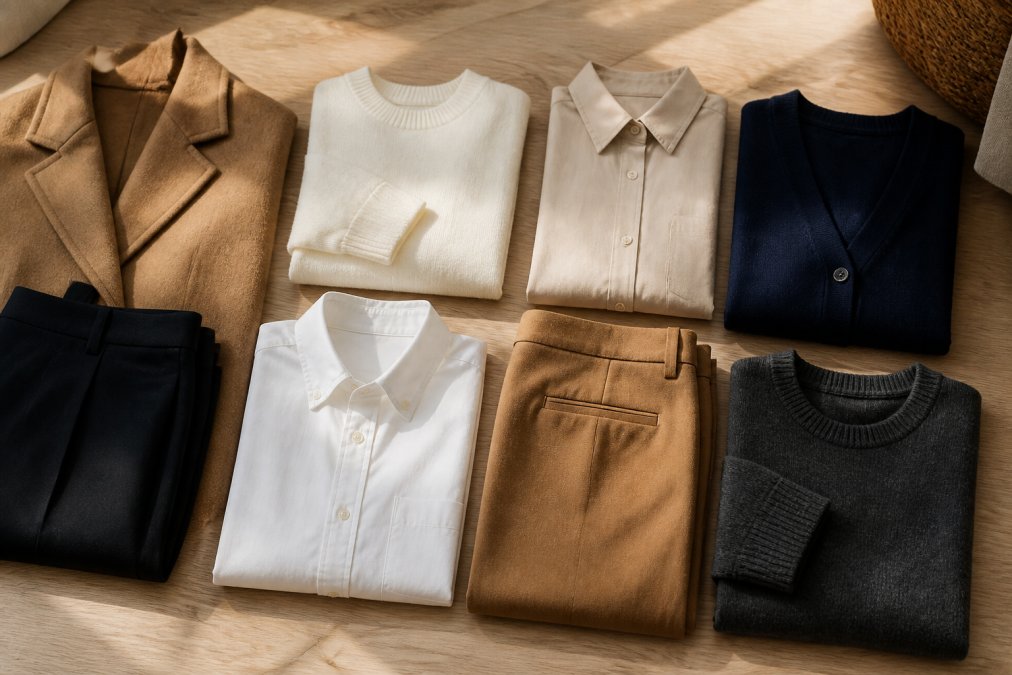
The goal is to build a palette where every piece can theoretically share an outfit with every other piece.
Neutral Tones as Your Foundation
Neutral tones form the backbone of any functional capsule system. Classic neutrals include white, off-white, cream, grey, charcoal, navy, camel, tan, and black. You do not need all of them. Pick three to four that work with your skin tone and lifestyle context.
Navy and grey are the most versatile pair for professional settings. Your neutral foundation should cover at least 70-80% of your capsule pieces. Tops, trousers, outerwear, and shoes in your chosen neutrals will mix freely and multiply your outfit options without any extra effort.
Adding Accent Colors Without Breaking the System
Accent colors give your capsule personality without sacrificing versatility. Choose one or two accent colors that complement all of your neutrals simultaneously.
Earthy accents like terracotta, olive, or burgundy pair well with warm neutral foundations. Cool accents like cobalt or forest green work better with grey-and-navy foundations. Limit accent pieces to items that carry lower commitment: a scarf, a sweater, a single pair of trousers. Your shoes, bags, and outerwear should almost always stay within your neutral palette.
Your Capsule Wardrobe Checklist: The Essential Items by Module
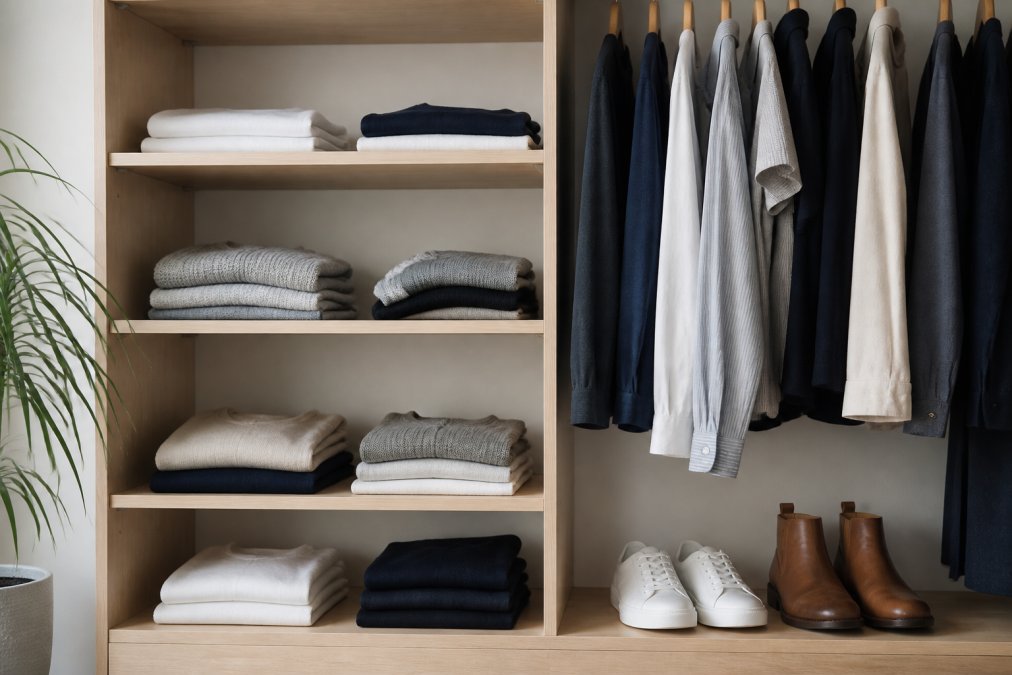
A capsule wardrobe checklist is most useful when organized by function rather than by garment type. The modular approach below gives you a starting framework. Adjust quantities based on your laundry frequency and lifestyle.
| Module | Core Items | Recommended Quantity |
|---|---|---|
| Core Tops | T-shirts, button-downs, blouses | 5-7 |
| Bottoms | Trousers, jeans, skirts | 3-5 |
| Layering | Blazers, cardigans, light jackets | 2-3 |
| Outerwear | Coat or structured jacket | 1-2 |
| Footwear | Versatile everyday + one formal | 3-4 pairs |
| Accessories | Belt, scarf, minimal jewelry | 3-5 items |
| Occasion | One elevated outfit for events | 1-2 pieces |
The Core Clothing Module
Your core clothing module covers the pieces you reach for most days. Prioritize fit above all else. A well-fitted mid-priced garment outperforms an ill-fitted premium one every time. Aim for machine-washable foundational pieces wherever possible.
Versatile Footwear and Accessory Coordination
Three to four pairs of shoes cover most lifestyles: a clean white or neutral sneaker for casual wear, a leather loafer or Oxford for professional settings, a sandal or mule for warm weather, and one boot for cooler months.
Accessory coordination follows the same palette logic as clothing. A leather belt and bag in the same tone pull any outfit together. Jewelry should stay simple: one watch, one pair of everyday earrings, and one versatile necklace handle most situations.
Layering Pieces That Do Double Duty
Layering is the mechanism that extends your capsule across seasons and from work to casual settings. A well-chosen blazer worn over a T-shirt reads as smart casual. The same blazer over a button-down reads as business professional. That single piece is doing the work of context-shifting.
Look for layering pieces with clean lines and no loud branding. A merino cardigan, a structured denim jacket, and a lightweight trench coat cover most layering needs across three seasons.
The Modular Capsule System: Mixing, Matching, and Seasonal Rotation
The modular capsule system treats your wardrobe as a set of interchangeable capsule modules rather than a single fixed list. Each module serves a context: work, casual, active, travel, occasion. Pieces within a module mix freely, and the best pieces cross over between modules.
Seasonal rotation keeps the system manageable. Rather than maintaining a year-round wardrobe of 60-plus items, rotate two to three seasonal modules in and out of active circulation.
Building Capsule Modules for Work-to-Casual Transitions
The work-to-casual transition is the highest-value problem a capsule solves for busy professionals. The key is identifying your "bridge pieces": items that read as professional enough for the office but relaxed enough for dinner afterward without a full change.
Classic bridge pieces include straight-leg dark trousers, clean leather sneakers, a tailored blazer in a neutral tone, and a quality merino crewneck. These items sit comfortably in both the work module and the casual module, which means they pull double duty and reduce the total number of pieces you need.
Capsule Wardrobe for Professional Travel
A travel capsule is a subset of your main capsule designed for maximum outfit coverage with minimum luggage. The formula that works: three bottoms, five tops, two layering pieces, one pair of dress shoes, one pair of casual shoes, and accessories. Every top should mix with every bottom. That combination generates more than 30 outfit configurations from 11 pieces.
Fabric choice matters more for travel than for any other use case. Wrinkle-resistant fabrics like merino wool, ponte, and certain technical blends recover from being packed without needing an iron.
Digital Inventory Management and Sustainable Shopping Habits
Most people have no idea what they actually own. Digital inventory management solves that problem and makes intentional shopping significantly easier.
Tracking Your Wardrobe Digitally
A digital wardrobe inventory is a record of every item you own, organized by category, color, and frequency of use. Apps like Stylebook, Whering, and Cladwell are purpose-built for this. A simple spreadsheet or photo album organized by category works just as well.
When you can see your entire wardrobe in one view, gaps become obvious and redundancies become undeniable. Track cost-per-wear over time by logging each time you wear a piece. After six months, the data tells you which items are genuinely earning their place.
Intentional Shopping, Slow Fashion, and Circular Fashion Principles
Intentional shopping means buying with a specific gap in mind, not because something caught your eye on a sale rack. Before any purchase, check your inventory: do you already own something that fills this function?
Slow fashion prioritizes garments built to last, from brands that pay fair wages and use responsible materials. Circular fashion adds a second layer: buying secondhand, renting for occasion wear, and reselling or donating pieces when they leave your capsule.
For neurodivergent individuals, a capsule wardrobe offers a particularly meaningful benefit: sensory consistency. Knowing that every item in your closet fits well, feels comfortable, and matches everything else removes a significant source of daily friction. Many people with ADHD, autism, or sensory processing differences find that a small, pre-vetted wardrobe dramatically reduces the cognitive load of getting dressed. Building a capsule with sensory needs in mind, prioritizing soft fabrics, tagless construction, and familiar silhouettes, is a legitimate and practical application of the system.
Common Bad Advice About Capsule Wardrobes (And What to Do Instead)
The popular advice on how to build capsule wardrobe content gets several things consistently wrong.
"Start with exactly 33 items." The 33-item rule is a useful starting point for some people and completely wrong for others. A parent of young children, a person with a physically demanding job, or someone who travels frequently for work will need a different count. Let your lifestyle define your capsule size.
"Throw everything out and start fresh." Starting from zero is expensive, wasteful, and unnecessary. A wardrobe audit almost always reveals pieces worth keeping.
"Buy investment pieces from luxury brands." Quality matters, but luxury branding does not equal durability or versatility. Check seams, fabric weight, and stitching density rather than the tag.
"A capsule wardrobe means wearing the same thing every day." A well-built capsule of 30-35 pieces generates well over 100 distinct outfits through layering and combination.
"You only need neutral colors." Neutral tones as your foundation is good advice. All-neutral everything is personal preference, not a rule. If color is part of your personal style, build a palette that includes your preferred accent colors alongside your neutrals.
At Hoss Style & Co LLC, the focus on versatile, everyday pieces that transition from work to casual settings reflects exactly this principle: well-chosen foundational pieces do more work than a closet full of single-use items.
Building a capsule wardrobe is straightforward once you stop treating it as a shopping project and start treating it as an editing project. The real challenge is making confident decisions about what stays and what goes, then resisting the pull of impulse buying once your closet is clean. Hoss Style & Co LLC offers a curated collection of versatile pieces for both men and women, built for everyday wear and work-to-casual transitions, with secure checkout and tracked shipping on every order. Shop All to find the foundational pieces that belong in your capsule.
Frequently Asked Questions
How many items should be in a capsule wardrobe?
Most capsule wardrobe frameworks suggest between 25 and 50 pieces total, including clothing, shoes, and accessories. Beginners often start with around 30 to 35 items. The right number depends on your lifestyle, how often you do laundry, and whether you include seasonal pieces. The goal is not a specific count but a curated collection where every item earns its place by mixing and matching with at least three other pieces.
What is the 3-3-3 rule for a capsule wardrobe?
The 3-3-3 rule is a simplified outfit planning method where you choose 3 tops, 3 bottoms, and 3 pairs of shoes, then wear only those combinations for a set period, typically one month. It is a useful exercise for capsule wardrobe beginners because it forces you to test true versatility. If you struggle to create enough outfits from those nine pieces, it signals gaps in your color palette or mix-and-match strategy.
What are the most common capsule wardrobe mistakes to avoid?
The most common mistakes include buying all-new items before decluttering first, choosing pieces based on trends rather than timeless wearability, ignoring your actual lifestyle when selecting essentials, and selecting a color palette that does not coordinate across the whole collection. Another frequent error is setting the capsule size too small too fast. Start with a realistic number of items, assess what you actually reach for over 30 days, then reduce gradually.
What are the essential pieces for a beginner capsule wardrobe checklist?
A solid beginner capsule wardrobe checklist typically includes: two to three well-fitted trousers or jeans in neutral tones, three to five tops in versatile colors, one or two layering pieces such as a blazer or cardigan, one casual and one slightly dressier dress or outfit set, two to three pairs of versatile footwear, and a few accessories that coordinate across the whole collection. Prioritize quality over quantity so garment care stays simple and pieces last longer.
How do I transition my capsule wardrobe for different seasons?
Seasonal rotation works best when your core foundational pieces, such as neutral trousers, quality denim, and layering items, stay in your closet year-round. Swap out roughly 10 to 15 seasonal items twice a year: lighter fabrics and brighter accent colors for spring and summer, heavier layers and deeper tones for fall and winter. Store off-season pieces in labeled bins or garment bags. A digital inventory makes tracking what you own across seasons much easier.
Can building a capsule wardrobe work for neurodivergent individuals?
Yes, and many people find a capsule system especially helpful for reducing daily decision fatigue, which is a common challenge for individuals with ADHD or autism spectrum conditions. A tightly curated collection with a consistent color palette means fewer choices each morning. Prioritizing sensory-friendly fabrics, consistent fits, and simple outfit formulas can make the system even more effective. Digital inventory apps that show outfit combinations visually can also reduce the mental load of getting dressed.
What is the 5-4-3-2-1 method for a capsule wardrobe?
The 5-4-3-2-1 method is a structured capsule formula: 5 tops, 4 bottoms, 3 layering pieces, 2 pairs of shoes, and 1 bag or statement accessory. It is designed to produce a high number of outfit combinations from a small number of garments, which is the core goal of intentional shopping and the capsule system. This method works best when all pieces share a cohesive color palette so every combination looks deliberate rather than accidental.
This article was written using GrandRanker


%0A%0ACapsule%20Wardrobe%20for%20Beginners:%20Assess%20Before%20You%20Add%0A%0ARun%20a%20Full%20Wardrobe%20Audit%0ADefine%20Your%20Personal%20Style%20Before%20Buyin...)