

Table of Contents
- Curated vs Madewell for Basics: Quick Comparison
- Denim Fit, Wash, and Sizing Consistency
- Fabric Composition and Long-Term Durability
- Affordable Alternatives to Madewell Clothing
- How to Build a Capsule Wardrobe With Basics
- Cost Per Wear: The Math That Decides It
- Styling Basics for Elevated Everyday Looks
- Verdict: Which Wins for Your Wardrobe
- Frequently Asked Questions
Last Updated: September 22, 2026
Curated vs Madewell for Basics: Quick Comparison
The Curated vs Madewell for basics comes down to this: Madewell wins on denim heritage and fit consistency, while The Curated competes on a tighter edit of everyday pieces. This guide from Hoss Style & Co LLC breaks down denim fit, fabric composition, and cost per wear so you can decide without guessing. The short version: Madewell is the safer bet for denim loyalists, The Curated is the leaner capsule-wardrobe option, and neither is the cheapest path to elevated basics.
| Criteria | Madewell | The Curated |
|---|---|---|
| Denim heritage | Strong, decades of fits | Newer, smaller range |
| Sizing consistency | Reliable across washes | Varies by drop |
| Fabric range | Cotton-heavy denim, some blends | Mixed, trend-led |
| Price tier | Mid-range pricing | Mid-range pricing |
| Best for | Denim fit and wash loyalists | Edited capsule pieces |
Denim Fit, Wash, and Sizing Consistency
Denim fit and wash are where Madewell earns its reputation. The brand built its following on consistent straight-leg and relaxed silhouettes, and sizing consistency holds up across repeat washes better than most mid-range competitors. The Curated's denim leans trend-led, so fits shift more between drops. If you buy denim once a year and expect the same fit next time, that variation is a real risk.
Straight-Leg and Relaxed Fits That Hold Their Shape
Straight-leg and relaxed fits hold their shape best in cotton-heavy denim with minimal stretch. Madewell's core denim sits in that zone, which is why its straight-leg cuts keep their line through a full day of wear. The Curated's denim often runs lighter on structure, so the same cut can read slouchier by afternoon. A common mistake is sizing down to chase a snugger fit; in low-stretch denim that backfires after the first wash.
Fabric Composition and Long-Term Durability
Fabric composition decides how long a basic actually lasts, and it is the factor most shoppers skip. The competitive gap here is real: most comparisons stop at "cotton-heavy" and never break down what the numbers on the tag actually do. Here is the breakdown that matters.
Reading the Fiber Tag Like a Buyer, Not a Browser
Denim is sold by weight and blend, and both drive how a pair ages. A few reference points:
- 100% cotton (rigid): No stretch, maximum abrasion resistance, develops creases and fades that read as character. Breaks in over 10-20 wears and holds shape longest. Downside: no give on day one.
- 99% cotton / 1% elastane: The sweet spot for most people. Enough recovery to prevent bagging at the knee, not enough stretch to sag. This is the blend most straight-leg and relaxed cuts are built around.
- 92-98% cotton with 2-8% elastane or polyester: Softer hand-feel out of the bag, faster to lose shape. Above roughly 2% elastane, knees and seats tend to bag within a single wear cycle.
- High polyester share (30%+): Cheapest to produce, pills fastest under friction, and holds dye less predictably. It feels smooth in the fitting room and tired by month six.
The Failure Modes That Actually End a Basic's Life
Basics rarely die from a single tear. They die from one of four slow failures:
- Pilling, friction on synthetic blends pulls loose fibers into balls, usually at the inner thigh and underarm. Worse with higher polyester content.
- Bagging, stretch denim that loses recovery sags at the knee and seat. Worse above 2% elastane and after hot-water washes.
- Crocking and fading, indigo transfer and wash fade. Rigid cotton fades evenly; blends can fade patchy.
- Seam and hem failure, chain-stitched hems on denim hold better than single-needle; flat-felled seams outlast overlocked ones on any woven.
How the Two Brands Sit on This Axis
A basic that survives two years of weekly wear beats a cheaper piece replaced every season. That is the whole game in fabric durability.
Affordable Alternatives to Madewell Clothing
Affordable alternatives to Madewell clothing exist, and the smartest ones skip the middleman markup. At Hoss Style & Co LLC, our approach is a curated collection of versatile pieces. Our straight-leg denim starts well below typical mid-range pricing, and every order ships with tracking.
What a $29 to $57 Pair of Jeans Actually Gets You
A $29 to $57 pair of jeans gets you real denim construction without the brand premium. Our Straight-leg Loose-fit Workwear Denim Jeans run $29.65 in a relaxed, high-waist cut with a distressed finish. The Straight-leg jeans sit at $38.49 in cotton with a full size run from 28 to 38. The Springautumn Relaxed Fit Jeans land at $35.30 in a straight-leg cotton build.


| Style | Price | Fabric | Best For |
|---|---|---|---|
| Workwear Denim Jeans | $29.65 | Polyester, slight stretch | Relaxed everyday wear |
| Straight-leg jeans | $38.49 | Cotton | Classic straight fit |
| Springautumn Relaxed Fit | $35.30 | Cotton | Spring/autumn layering |
| Patchwork Straight-leg | $57.23 | Cotton | Statement street style |
How to Build a Capsule Wardrobe With Basics
Building a capsule wardrobe with basics starts with a fixed palette and a small number of repeat-wear pieces. The goal is versatility, not volume. Most people overbuy and under-wear; a tight edit fixes that.
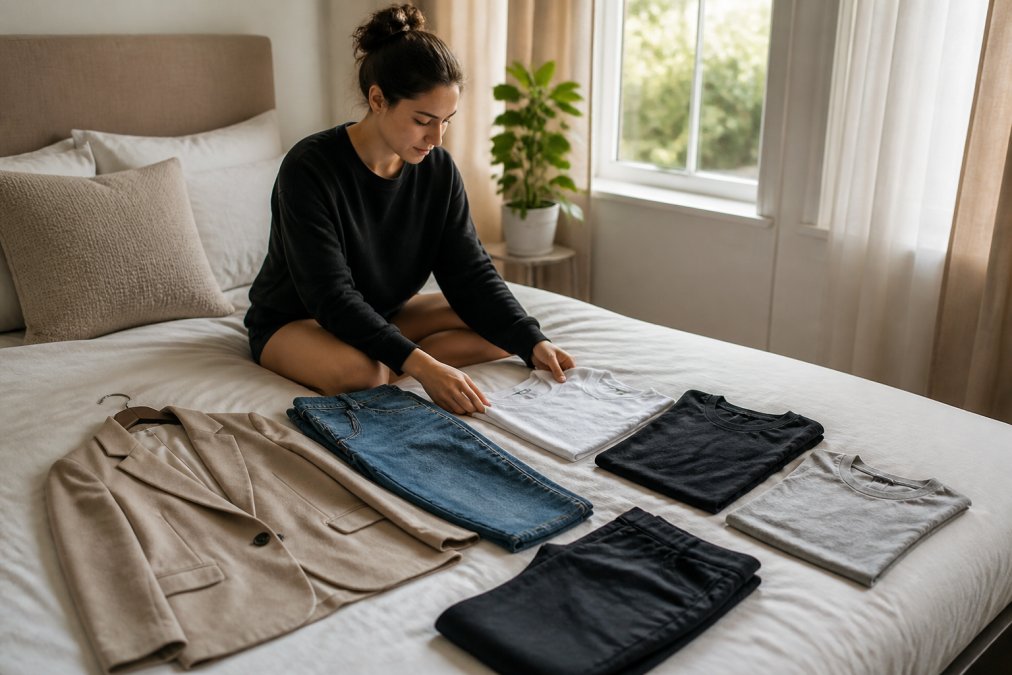
Start with these staple items:
- Two pairs of straight-leg denim in a dark and light wash
- Three plain tees in neutral tones
- One relaxed jacket that layers over everything
- One pair of tailored trousers for work-to-casual days
- Two layering pieces: a knit and a button-down
Cost Per Wear: The Math That Decides It
Cost per wear is the price divided by the number of times you actually wear the item. Most comparisons stop at that one-line definition. The useful version accounts for care, lifespan, and the break-even point where a premium piece actually beats a cheap one.
The Formula, With the Variables That Matter
Cost per wear = price ÷ (wears per year × expected years of wear).
- Wash frequency. Denim worn 3-4 times between washes lasts materially longer than denim washed after every wear. Hot water and machine drying accelerate elastane breakdown and fade.
- Care method. Cold wash, inside-out, hang or lay flat to dry. This is the single cheapest lever on cost per wear, it costs nothing and extends the wear window.
A Worked Comparison
Take a $40 pair of jeans worn twice a week for two years: 2 × 52 × 2 = 208 wears. $40 ÷ 208 = about 19 cents per wear.
Where the Math Flips
Cost per wear favors the premium piece when three conditions stack:
- The fabric is cotton-forward (low elastane), so shape holds over years.
- Construction is repairable, chain-stitched hems, flat-felled seams, room to let out or take in.
- You actually wear it at high frequency. A $100 jacket worn 10 times a year never beats a $40 jacket worn 100 times.
The Step-by-Step
- Estimate realistic wears per year, not aspirational ones.
- Estimate years of life based on fabric and care, not hope.
- Divide price by the product of those two numbers.
- Compare cost per wear, not price tags.
- Re-check after six months. If the piece is bagging or pilling early, your estimate was optimistic, adjust for the next purchase.
Garment care extends the timeline. Cold washes and air drying keep denim in rotation longer, which lowers cost per wear without spending another dollar. That is the mechanism most comparisons skip, and it is the one that decides whether the premium piece was worth it.
Styling Basics for Elevated Everyday Looks
Styling basics for elevated looks comes down to fit, proportion, and restraint. Elevated basics are not about more pieces; they are about better-fitting ones. A straight-leg jean with a tucked tee and a structured jacket reads more polished than a trend-heavy outfit every time.
Three rules that work:
- Keep one statement piece per outfit, not three.
- Match your denim wash to the formality of the setting.
- Tailor anything that gaps or drags. A $15 alteration beats a $150 replacement.
Verdict: Which Wins for Your Wardrobe
Madewell wins if denim fit and wash consistency are non-negotiable and you are willing to pay mid-range pricing for it. The Curated wins if you want a tightly edited, trend-aware selection and can tolerate more variation between drops. Neither wins on price.
Frequently Asked Questions
What are the main differences in aesthetic between The Curated and Madewell?
Madewell leans toward a classic denim-and-tee look with a strong emphasis on heritage washes and slim or straight cuts. The Curated takes a more minimal, edit-driven approach, favoring neutral palettes and fewer, more deliberate pieces. If you want variety in washes and seasonal drops, Madewell covers more ground. If you want a tight set of everyday pieces that mix without effort, a curated model suits better. The practical difference shows up in how quickly you can assemble outfits from what you already own.
Are there affordable alternatives to Madewell clothing that still hold up?
Yes. Cotton straight-leg jeans priced between $29.65 and $57.23 cover the same everyday role as designer denim at a fraction of the cost. Look for 100% cotton or cotton-dominant fabric, straight or relaxed cuts, and a published size chart with waist, hip, and inseam measurements in centimeters. Those three details matter more than the label. A pair that fits your actual measurements and survives regular washing will outlast a pricier pair you avoid wearing because the fit is off.
How do I build a capsule wardrobe with basics without overbuying?
Start with two pairs of jeans in different washes, three neutral tops, one layering piece, and one jacket. That is roughly ten items and covers most work-to-casual situations. Add pieces only when you notice a repeat gap, like always needing a third top on workdays. Stick to a consistent color range so everything mixes. Wash denim inside out in cold water and air dry to slow fading. A small, well-chosen set gets worn more often than a large one, which is what actually lowers your cost per wear.
How does sizing consistency compare between these two for denim?
Madewell publishes detailed fit notes and offers multiple inseam lengths, which helps if you know your measurements. Many imported denim lines run one to two sizes smaller than standard American sizing, so check the chart before ordering and size up when you fall between two sizes. Measure your waist, hip, and thigh at home, then match those numbers to the chart rather than trusting a letter size. That single step prevents most fit returns.
Is it worth paying more for staple wardrobe pieces?
Only when the higher price buys something you will actually use: a better fit, a fabric that survives more washes, or a cut that works across settings. Run the math. A $57 pair worn twice a week for a year costs about 55 cents per wear. A $30 pair worn once a month costs about $2.50 per wear. Longevity and frequency drive value, not the price tag. Buy the cheaper pair if it fits well and you will wear it often.
Building a wardrobe that works for both the office and the weekend is harder than it looks, especially when basics either cost too much or fall apart too fast. Hoss Style & Co LLC solves that with carefully selected fashion pieces built for everyday versatility, a focus on work-to-casual transitions, and secure, tracked shipping on every order. Skip the guesswork and the premium markup. Get started with Hoss Style & Co LLC and build a wardrobe that earns its place.


