

Table of Contents
- Why Learning to Identify High Quality Clothes Matters
- How to Check Fabric Quality Before You Buy
- How to Spot Quality Stitching and Seam Integrity
- Signs of Poor Quality Clothing to Avoid
- Evaluating Hardware, Buttons, and Zippers
- Assessing Garment Construction and Fit
- Quality Clothing That Lasts: Durability and Longevity
- Conclusion
Last Updated: August 13, 2026
Why Learning to Identify High Quality Clothes Matters
Most people buy clothes based on price, trend, or appearance, then are surprised when seams split, fabric pills, or colors fade. The real skill is finding clothes that perform well over time. Learning to identify high quality clothes saves money: a $60 shirt lasting three years costs less per wear than a $20 shirt replaced twice annually. At Hoss Style & Co LLC, we focus on pieces built to last, which is why understanding durability matters before you buy. When you know what to look for, you make smarter purchases, spend less time returning items, and build a wardrobe where pieces work together because they're made to last. Fast fashion has trained consumers to expect low prices, making quality the exception rather than the rule. This guide walks you through specific checks to separate well-made pieces from disposable ones.
How to Check Fabric Quality Before You Buy
Fabric is where quality begins. Everything else, stitching, construction, hardware, matters only if the material underneath can handle wear and washing.
Understanding Fiber Content and Natural vs. Synthetic
Check the fiber content label first. Natural fibers like cotton, linen, wool, and silk breathe better, age more gracefully, and typically feel softer, but they can shrink and wrinkle. Synthetics like polyester and nylon resist wrinkles and shrinkage, dry faster, and cost less, but they can pill and degrade under UV exposure. The blend matters as much as individual fibers: 100% cotton wrinkles easily but feels better than a 50/50 cotton-polyester blend, while 85% cotton-15% elastane in pants provides stretch without sacrificing durability. Look for fiber content matching how you'll actually wear the piece.
Synthetic doesn't automatically mean low quality, and natural doesn't automatically mean high quality. A well-made polyester dress can outlast a poorly-made linen one. What matters is whether the fiber choice matches the garment's purpose and construction.
Testing Hand-Feel and Fabric Density
Run your fingers across the fabric. High-quality clothing feels substantial and dense. The weave or knit should feel tight and even; gaps between threads indicate loose construction that will pill and degrade faster. Fabric density affects longevity directly, dense fabric resists pilling because fibers are packed tightly enough that loose strands can't easily form balls on the surface.
Test the fabric's recovery by stretching it gently. Quality fabric bounces back to its original shape. Fabric that stays stretched or wrinkles easily in your hand will wrinkle during wear and may not recover fully after washing. This is especially important for knits and stretch fabrics.
Checking for Transparency and Drape
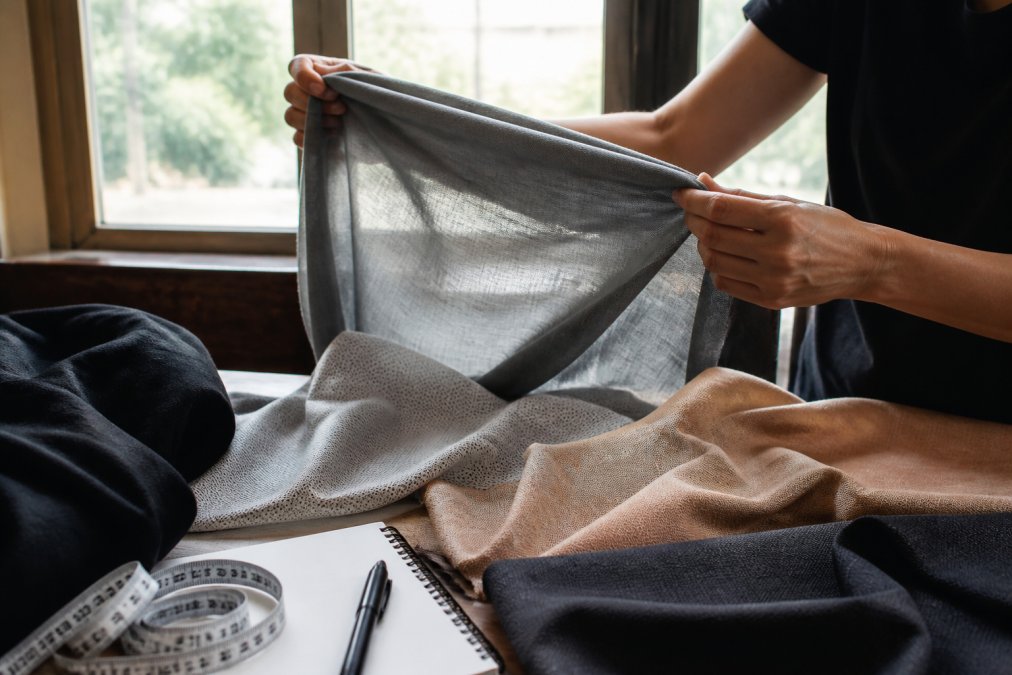
Hold the garment up to light. Cheap fabric becomes transparent or shows your hand outline clearly. Quality fabric maintains opacity even when backlit, indicating tighter weave and better fiber quality. Drape, how the fabric falls and moves, also signals quality. Stiff, plasticky fabric drapes poorly and looks cheap. Quality fabric has natural flow that flatters the body. When you hold the garment, it should move smoothly, not cling awkwardly or stand away from the body.
How to Spot Quality Stitching and Seam Integrity
Stitching is where design meets durability. Perfect seams won't save a garment made from poor fabric, but poor seams will destroy one made from excellent fabric.
Inspecting Seams for Even Tension and Strength
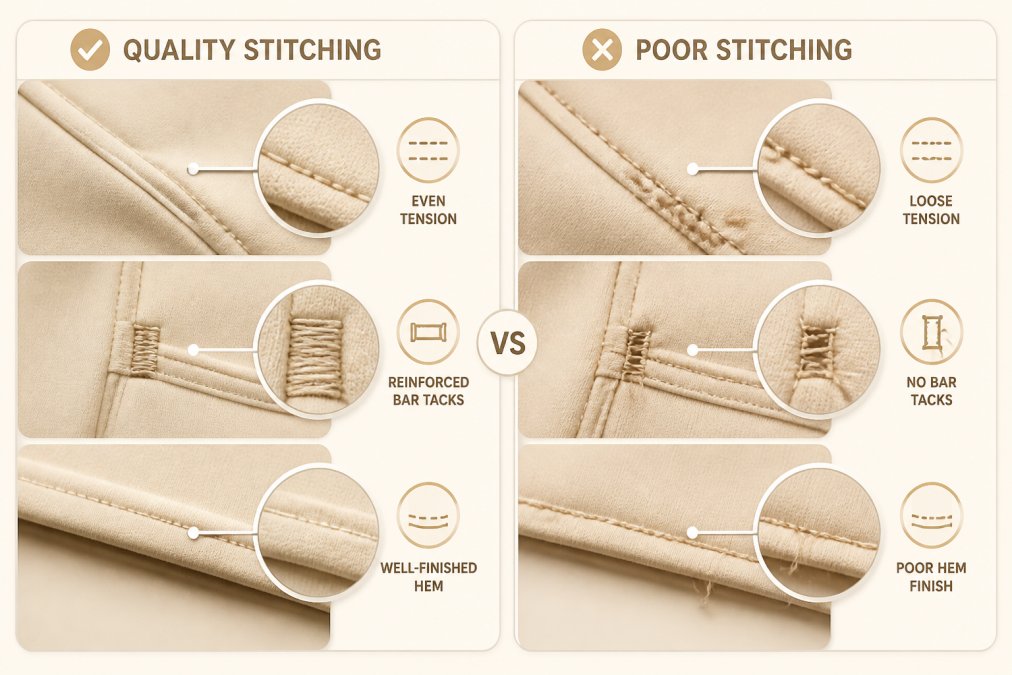
Look at seams closely. Stitches should be even, straight, and consistent in tension. Run your finger along a seam; you shouldn't feel loose threads or gaps. Seam strength depends on stitch density, more stitches per inch mean stronger seams. Industrial machines typically use 12-16 stitches per inch for quality garments. Fewer than 10 per inch indicates lower quality.
Look for reinforced seams at stress points like armholes, crotches, and side seams. Quality garments reinforce these areas with additional stitching or bar tacks (small rectangular stitched boxes), showing the manufacturer anticipated wear patterns. Standard stitching only at these areas may fail faster.
Checking Hems, Cuffs, and Edge Finishing
Quality hems are narrow, even, and invisible from the outside with consistent, tight stitching. Some garments use flat-felled seams (where one seam allowance is folded and stitched over the other) for extra durability. Check cuffs and necklines the same way, these areas see repeated stress. The inside of the neckline should be finished cleanly with binding, a facing, or a turned-and-stitched edge.
Look at how sleeves are attached. Quality sleeves are set smoothly with no puckering around the armhole. The sleeve cap should be smooth and shaped to match the armhole. Flat, poorly-shaped sleeves indicate lower quality tailoring.
Signs of Poor Quality Clothing to Avoid
Pilling, Shrinkage, and Fabric Degradation
Pilling happens when loose fibers ball up on the fabric surface. If you see pilling on a garment in-store, it's a red flag, the fabric degrades quickly. Check the care label for shrinkage warnings. If it says "wash in cold water" or "lay flat to dry," the garment is prone to shrinkage. Quality garments are usually pre-shrunk and handle standard washing. Ask yourself whether care requirements match your actual habits.
Fabric degradation shows up as fading, stiffness, or brittleness after washing. Poor dyes fade quickly. Quality garments maintain color and softness through multiple wash cycles.
Loose Threads, Unraveling, and Weak Construction
Pick up the garment and look for loose threads hanging from seams or hems. Multiple loose threads or threads that pull easily indicate weak stitching. Unraveling seams are a serious problem, if a seam starts to come apart from wear or washing, the garment is done. Check stress points; if seams look like they might unravel, skip the garment.
Weak construction shows up as gaps between pattern pieces, misaligned seams, or obvious shortcuts in assembly. Sometimes you'll see a seam stitched only partway or a hem not fully attached. These are intentional shortcuts to save time and money.
Evaluating Hardware, Buttons, and Zippers
Hardware seems minor until it fails. A broken zipper makes an otherwise perfect jacket unwearable.
Buttons should be sewn securely with a thread shank (small space between button and fabric) that allows the button to move slightly. Quality buttons are made from natural materials or high-quality plastic and feel substantial. Cheap buttons feel flimsy.
Zippers should glide smoothly without catching or sticking. Metal zippers last longer than plastic ones, though quality plastic zippers work fine. Check that the slider is sturdy. The zipper should align properly with fabric on both sides.
Snaps, hooks, and other closures should be secure and properly installed. Quality closures are reinforced on the inside with extra fabric or interfacing. When you fasten or unfasten them, they should feel solid.
Assessing Garment Construction and Fit
Pattern Matching and Tailoring Details
Quality garments match patterns at seams. If the garment has stripes, checks, or prints, the pattern should align where pieces meet. Mismatched patterns indicate poor quality control. Look at tailoring details: collar points should be sharp and even, lapels should lie flat, buttonholes should be finished cleanly with no fraying.
Check overall symmetry. Sleeves should be the same length, pockets should align, hems should be even. Asymmetry usually indicates either a manufacturing defect or intentional design.
Lining Quality and Interior Finishing
Open the garment and check the inside. Quality garments have finished linings or at least finished seams. Seams shouldn't be visible from the inside unless the design intentionally exposes them. Loose threads, raw edges, and sloppy interior finishing indicate low quality.
Linings should be smooth and properly attached. Interior pockets should be finished properly with reinforced openings to prevent tearing. Pocket corners should be reinforced to prevent ripping when you put items in them.
Quality Clothing That Lasts: Durability and Longevity
Quality isn't just about initial construction, it's about how a garment performs over time.
Post-Purchase Care and Maintenance Impact
How you care for clothing affects its longevity dramatically. Follow care label instructions. Wash in cold water when possible; hot water fades colors and weakens fibers. Use gentle detergent and air dry when the label allows. Proper storage matters too: hang or fold garments appropriately based on fabric type. Heavy knits should be folded to prevent stretching. Repair small issues before they become big ones, a loose button takes two minutes to reattach.
Sustainable Wardrobe Building vs. Fast Fashion
Fast fashion prioritizes low prices and trend-chasing, with garments designed to last one season. Building a sustainable wardrobe means buying fewer pieces that last longer and work together across multiple seasons. Quality pieces become the foundation, when you buy clothing that's durable and versatile, you wear it more often and keep it longer, reducing the total number of garments you need.
The second-hand market proves this point. Quality garments show up in thrift stores years after purchase because they're still wearable. Cheap garments rarely make it to second-hand markets because they're already falling apart. Building a sustainable wardrobe doesn't mean buying expensive designer pieces, it means buying from brands that focus on versatile, durable basics designed to work across seasons. A well-made neutral shirt works with multiple outfits across multiple years.
Learning to identify high quality clothes transforms how you shop. Instead of chasing trends or hunting for deals, you evaluate what you're actually buying. You spend more per item but less overall because pieces last. You build a wardrobe where most items work together because they're made well enough to stick around. Start by checking fabric quality, inspecting stitching, and evaluating construction. These skills take minutes to develop and save you money for years. When you're ready to build a wardrobe of pieces that actually last, Hoss Style & Co LLC offers a curated collection of durable basics designed for everyday wear. Our focus on quality construction and versatile styling means you're investing in pieces you'll reach for repeatedly, season after season. Shop pieces built to last at Hoss Style & Co LLC.
Frequently Asked Questions
What are the signs of high-quality fabric?
High-quality fabric feels smooth and substantial to the touch, with consistent density throughout. Look for natural fiber content like cotton, wool, or linen, or well-constructed blends that resist pilling. The fabric should drape elegantly without sagging, maintain its shape after wear, and show no transparency or thin spots when held to light. Weight matters too, heavier fabrics typically indicate better durability and longevity.
How can you tell if a garment is well-constructed?
Inspect the stitching closely: seams should be straight, even, and tightly spaced with no loose threads. Check that hems are finished cleanly, buttons are securely attached with reinforcement, and zippers move smoothly. Look inside the garment for quality lining and neat finishing on all interior seams. Pattern matching on plaids or prints shows attention to detail. Well-constructed pieces also fit your body proportionally with balanced armholes, collar placement, and overall cut.
Is 100% natural fiber always better than synthetic blends?
Not necessarily. While natural fibers like cotton and wool offer breathability and comfort, quality synthetic blends can provide superior durability, stretch recovery, and wrinkle resistance. A well-made 80% cotton-20% polyester blend may outlast 100% cotton that's poorly constructed. Focus on fiber content listed on the care label, construction quality, and how the fabric feels and performs rather than assuming natural is always superior. The best choice depends on the garment's intended use.
What should you look for in clothing seams and stitching?
Examine seams for straight, even stitching with tight, consistent spacing, typically 12-16 stitches per inch indicates quality. Seams should be reinforced at stress points like armholes and crotch areas. Look for double-stitched seams on durable pieces. Check that thread color matches the fabric, hems are finished (not raw edges), and there are no puckered or wavy seams. Run your finger along the inside seam: it should feel smooth without loose threads or unraveling.
This article was written using GrandRanker


