

Table of Contents
- What Minimalist Fashion Means in 2026
- Why Minimalist Fashion Is Trending Now
- Building Your Minimalist Capsule Wardrobe
- Essential Pieces Every Minimalist Wardrobe Needs
- Creating Minimalist Outfit Ideas for Work and Casual
- Quiet Luxury Fashion vs. Minimalism
- Making Minimalist Fashion Work for Your Body Type and Climate
- Caring for and Extending the Life of Your Minimalist Pieces
- Frequently Asked Questions
Last Updated: October 21, 2026
What Minimalist Fashion Means in 2026
Minimalist fashion is a design philosophy centered on simplicity, functionality, and intentional curation. It prioritizes clean lines, neutral color palettes, and versatile pieces that work across multiple occasions and seasons. Rather than following fast-moving trends, minimalism emphasizes quality over quantity, investing in garments built to last.
The aesthetic has evolved significantly since its origins. Where 1990s minimalism felt austere and rigid, today's approach balances restraint with comfort. Relaxed tailoring, soft fabrics like linen and cotton, and understated elegance define the current iteration. A minimalist wardrobe today means owning fewer pieces that mix and match effortlessly, a true capsule wardrobe where every item earns its place.
At Hoss Style & Co, we've built our collection around this philosophy. Our approach focuses on pieces that transition seamlessly from work to casual settings without requiring constant shopping or wardrobe overhauls. The goal isn't deprivation; it's clarity. When your closet contains only pieces you genuinely wear, getting dressed becomes simpler and more confident.
The distinction matters: minimalism isn't about owning the fewest clothes possible. It's about owning the right clothes, the ones that reflect your actual life and style preferences.
Why Minimalist Fashion Is Trending Now
Several cultural shifts have converged to make minimalist fashion's 2026 trend a mainstream conversation. First, there's genuine fatigue with overconsumption. The constant cycle of trend-chasing, seasonal collections, and fast fashion disposal has worn people down. Wardrobes overflow while nothing feels quite right.
Second, economic pressure matters. Fewer, better pieces cost less over time than constant replacement cycles. A $40 quality cotton shirt worn 80 times costs 50 cents per wear. A $15 trendy piece worn twice costs $7.50 per wear.
Third, digital fatigue is real. Social media feeds endless styling options, creating decision paralysis. Minimalism offers relief: if your wardrobe is coherent, you need fewer decisions. Getting dressed takes minutes instead of the mental energy drain of sorting through 200 unworn pieces.
Sustainability concerns amplify this trend, though not in the preachy way many assume. People aren't adopting minimalism primarily to save the planet. They're adopting it because it saves money, time, and mental energy. The environmental benefit is a welcome side effect, not the driver.
The timing also reflects post-pandemic wardrobe reality. Many people worked from home for extended periods. When they returned to offices, their old professional wardrobes felt wrong, too formal, too trend-dependent, too disconnected from how they actually live. Rebuilding from scratch offered a chance to build differently.
Building Your Minimalist Capsule Wardrobe
A capsule wardrobe typically contains 30-50 pieces that coordinate across multiple outfits. The exact number depends on your climate, work environment, and lifestyle, but the principle remains: every piece should work with at least three others.
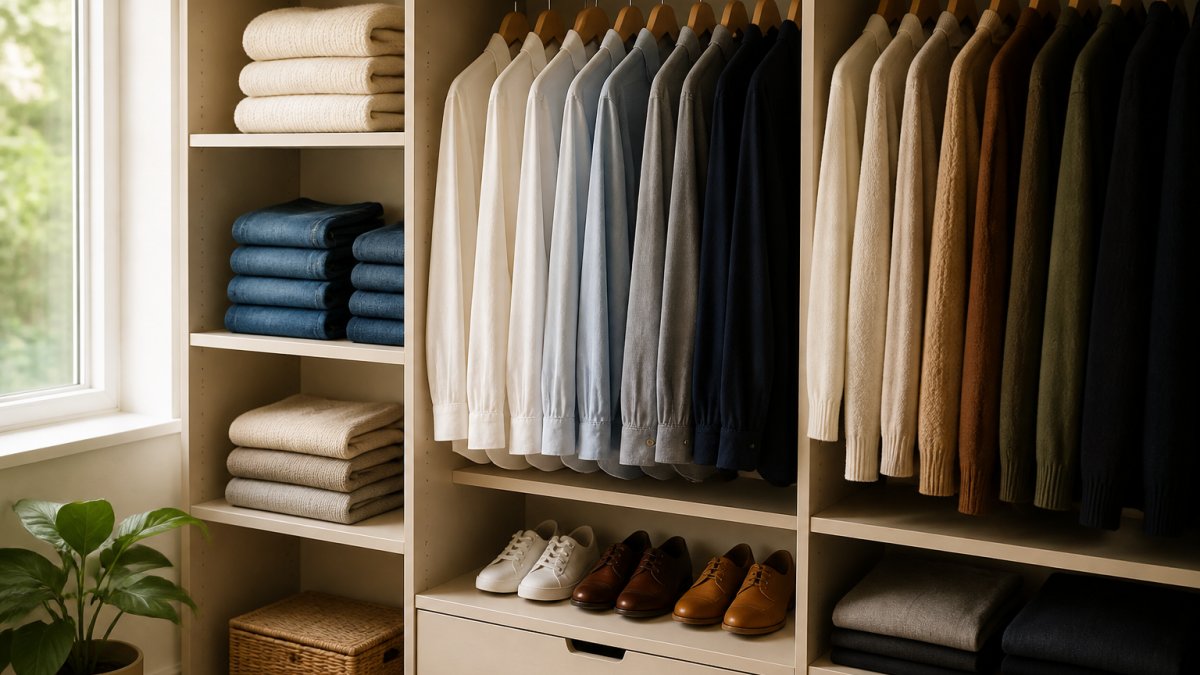
Start by identifying your color foundation. Neutrals form the backbone: cream, oatmeal, charcoal, black, navy, and white. These colors mix without clashing and create a cohesive visual identity. Add two accent colors that genuinely reflect your preferences, perhaps sage green or warm gray.
Next, audit what you already own. Pull out pieces you've worn in the last 90 days. These reveal your actual style preferences, not your aspirational ones. Notice patterns: do you reach for certain silhouettes? Your existing choices contain valuable data about what actually works for your body and life.
Build around those patterns rather than against them. If you've never worn a cropped top, don't buy one because it's minimalist. If you live in a cold climate, layering pieces matter more than lightweight options. If you work in a conservative industry, tailored pieces serve you better than relaxed silhouettes.
The transition happens gradually. You don't need to purge everything immediately. Instead, commit to replacing pieces thoughtfully. When something wears out or no longer fits, choose a replacement that serves multiple outfits. Within 6-12 months, your wardrobe naturally becomes more cohesive.
Essential Pieces Every Minimalist Wardrobe Needs
A functional minimalist wardrobe includes specific categories that cover most situations. These aren't rigid rules, adjust for your climate and lifestyle, but they represent the foundation most people need.
Basics: White t-shirt, cream long-sleeve shirt, neutral sweater, simple tank. These layer under everything and provide the visual foundation for outfits. Quality matters here; cheap basics pill and fade quickly.
Outerwear: One neutral jacket suitable for your climate. In temperate regions, a blazer or structured cardigan works year-round. In cold climates, a quality coat that pairs with everything.
Bottoms: Two to three pairs of jeans or neutral trousers in flattering fits. The Classic Stretch Cross-border Jeans For Women at $38.79 provide the durability and neutral color that anchor a capsule wardrobe.
Layering pieces: A lightweight sweater, cardigan, or button-up shirt that works under and over other pieces. The Loose-fitting Pullover Sweater from Hoss Style & Co at $35.89 exemplifies this category, available in multiple neutral tones, it layers seamlessly and works across body types through its relaxed fit.

Workwear: If your job requires professional dress, invest in one or two pieces that feel both authoritative and comfortable.
Shoes: Neutral leather shoes in three categories, professional, casual, and active. One pair of comfortable flats or loafers, one pair of sneakers, one pair suitable for dressier occasions. These should coordinate with your color palette.
Accessories: A simple belt, basic jewelry, and a neutral bag that works across settings. Minimalism extends to accessories; a few high-quality pieces beat a drawer full of options.
The goal isn't owning every category immediately. Start with what your daily life actually requires, then add thoughtfully over time.
Creating Minimalist Outfit Ideas for Work and Casual
The real test of a minimalist wardrobe is whether it actually produces outfits without friction. A well-built capsule should generate dozens of combinations from relatively few pieces.
For work settings, start with a neutral base: trousers or a skirt in black, navy, or gray. Layer with a simple top, white, cream, or your chosen neutral. Add a blazer or structured cardigan for polish. This formula works regardless of body type because the pieces coordinate by design, not accident.
Casual outfits follow the same logic: neutral bottoms, simple top, layering piece if needed. Jeans with a sweater and jacket work in dozens of situations. A neutral skirt with a white shirt and cardigan transitions from brunch to errands to casual dinner.
Loose-fitting Pullover Sweater →
The psychological benefit matters as much as the practical one. When your wardrobe is coherent, you stop second-guessing your choices. You get dressed faster. You feel more confident because your outfit isn't fighting against itself. That mental clarity, not just the efficiency, is what makes minimalism sustainable.
Building outfit templates helps during the transition. Write down 5-7 outfits you actually wear regularly. Photograph them. Use these as reference points when adding new pieces. Does the new item fit into at least three of your existing templates? If not, it doesn't belong in a minimalist wardrobe.
Quiet Luxury Fashion vs. Minimalism
The terms often get conflated, but they describe different philosophies. Understanding the distinction helps clarify what you're actually building.
Quiet luxury emphasizes expensive, high-quality materials and construction that speaks through subtlety rather than logos. A cashmere sweater, Italian leather shoes, or Japanese denim represents quiet luxury. The investment is visible through quality, not branding.
Minimalism, by contrast, focuses on simplicity and intentionality regardless of price point. You can build a minimalist wardrobe with affordable basics or luxury pieces. The philosophy isn't about spending more; it's about spending smarter.
The overlap occurs when people pursue both simultaneously: investing in fewer, higher-quality pieces that will last longer. That approach makes financial sense. A $120 quality sweater worn 200 times costs 60 cents per wear. A $25 sweater worn 30 times costs 83 cents per wear. The expensive piece wins.
But minimalism doesn't require luxury pricing. Hoss Style & Co demonstrates this through accessible pieces like the Loose-fitting Pullover Sweater at $35.89 and Classic Stretch Cross-border Jeans at $38.79. Quality construction and thoughtful design don't demand luxury price tags.

The real distinction: quiet luxury is about what you own, while minimalism is about how many you own and whether they work together. You can practice minimalism with budget pieces. You can practice quiet luxury while owning excessive quantities. The philosophies address different questions.
Making Minimalist Fashion Work for Your Body Type and Climate
Minimalism sometimes gets presented as a one-size-fits-all aesthetic, which creates false barriers. The philosophy adapts to individual circumstances; the execution simply looks different.
For different body types, the principle remains constant: clean lines and intentional fit matter more than trend-chasing. Someone with a petite frame might favor shorter lengths and simplified silhouettes. Someone taller might choose longer proportions. Someone with curves might emphasize fit through tailoring rather than loose draping.
The Women's Short Puffer Down Jacket Coats exemplify this adaptability. The relaxed fit and shorter length work across body types without requiring constant size-hunting or compromise. Minimalism succeeds when pieces actually fit and flatter the person wearing them, not when they conform to an abstract ideal.

Climate dramatically affects wardrobe strategy. Someone in a warm climate builds around breathable fabrics like linen and cotton in lighter weights. Someone in a cold climate prioritizes layering pieces and insulation.
Seasonal variation matters too. A minimalist wardrobe in a four-season climate might include slightly different pieces for winter versus summer, but the core remains consistent. Transitional pieces, cardigans, lightweight jackets, scarves, bridge seasons without requiring a complete wardrobe overhaul.
The mistake people make is assuming minimalism means ignoring these variables. It actually means respecting them. A minimalist wardrobe works because it acknowledges your specific life, not despite it.
Caring for and Extending the Life of Your Minimalist Pieces
When you own fewer pieces, each one carries more weight. Caring for them properly becomes essential, not just for longevity, but for the financial and environmental logic of minimalism.
Basic maintenance prevents most damage. Washing clothes in cold water, using gentle detergent, and air-drying extends fabric life significantly. Heat damages fibers; cold water and air drying preserve them. This simple shift can double the lifespan of most garments.
Storage matters more than most people realize. Hangers that don't stretch necklines, breathable storage that prevents mildew, and organization that prevents wrinkles all contribute to longevity. Folding heavy knits rather than hanging them prevents stretching.
Minor repairs become worthwhile when pieces matter. A loose button, small tear, or separated seam costs $5-15 to repair but extends garment life by years.
Fabric choice influences care requirements and longevity. Natural fibers like cotton and linen become softer with washing and last longer than synthetics. They require less special care, no dry cleaning, no delicate cycles.
Quality construction shows in details: reinforced seams, finished hems, substantial zippers, and durable buttons all indicate pieces built to endure. When evaluating new pieces, check these details.
Minimalist fashion isn't about deprivation or rigid rules. It's about building a wardrobe that actually works for your life instead of against it.
Frequently Asked Questions
Why is minimalist fashion becoming more popular in 2026?
Minimalist fashion is trending because it offers relief from trend exhaustion and overconsumption. Busy professionals and budget-conscious shoppers are drawn to fewer, better pieces that reduce decision fatigue and lower overall spending. The shift reflects growing interest in intentional dressing, sustainability, and conscious consumption. Minimalist wardrobe staples also work across multiple settings, making them practical for people juggling work and casual environments.
How do you build a minimalist capsule wardrobe on a budget?
Start with neutral colors like cream, oatmeal, black, and gray. Invest in versatile basics that mix and match easily: quality jeans, simple sweaters, and plain button-down shirts. Look for natural fabrics like cotton and linen that last longer. Pieces from Hoss Style & Co, such as the Classic Stretch Cross-border Jeans ($38.79) and Loose-fitting Pullover Sweater ($35.89), offer affordable quality without premium luxury pricing. Focus on cost per wear by choosing timeless pieces you'll reach for repeatedly.
What's the difference between minimalist fashion and quiet luxury?
Minimalist fashion emphasizes simplicity, clean lines, and intentional dressing with fewer pieces. Quiet luxury fashion focuses on high-end materials and subtle status signals, often at premium prices. Minimalism prioritizes accessibility and sustainability; quiet luxury emphasizes exclusivity and craftsmanship. Both share understated style and relaxed tailoring, but minimalism is about owning less and choosing thoughtfully, while quiet luxury is about owning expensive pieces that signal wealth subtly.
How can you make minimalist outfits look interesting without lots of patterns or colors?
Use texture and layering to add visual interest. Combine different fabric weights like soft linen with structured cotton, or pair a relaxed sweater over a fitted shirt. Controlled accents work well: a simple belt, neutral scarf, or quality watch. Play with silhouettes by mixing relaxed tailoring with fitted pieces. Vary sleeve lengths, necklines, and proportions. Invest in hero pieces with subtle details like interesting buttons or seaming. This approach keeps your wardrobe minimal while maintaining outfit versatility and personal style.


